
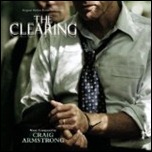
The Clearing
Much of the score has a very dark and moody quality. The opening cue is a solo violin presentation of the score’s main theme. This kind of low-key presentation of the theme establishes a pretty distinctive mood right at the start. The theme is a fairly simple motif, built around a fairly simple 8 note melody with the first 3 notes repeated. This motif is woven throughout the score, often either via the solo violin or via piano (including a stand-alone solo piano cue of the theme). The soundtrack ends with a full orchestral arrangement.
Armstrong includes some electronic elements as well, introducing a bit of a modern style to some parts of the score. The early cue “Arnold On His Way” especially showcases this aspect of the music and comes as a somewhat interesting shift in tone after the moody, more classical instrumentals of the first couple cues.
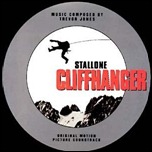
Cliffhanger
The score is built around an absolutely thrilling main theme. The theme is built around a series of very brassy fanfares backed by some absolutely soaring strings. This is one of those themes that really sticks in your mind after listening to the album or seeing the film. The opening cue of the album is a terrific concert arrangement of the theme. It may have played over the main title, although I don’t recall for sure. Either way, it gets the album off to a rousing start while firmly establishing the score’s primary musical voice right from the beginning.
Stallone’s action movies often tended to have something of a brooding quality to them and Jones’ score does reflect this with some cues that are fairly moody. This is pretty effective scoring, with Jones retaining a melodic quality that never strays excessively far from the style of the main theme. This helps to keep the darker side of the score from becoming oppressive and also retains a cohesive sound to it.
One thing that might be a tad surprising about the score is that it doesn’t have a lot of extremely high-adrenaline action music. It isn’t completely absent, of course, but even some of the core action cues like “Bats” or “Helicopter Fight” still stay very anchored in melody and are a bit heavier on tension and mood than on what you might usually expect for a big-budget action movie. When more actively percussive music comes into play, it tends to be particularly effective due to its fairly sparing use.
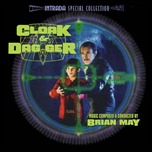
Cloak & Dagger (Brian May, 1984): I haven’t seen it for years, but this was a movie that I especially enjoyed when it first came out. I was 15 years old and already a definite computer/video game nerd by then, so the film connected with me pretty well. What I don’t remember was ever really thinking too much about the music in the movie, particularly since there was no soundtrack released. Intrada released Brian May’s score for the first time earlier this year and I found the music to have a certain familiarity, although not as much as I might have expected from a film that I saw a number of times back when it was reasonably new.
May provided a pretty charming adventure score for the film. It is a fully orchestral score with a somewhat old-fashioned sound. Considering the computer and video game theme to the film, it is actually a bit surprising that the score is so traditional and lacking in electronic elements. The score is dominated by some very active string and piano melodies, with occasional militaristic brass and percussion brought into some of the action sequences, including a pretty great march that appears occasionally during the score and then gets a full performance in the end credits cue. Gentle woodwinds often accompany piano during the more quiet parts of the score.
The score is very energetic and fast paced, although it is somewhat limited in thematic elements. May does introduce a very short primary motif that serves as something of a main theme for the score, but it isn’t one that is especially distinctive and, thus, probably not one that will stick in your mind too much after seeing the film or hearing the album. In fact, this fairly minimalist main theme is probably the reason that I didn’t find the music exceptionally memorable based on multiple viewings of the film. This isn’t necessarily a negative, though, as the music is pleasant to listen to and likely served the film well.
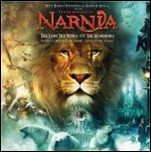

 (Harry Gregson-Williams, 2005): Obviously inspired by the enormous success of the Lord of the Rings films, Walden Media and Disney saw adapting C.S. Lewis’ classic Chronicle of Narnia book series as an obvious opportunity to create a similar, but more family-friendly, franchise. Shrek co-director Andrew Adamson was a somewhat surprising choice to helm the first film in the series. Adamson brought along Shrek composer Harry Gregson-Williams, giving him a welcome opportunity to stretch his talents quite a bit beyond the animation and contemporary action scores for which he was mainly known.
 The musical content is identical on both releases, with the special edition simply offering fancier packaging. I have the special edition because I was able to get it at a decent price, but there is little reason to spend much extra for it. There also were at least two song compilation albums released which were really just “inspired by” the movie.
 (Harry Gregson-Williams, 2008): Composer Harry Gregson-Williams returned to the world of Narnia for Prince Caspian, the second entry in the series. The score maintains stylistic continuity with the first one, including reprising a couple main themes, but it does also take a more action-oriented approach while downplaying some of the more otherworldly elements from the original. The result is a score that is in the same family as the first one, but perhaps a bit more conventional. While less of a creative leap, I also think it is a somewhat more listenable score.
 (Michael Small, 1979): Here is a definite oddity in my collection: a score album from a movie that had no musical score. While it certainly isn’t the only album I have of a rejected score, this one is, I believe, unique since the filmmakers decided to replace the score with nothing at all. They didn’t even go with a song or classical temp score or anything like that. Instead, they decided that the film’s tension would be stronger and more effective without music.
 (Jerry Goldsmith, 1974): Chinatown was pretty high on the list of the most acclaimed films that Jerry Goldsmith ever scored. The score is a perfect fit to the film and a major contributor to its success. This is made all the more amazing by the fact that Goldsmith was brought in as a last minute replacement composer and, reportedly, only had 10 days to compose it.
 (Jerry Goldsmith, 1996): During the 1990s, Jerry Goldsmith frequently took jobs scoring 2nd tier action films. These were usually medium-budget major studio releases with reasonably well-known actors, but they weren’t big budget tentpole releases starting top box-office draws. Goldsmith delivered very competent scores for these films, even often helping to elevate the film’s overall quality, although they didn’t usually count among the composer’s most memorable work. Chain Reaction, which starred Keanu Reeves and Morgan Freeman, was one of the more forgettable of these films and scores.
 (John Barry, 1992): Chaplin was John Barry’s first major film score after his big, Oscar-winning success with Dances With Wolves. While this is a smaller-scale score than this one, it does clearly come from the same era of Barry’s career, when his focus had shifted more towards lushly romantic melodies than big action cues.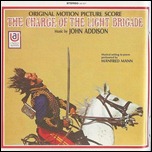
 (John Addison, 1968): This score was included in Film Score Monthly’s “MGM Soundtrack Treasury” boxed set. The film was a remake of a 1936 Errol Flynn movie (with a score by Max Steiner) about the events surrounding England’s involvement in the 19th century Crimean War against Russia.
 Bigbeaks Blog