

Die Hard
Likely due to the limited expectations for the film as well as the prominent use of non-original music, no soundtrack album was released along with the film. Although the sequel scores were released with the films, Michael Kamen’s score remained unavailable (at least officially) until Varese Sarabande finally put it out on a 3000 copy limited edition “CD Club” release in 2002. That release sold out fairly quickly and used copies today fetch prices well in excess of $100. The soundtrack seems to be a pretty obvious candidate for a re-issue, but right now it remains one that is costly and difficult to obtain, if you don’t already have it.
Kamen’s original contributions to the score were dominated by stark, intense themes dominated by deep brass, vivid strings, and some very effective acoustic guitar. The most recognizable component is a brief, guitar motif that is essentially the Die Hard series’ musical signature. This motif is really too short to truly classify as a theme, but it is a distinctive element that is instantly associated with these films.
A particularly interesting element to this score is Kamen’s use of the film’s Christmas time setting. Kamen occasionally integrates sleigh bells or bell choir into the score as well as brief samples of familiar Christmas tunes such as “Winter Wonderland”. These brief excerpts are presented in an almost chillingly menacing way. The use of familiar holiday-associated melodies and instruments presented in this way makes for a very interesting effect. The film memorably ends with the upbeat holiday classic “Let It Snow, Let It Snow, Let It Snow” playing over the end credits and the song also closes the soundtrack CD, although in an instrumental version rather than the traditional version used in the film.
The most prominent and memorable non-original music used in the score is the “Ode to Joy” from Beethoven’s 9th Symphony. Bits of this familiar melody are regularly integrated into the score, essentially serving as a primary theme for the film’s villains. The melody is then presented in full accompanying the key scene where the villains manage to open the safe that they came to the building to rob. The disconnect between this emotionally full and usually joyful music and the temporary triumph of the bad guys is a bold, memorable and remarkably effective musical choice. While “Ode to Joy” is not traditionally associated with the holidays, its use still served to vividly underscore the film’s unusual juxtaposition of festive/joyful elements with violence and peril.
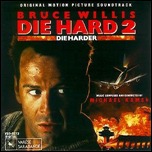
Die Hard 2: Die Harder
Michael Kamen was brought back to score the sequel and provided a score that is contains some similarities to the original, although with a few key differences as well. One of the most obvious differences right from the start is that this score seems a bit more fully orchestral than the original. Even the familiar Die Hard signature motif is generally performed by the orchestra’s violin section this time instead of on acoustic guitar as in the original.
The airport setting provided a more expansive setting, including considerably more outdoor sequences, so the somewhat larger scale of the score is fitting. The first score tended to be dominated by stark, tension-filled cues, and there are similar ones here as well, the new one provides more opportunities for more dynamic, high-octane chase type music as well. The cue “Snowmobiles”, which accompanies an almost James Bond style chase sequence late in the film, is a particularly good example of this side of the score.
Kamen did not repeat the use of “Ode to Joy” or the Christmas carol excerpts from the first film. He does once again incorporate an existing piece into the score, though. This time the piece that he uses is “Finlanda” by Jean Sibelius, which is certainly not as well-known or familiar as the Beethoven piece. A full performance of the piece closes out the soundtrack CD, which was released by Varese Sarabande at the time that the movie came out.


 (John Barry, 1972): Diamonds Are Forever was the 7th film (and the last to star Sean Connery) in Eon Productions’ James Bond series. By this point, the musical style of the series was firmly established by John Barry, who had worked on all of the previous films and was the sole credited composer on all but the first.
 Bigbeaks Blog