
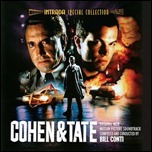
Cohen & Tate (Bill Conti, 1988): Intrada very recently released a CD containing the first ever album release of Bill Conti’s score to this late 80s Roy Scheider thriller. It is a surprisingly dark and aggressive score for Conti and isn’t immediately recognizable as his work. It is an effective score and an interesting look at a different side to a popular composer.
The score is dominated by some very aggressively low piano music, which generally serves as the primary theme for the score. Harsh strings and some very deep brass, particularly French horn, additionally build upon the foreboding atmosphere that is established by the primary piano music. Much of the score is fairly dissonant and non-melodic, instead going for more of a rhythmic approach. There are some exceptions where Conti does introduce more melodic elements, such as a fairly cold, but definitely melodic theme that is particularly clearly established in the cue “Tail Lights”.
The later part of the score includes some pretty intense action music, with percussion joining the deep piano and strings to create some aggressively fast-paced, very rhythmic music. The short cue “It’s Really Them” is one of the first really strong examples of this aspect to the score and this approach is further developed impressively in the cue “Kaboom”. In the end, all of the different elements of the score come together in the fairly impressive “The Last Battle” cue.

The Color Purple
The primary theme to the score is a beautiful melody that seems to be inspired by Georges Delerue. In fact, the theme is perhaps a bit uncomfortably close to Delerue’s main theme from the 1967 film Our Mother’s House. Despite this similarity, it is still an exceptionally nice theme that works extremely well in the film and the score. The theme is initially introduced as primarily a flute melody, but is developed into more fully orchestral versions. Much of the score has a pretty distinctively rural quality to it, particularly emphasized by the occasional use of harmonica.
The score also occasionally introduces some other ethnic elements, most significantly some African rhythms, starting with the cue “High Life/Proud Theme”. Jones and his team are particularly effective at blending some of the score’s melodic themes with these African rhythms in order to retain a cohesiveness to the score. This ethnicity is most impressively featured in the very powerful cue “Celie Shaves Mr./Scarifiaction Ceremony” which underscores one of the film’s most intense sequences.
Songs play a key role in the film as well due to one of the key characters, dubbed by singer Tata Vega, being a singer in a 1930s juke joint. The most important of these is the very distinctive, jazzy song “Miss Celie’s Blues (Sister)” which actually opens the soundtrack album (as the first part of the “Overture” cue) and then is given a complete performance later. Vega also performs the songs “Careless Love”, “The Dirty Dozens” and leads a choir in the lively gospel song “Maybe God Is Trying to Tell You Something”.
Back in 1985, a 2-LP soundtrack album was released that was pressed on rather striking purple vinyl. The same program was eventually released on a 2-CD set that still remains in print and readily available.
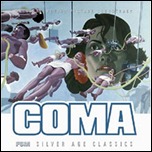
Coma (Jerry Goldsmith, 1978): Jerry Goldsmith’s score for Michael Crichton’s 1978 medical thriller Coma was generally one of the composer’s more dark and challenging scores of that era of his career. The score somewhat straddles the line between the more atonal approach that Goldsmith sometimes took during the 1970s and the more melodic approach that dominated his later scores.
A distinguishing element of this score was that Goldsmith composed it using a limited orchestra, principally featuring piano, strings, and percussion as well as some occasional electronics. Brass is entirely absent from the score. The result is a score that has a sort of compressed, vaguely oppressive tone, reflecting the overall mood of the film itself.
While much of the score is fairly non-melodic and atonal, Goldsmith does provide a melodic, somewhat pop-inspired love theme that is only used very sparingly. The theme is given a full performance in the cue “Cape Cod Weekend (Love Theme from Coma), but is rarely re-visited within the main parts of the score. The expanded soundtrack ends with a song entitled “Sunday’s Moon” which adds lyrics by Goldsmith’s wife Caroline to the theme.
A 35-minute soundtrack album was released on LP at the time of the movie’s release and has been re-issued twice on CD, once by the now-defunct Bay Cities label and also by the Chapter III label, which paired it with Goldsmith’s score to Logan’s Run. Most recently, Film Score Monthly released an expanded, 51 minute (including bonus tracks) program of the score as part of a 2-disc set that also included scores from two other Michael Crichton movies, Westworld and The Carey Treatment. That release is still available.
All of the soundtrack releases have included an additional disco instrumental entitled “Disco Strut”, written by Don Peake. This cue is pretty much exactly what you would expect from a cue by that title and is definitely a product of its era. The soundtracks also include a disco version of Goldsmith’s love theme, which benefits from the strong source melody, but still is rather dated.
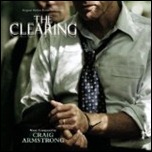
 (Craig Armstrong, 2004): As I know little about the film, it is fairly unlikely that I would have bought this soundtrack myself. It is one of several that I was given by a friend who works at the movie studio and it is a pretty good score. My only previous familiarity with Craig Armstrong was mainly through his projects with Baz Luhrmann, which tended to be pretty song-oriented. It is interesting hearing a more full score.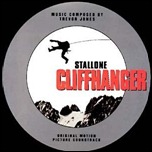
 (Trevor Jones, 1993): Trever Jones’ Cliffhanger is one of my favorite action scores of the early 1990s and it comes from what I think was probably the most purely entertaining action film of Sylvester Stallone’s career. I’ve always found it a bit puzzling that Jones didn’t make a bigger name for himself as an action composer.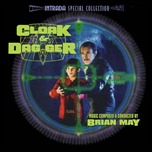
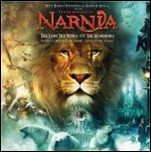

 (Harry Gregson-Williams, 2005): Obviously inspired by the enormous success of the Lord of the Rings films, Walden Media and Disney saw adapting C.S. Lewis’ classic Chronicle of Narnia book series as an obvious opportunity to create a similar, but more family-friendly, franchise. Shrek co-director Andrew Adamson was a somewhat surprising choice to helm the first film in the series. Adamson brought along Shrek composer Harry Gregson-Williams, giving him a welcome opportunity to stretch his talents quite a bit beyond the animation and contemporary action scores for which he was mainly known.
 The musical content is identical on both releases, with the special edition simply offering fancier packaging. I have the special edition because I was able to get it at a decent price, but there is little reason to spend much extra for it. There also were at least two song compilation albums released which were really just “inspired by” the movie.
 (Harry Gregson-Williams, 2008): Composer Harry Gregson-Williams returned to the world of Narnia for Prince Caspian, the second entry in the series. The score maintains stylistic continuity with the first one, including reprising a couple main themes, but it does also take a more action-oriented approach while downplaying some of the more otherworldly elements from the original. The result is a score that is in the same family as the first one, but perhaps a bit more conventional. While less of a creative leap, I also think it is a somewhat more listenable score.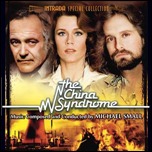
 (Michael Small, 1979): Here is a definite oddity in my collection: a score album from a movie that had no musical score. While it certainly isn’t the only album I have of a rejected score, this one is, I believe, unique since the filmmakers decided to replace the score with nothing at all. They didn’t even go with a song or classical temp score or anything like that. Instead, they decided that the film’s tension would be stronger and more effective without music.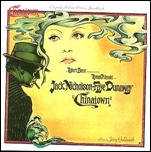
 (Jerry Goldsmith, 1974): Chinatown was pretty high on the list of the most acclaimed films that Jerry Goldsmith ever scored. The score is a perfect fit to the film and a major contributor to its success. This is made all the more amazing by the fact that Goldsmith was brought in as a last minute replacement composer and, reportedly, only had 10 days to compose it.
 (Jerry Goldsmith, 1996): During the 1990s, Jerry Goldsmith frequently took jobs scoring 2nd tier action films. These were usually medium-budget major studio releases with reasonably well-known actors, but they weren’t big budget tentpole releases starting top box-office draws. Goldsmith delivered very competent scores for these films, even often helping to elevate the film’s overall quality, although they didn’t usually count among the composer’s most memorable work. Chain Reaction, which starred Keanu Reeves and Morgan Freeman, was one of the more forgettable of these films and scores.
 (John Barry, 1992): Chaplin was John Barry’s first major film score after his big, Oscar-winning success with Dances With Wolves. While this is a smaller-scale score than this one, it does clearly come from the same era of Barry’s career, when his focus had shifted more towards lushly romantic melodies than big action cues.
 (John Addison, 1968): This score was included in Film Score Monthly’s “MGM Soundtrack Treasury” boxed set. The film was a remake of a 1936 Errol Flynn movie (with a score by Max Steiner) about the events surrounding England’s involvement in the 19th century Crimean War against Russia.
 (Bruce Broughton, 2003): I generally haven’t been including compilation albums in my reviews of my soundtrack collection (although I have many), but I am making an exception in order to call attention to this wonderful collection of cartoon scores composed by Bruce Broughton. The scores are generally complete and not available anywhere else. This is actually a promotional release, but copies can usually be tracked down with some searching. At the time I’m writing this, there is one copy available at a reasonable price from the Amazon link above and
 (Max Steiner, 1942): Casablanca is a pretty likely candidate for being the most truly beloved of American films. I’m sure there are people out there that don’t care for it, but I can’t say that I recall encountering any. The movie was a nearly perfect mix of drama, romance, intrigue, and humor. Max Steiner’s score and Dooley Wilson’s entertaining performances of several classic songs contributed a lot to the film’s success.
 (Jerry Goldsmith, 1980): This film was essentially a low-budget remake of Casablanca set in Peru and starring Charles Bronson in the Bogart role, so it isn’t too surprising that this isn’t a particularly well remembered movie. This was the first collaboration between Jerry Goldsmith and director J. Lee Thompson (their best known project together was King Solomon’s Mines) and the composer delivered a pleasant, if unspectacular, Spanish-styled score for the film.
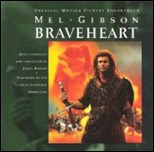
 (James Horner, 1995): 1995 was a pretty big year for James Horner. That year, he scored two highly-acclaimed films, both of which were front-runners at the Academy Awards. While Apollo 13 was the bigger hit at the box office, Braveheart was the Best Picture winner and both the film and score have retained an extremely loyal following, with the soundtrack album remaining one of the top sellers of the genre. Somewhat famously, Horner’s two scores apparently split the Academy’s vote for Best Original Score, resulting in the award going to Luis Bacalov’s Il Postino, instead.
  album that contained some more of Horner’s music as well as various source cues from the film. I’ve always felt that the first release was enough, though, and have never felt the need to pick up the second album.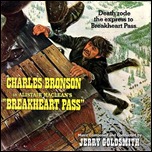
 (Jerry Goldsmith, 1975): In the 1960s and 1970s, Jerry Goldsmith was given many opportunities to score westerns, although his projects generally were less prominent projects than the assignments his contemporaries like Elmer Bernstein and Ennio Morricone tended to get. This Charles Bronson western was one of the latest ones that he worked on, coming out at a time when audience interest in the genre was definitely on the decline.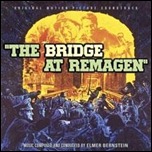
 (Elmer Bernstein, 1969): This World War II adventure score by Elmer Bernstein was released by Film Score Monthly as a Silver Age Classics limited edition, paired on a single disc with Maurice Jarre’s score to the 1964 film The Train. Bernstein’s score only runs for slightly under 30 minutes on the CD, but the liner notes indicates that to be a complete presentation of the music that he wrote for the film.
 (John Powell, 2008): Disney’s 2008 CGI animated feature was not a musical, thus the soundtrack album primarily features the orchestral score by composer John Powell, who has generally done some of his best work in animated features (including Shrek, the Ice Age sequels, Kung Fu Panda, and How to Train Your Dragon). This was his first score for Disney and it is well suited to the film.

 (John Williams and Various artists, 1989): This film featured John Williams first of the three scores (preceding JFK and Nixon) that he composed for director Oliver Stone. Those scores were among the darkest and most somber that Williams composed. This means that they weren’t among the most accessible to listen to separately from the films, but the scores were exceptionally effective within the films. The Born on the Fourth of July score isn’t one that I return to very often, but it is a very impressive, serious composition that should be a part of any serious film music collection.
 (Georges Delerue, 1983): Not too long after Intrada put out their CD release of The Black Stallion, they also put out a disc of Georges Delerue’s score to the film’s sequel. While this score only required a single CD release, it still contains the complete score as heard in the movie as well as the original 1983 album presentation for a total running time of around an hour and 17 minutes.
 Bigbeaks Blog