Soundtrack Collection: Atlantis to Bachelor in Paradise

Atlantis: The Lost Continent

Atlantis: The Lost Continent (Russell Garcia, 1961): Film Score Monthly released this CD of Russell Garcia’s score to George Pal’s science fiction film, which was one of his lesser-known efforts.  The score is paired on the CD with Miklós Rózsa’s score to Pal’s The Power.

The 45 minute, monaural score is melodic and romantic, but with some fairly intense action music as well.  Some of the softer moments are characterized by solo horns and Occasional Mediterranean ethnic elements come into play as well.  Garcia uses the harp quite a bit as well, sometimes to introduce a bit of a mysterious sound, as in the cue entitled “Lost/Hallucinations”, or sometimes for a more romantic sound as in “Harps”.  The score also contains its share of fanfares, even including a track simply titled “Fanfares”.  I particularly like the big, brassy fanfare-like theme that is introduced with the simply-titled cue “Atlantis”.

Atlantis: The Lost Empire

Atlantis: The Lost Empire (James Newton Howard, 2001): This film was a bit of a departure for Disney’s animation team.  It was a widescreen, action adventure film that was closer in spirit to Indiana Jones than to Disney’s usual animated fairy tales.  James Newton Howard came on board to provide a high energy action score for the film.  Heard out of context, I doubt most people would pick this out as a Disney animation score.

The album opens with a pretty generic pop song entitled “Where the Dream Takes You”, which was co-written by Newton-Howard and Diane Warren and performed by Mya.  It isn’t anything overly special, but at least they allowed the film’s score composer write the music for the song, which is incorporated in the score as essentially the film’s love theme.

The film’s main theme is a big, brassy fanfare with wordless choral backing. It is a very catchy and memorable melody and is re-visited pretty regularly throughout the score.  The entire score is very brass and percussion focused, with strings and chorus joining in pretty regularly as well.

Author! Author!

Author, Author (Dave Grusin, Johnny Mandel, 1982): Johnny Mandel initially was hired to score this Al Pacino romantic comedy, but his score was ultimately rejected and replaced with one by Dave Grusin.  Varese Sarabande’s CD Club limited edition release includes both scores on a single CD, with Grusin’s score running about 25 minutes and Mandel’s about 23.  Note that the film included a hit song, “Coming Home To You” by Alan and Marilyn Bergman, that isn’t on the CD.

Grusin’s score has a pop music sound, using mostly electronic instruments, mainly keyboard, although saxophone is also pretty common.  During the main title track, Grusin introduces a primary melody that is repeated regularly throughout the score.  It is a warm, infectious melody, although the repetition is a bit much.    Grusin’s jazz background does shine through occasionally, particularly with the solo saxophone in “Out and About”.  The score has a pretty dated sound, definitely recognizable as a comedy score from the early 80s.  It is a good representative of that kind of score, but probably not to everyone’s taste.

Mandel’s score is orchestral, featuring a main theme that is primary played by solo piano with the string section occasionally joining in.  One fairly quietly romantic theme introduced later in the cue “Reels Five and Six” (the cues for Mandel’s score were not given titles but are instead represented by the reel numbers where they would have fit in the film) features a very nice melody played on a solo guitar. The final track (“Reel Twelve”) opens with a solo violin excerpt from Vivaldi’s “The Four Seasons” before transitioning into an orchestral finale.  The score has a darker quality and isn’t as constantly cheerful in quality as Grusin’s, but also doesn’t sound nearly as dated.  On CD, I think it is the better of the two scores, although I don’t really know which was better suited to the film.

Avalon

Avalon (Randy Newman, 1990): Barry Levinson’s 2nd film in his autobiographical Baltimore trilogy (which also includes Diner and Tin Men) was a film that I absolutely loved.  It is one of those rare films where I became so completely absorbed in the lives of the characters that I hated to leave them when the film came to an end.  Randy Newman’s sensitive, Americana score definitely contributed to the film’s success.

Newman’s score uses a variety of solo instruments to evoke varied moods throughout the score.  It opens with a simple, solo piano presenting the main theme.  Solo violin, trumpet and woodwinds later take on the same melody.  These instruments dominate the entire score, which remains gently melodic throughout.  The use of trumpet solos for some of the score’s most emotional moments is particularly effective.

Newman makes the interesting choice of avoiding ethnic elements in a film about an early 1900s Polish immigrant family with a strong emphasis on their adaptation to life in America.  Newman correctly recognized that the right emphasis should be on the characters’ current home rather than where they had come from.  Americana orchestral music itself certainly is largely an adaptation of European classical music styles, which makes it very well suited to this type of story.
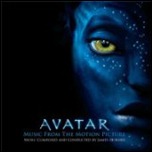
Avatar

Avatar (James Horner, 2009): I’ll state right off that I’m probably one of the very few people left that hasn’t yet gotten around to seeing Avatar.  It isn’t a lack of interest that has kept me from seeing the film, but instead simply that I didn’t find a good opportunity to get out to see the film during its theatrical run and finding a 3 hour+ block to sit down and watch a movie on DVD isn’t exceptionally easy either.  I do expect to try and see the film some time in the fairly near future, so I might need to re-visit this score at a later date.

The expectations for this score were obviously very high considering that the last collaboration between James Cameron and James Horner was Titanic, which set records both for box-office gross and soundtrack sales.  While Avatar was as financially successful a film, the soundtrack wasn’t as big a breakthrough among non-collectors.  

This is the the first time in quite a while that Horner has taken on a full-blown science fiction film and there might be an expectation that the score might resemble his early successes in that genre such as Star Trek II/III, Aliens, and Cocoon, but it really doesn’t resemble those scores much.  This score does seem to be more akin to his other scores from the late 90s and 2000s.

A lot of the music is fairly dark, with some heavy percussion, strings, and low brass along with some choral elements.  The score doesn’t have the ethnic elements that have been common in some of Horner’s more recent scores (particularly Titanic), which is probably to be expected for a movie set on an alien planet.  In their place, he uses some fairly unusual instrument choices and carefully placed vocals to generate a bit more of an exotic sound.  The score does establish a couple distinctive themes, including one primary melody that comes a little bit too close to the primary love theme from Titanic.

Probably in an attempt to duplicate their last success, the album ends with a pop ballad entitled “I See You (Theme from Avatar)”, which is performed by Leona Lewis.  It is based around one of the primary themes from the score, although it is not nearly as memorable as the Celine Dion hit from Titanic.
Read More »

Soundtrack Collection: American President to Angels & Demons

The American President

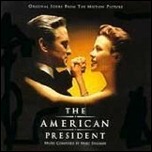
The American President (Marc Shaiman, 1995): The main theme from Rob Reiner’s well-regarded romantic drama is one that many listeners are apt to recognize, even if they don’t know where it came from.  Since the film’s release, it has been pretty frequently used in commercials for other movies and as accompaniment for various sporting events or patriotic presentations.  It is a stirring melody that successfully manages to be simultaneously romantic and patriotic.  The main theme is worked pretty regularly into the rest of the score, which has a romantically melodic quality throughout.  The 7 1/2 minute finale cue, “President Shephard”, is particularly stirring and emotional.
An American Tail

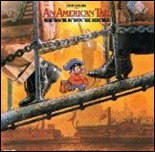
An American Tail (James Horner, 1986): This Don Bluth directed hit was the first animated feature that Steven Spielberg produced.  James Horner wrote the score as well as co-writing the film’s four songs with songwriters Barry Mann and Cynthia Weil.  The story is about Russian immigrant mice in New York in the late 1880s and Horner provides the score (and songs) with an appropriately ethnic sound.  The music tends to be fast paced with lots of focus on violin.  The cue “Give Me Your Tired, Your Poor” has an interesting gospel-style opening featuring a choir performing the famous words inscribed on the Statue of Liberty.
The songs are fun, although not as memorable as what would become typical with animated features in the 1990s.  The duet “Somewhere Out There” is the best known song from the film.  In the movie it is performed by Fievel (the main character) and his sister, in rather charmingly off-key vocals.  James Ingram and Linda Ronstadt performed a pop version of the song, which was actually a pretty big hit at the time, over the end credits.  Familiar voices in the cast included Christopher Plumber and Dom DeLuise, each of whom had one featured number (“Never Say Never” for Plumber and “A Duo” for DeLuise), each of which is a very entertaining showcase for the performer.

An American Tail: Fievel Goes West

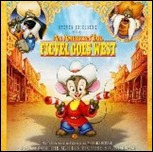
An American Tail: Fievel Goes West (James Horner, 1991): Horner returned to score the sequel to An American Tail.  The film was not very well received (it didn’t help that Universal released it the exact same day that Disney opened Beauty and the Beast), but I think that both film and score tend to be somewhat underrated. 
As the title implies, the sequel is a western and Horner’s musical approach reflects that.  While the main themes from the first film are reprised (particularly early on), much of the score is in a traditional western style, complete with the occasional harmonicas and fast paced string melodies.  The opening overture emphasizes this shift by opening with a reprise of melodies from the first film before transitioning into some of western-style music written for the sequel.  Horner seems a bit more comfortable in this musical style and I think the second film’s score is actually stronger than the first.

The sequel isn’t as much a musical as the first film, but it does include three new songs by Horner and Will Jennings.  Two of the new songs, “Dreams to Dream” and “The Girl You Left Behind”, are performed in the film by Cathy Cavadini, who provides the voice for Fievel’s sister.  Obviously hoping to repeat the big pop hit from the first film, Linda Ronstadt performed a version of “Dreams to Dream” over the end credits and her version opens the CD.  The third new song, “Way Out West” is performed by the whole cast and also is a key new theme in the score.  Early in the soundtrack (and film), Cavadini does sing a short reprise of “Somewhere Out There”, although it is played for laughs as it is quickly interrupted by items being thrown at the character. 

Amistad

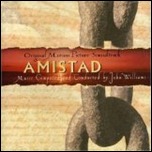
Amistad (John Williams, 1997): The album of Williams’ score to this Spielberg drama about a 19th century slave revolt on-board the titular ship opens and closes with the choral song “Dry Your Tears, Afrika”, which is one of his most striking compositions.  The song opens with rather haunting wordless female vocal humming and then transitions into full choral piece with African-style rhythms and vocals.  The song also has a strong underlying orchestral melody.

The melody from the song remains a primary theme through the remainder of the score.  African rhythm instruments, pipes, and both wordless and African language vocals are used regularly throughout the first half of the score, but with fully orchestral melodies regularly joining in.  This mix of instrumentations is unusual for Williams, but the score is still very recognizably his work. 

The lengthy cue “Middle Passage” scored the darkest sequence in the film, depicting the shipboard life of the slaves and then, finally, their revolt.  This cue opens with some very haunting, mostly non-melodic music and then transitions impressively into a full vocal and orchestral re-statement of “Dry Your Tears, Afrika”, providing a hopeful ending.

The second half of the film is largely a courtroom drama and Williams switches to a more straightforward orchestral style for much of that portion of the film.  This shift is first heard in the cue “Long Road to Justice”, which still uses the same themes from earlier in the film, but in principally a brass rendition, giving it a kind of regal, American-patriotic sound. 

The 1990s were a particularly strong period of creativity for Williams and the Amistad score is one of his most impressive compositions of that era.

Anastasia

Anastasia (David Newman, Lynn Ahrens, Stephen Flaherty, 1997): Trying to compete with Disney’s animated musical hits in the 1990s, 20th Century Fox hired Don Bluth to head up their newly-created animation division.  The first film they created was this highly entertaining musical which featured songs from Lynn Ahrens and Stephen Flaherty, the team responsible for the Broadway musicals “Ragtime”, “Once On This Island”, and (later) “Seussical”.

The songs are Broadway-style and work exceptionally well.  The opening number “A Rumor In St. Petersburg” is an elaborate, full-company (led by Kelsey Grammer and Jonathan Dokuchitz) production number that does a good job of entertainingly establishing the storyline.  Broadway star Liz Callaway was brought in to provide the singing voice for the title character and she is extremely well used in the two ballads “Journey to the Past” and, especially the haunting and stirring “Once Upon a December”.  Jim Cummings does a great job with the fun villain song “In the Dark of the Night”.  Grammer, Dokuchitz, and Callaway work together on the getting-it-done song “Learn to Do It” and, finally, Bernadette Peters leads the ensemble in the final production number, “Paris Holds the Key (To Your Heart)”.

The film’s voice cast included Angela Lansbury, but oddly she isn’t given a full song in the film.  On the album (and in the film) she only briefly sings on a couple of reprises of “Once Upon a December”, both of which are actually incorporated into the score cues.  I can’t help but wonder if she had a song that ended up on the cutting room floor as it seems strange that Lansbury would be hired for a musical but not given a song, particularly just a few years after Beauty and the Beast.

The album also includes the pop song (still written by Ahrens and Flaherty) “In the Beginning” performed by Donna Lewis and Richard Marx which plays over the end credits.  There are also fairly bad pop versions of “Journey to the Past” performed by Aaliyah and “Once Upon a December” performed by Deana Carter.  Both are extremely inferior to the Liz Callaway performances.  Finally, perhaps in an attempt to be multicultural, the last track on the CD is a Spanish version of “Journey to the Past” performed by Thalía.

The orchestral score was composed by David Newman and receives a fairly generous (for an animated musical) 22 minutes on the soundtrack.  Newman does incorporate Flaherty’s melodies into the score, but also provides a considerable amount of original music of his own.  The score has an elegant style that is in-line with the Broadway origins of the song score.  The score has lots of brass, percussion, and strings as well as occasional choral music.   The most dramatic and impressive of the score cues is the 6 minute “Prologue”, which underscored the opening sequence of the film.  The rest of the score builds off of the themes established there and continues to be very good, but that opening sequence gave Newman the meatiest sequence to score.

Angela's Ashes

Angela’s Ashes (John Williams, 1999): Alan Parker’s film adaptation of Frank McCourt’s well-regarded memoirs of his childhood in Ireland in the 1930s was one of the most bleak films to receive a John Williams score.  Williams’ score is melodic and not excessively downbeat and, in fact, played a major role in lightening the events in the film enough to make it a more watchable experience.

The score has a classical sound, with lots of strings and frequent piano and violin solos.  The soundtrack opens with “Theme from Angela’s Ashes” which, as the title suggests, introduces the main theme from the film.  The cue starts with a solo piano presentation of the theme which is later joined by full orchestra.  During the rest of the score, the main theme is most frequently presented via solo piano.

Starting with “The Land of Limerick”, Williams introduces some very effective solo harp to the score.  Considering the fairly strong ethnic and period elements to the film itself, it is surprising that this is really the closest thing to a ethnic color in the score.  Williams certainly doesn’t even come close to trying to create an ethnic connection with the music like he did with Far and Away, the last time he had done a film centered around Irish culture.

The American release of the soundtrack to the film contains a considerable amount of narration from the film overlaying the music.  There are very few score cues on the CD that do not contain at least some narration and it really can be pretty distracting.  Fortunately, the UK release of the soundtrack does not contain any of the narration and is fairly easy to obtain.  The Amazon.com link above is for this import version.

Angels & Demons

Angels & Demons (Hans Zimmer, 2009): The score for the sequel to The Da Vinci Code does re-visit some of the themes from the previous film, but is stylistically quite a bit different from the previous.  While the first score was mostly fully orchestral, this one contains a lot more electronics probably to emphasize the more technology-based focus of the story (at the time I’m writing this, I haven’t had a chance to see the film although I have read the book it was based on). 

Typically for Zimmer’s work on a thriller, the score emphasizes base and percussion quite a bit creating a fairly edgy sound.  The score makes extensive use of choral music as well, sometimes to pretty impressive effect as in the opening cue “160 BPM”.  In line with the religious themes of the story, the music sometimes has a classically spiritual style to it as well, such as in parts of the lengthy cue “Air”.  Solo violin is used frequently in the score and Joshua Bell is featured as the soloist. 

Soundtrack Collection (Alexander, Alice & Aliens)

Alexander

Alexander (Vangelis, 2004): I’m not really much of a fan of Vangelis and haven’t seen the film (I’m not much of a fan of director Oliver Stone either), so I’m not really sure why I ended up buying this soundtrack.  It is possible I received it as a gift or it might have been really inexpensive.  What is surprising to me, though, is that I like quite a bit of this score, although it descends a bit too far into weirdness as it goes on.
This is an extremely active, fast-paced score with lots of brass and percussion.  Choral elements, including some that more closely resemble chanting, come into play pretty frequently as well.   In particular, “The Drums of Guagamela” is a thrilling cue that really does get the blood pumping.  Other parts of the score have a haunting, medieval style, including the use of some more archaic instrumentation.  While there are a few calmer cues, particularly “One Morning at Pella” (which comes right after “The Drums of Guagamela” on the soundtrack), for the most part this isn’t a score to listen to when you want to relax.

Alice in Wonderland (Disney animated)

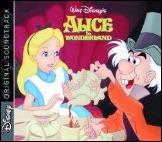
Alice In Wonderland (Oliver Wallace, 1951): The soundtrack from Disney’s classic soundtrack series for Disney’s animated feature has a bit of an unusual format. The score by Oliver Wallace is interwoven fairly tightly with quite a few songs that were written by a variety of composers and lyricists.  Because of this, the songs are not generally given separate cues on the album.  Instead, the cues are organized logically based on their position in the film, with score segueing seamlessly into songs and vice versa.  Due to the available source materials, quite a few parts of the soundtrack include occasional sound effects as well.
Lewis Carroll’s unusual writing style provides quite a bit of opportunity for clever songs and this film has more than most of the other Disney animated features of the era.  A few of the songs from the film are very well known, particularly “All In the Golden Afternoon”, “The Unbirthday Song”, and the title song.  These songs pretty frequently appear in Disney compilations and are pretty instantly recognizable.  The less-familiar songs are effective as well and this is an entertaining album to listen to.

Wallace’s score fits very well with the songs and does a good job of tying everything together.  While the film itself tends to take silliness to a higher level than most other Disney features, Wallace doesn’t really use a lot of silly-sounding music, instead allowing a somewhat more straightforward score provide musical support.

Alice in Wonderland (2010)

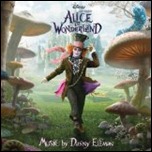
Alice in Wonderland (Danny Elfman, 2010): At the time that I am writing this, I have not yet had a chance to see Tim Burton’s recent live-action adaptation of Alice in Wonderland.  I doubt I will get a chance to see it now before it comes out on video, but I expect I will make an effort to quickly see it once it it does.  I’m a huge fan of Danny Elfman and particularly his score for Burton’s films, so I bought this soundtrack album as soon as it was available.

The score is really great.  It is charming and melodic with a style that is pretty unmistakably Elfman’s.  The album opens with “Alice’s Theme”, a charmingly bombastic original song written by Elfman and performed with an operatic female vocal.  The song is kind of strange and unworldly, which seems to me to be a pretty good fit to an Alice in Wonderland theme.  The song’s melody (and occasionally some of the vocals) is used throughout the score.  Several cues on the soundtrack are directly billed as reprises to the song.

Musically, Elfman’s score is one of the brighter ones that he has done for a Burton project, but still has some pretty dark edges to it.  The score is very string heavy, but with some liberal use of brass and percussion to emphasize the more action-oriented passages.  Elfman brings in a wordless choir at a number of points, which helps to establish the other-worldly quality to the music. “Alice’s Theme” is the one really strongly established and repeated theme, although the entire score is fairly melodic.

Read More »

Soundtrack Collection (Ace Eli through Aladdin)

Ace Eli and the Rodger of the Skies

Ace Eli and Rodger of the Skies (Jerry Goldsmith, 1973): This fairly obscure Goldsmith score was released by Film Score Monthly, paired on a CD with Goldsmith’s music for the TV series “Room 222”.  The score is from a film that is largely forgotten and unavailable on video (and was badly panned during its release), although it is somewhat notable for the “Story by” credit, which was Steven Spielberg’s first for a theatrical movie.

The score is highly melodic with an old fashioned Americana sound.  The main “Ace Eli Theme” is presented alone with a fast paced, ragtime style, but the theme is incorporated into other parts of the score with some other varied styles, including some more purely orchestral versions.  Several tracks have a carnival-atmosphere style while others have a bit of a country feel. There are some quieter, more gentle melodies as well.  The tracks “No Pony” and “Night Talk” are particularly good examples of Goldsmith’s more sensitive side.

Probably due to the obscurity of the score, and extensive re-cutting and re-scoring done before the film’s release, the album was put together from some pretty widely varied source elements.  Parts of the score were only available in monaural elements, so the album shifts back and forth between stereo and mono.  A few score cuts are presented as bonus tracks because the only available sources were either incomplete or damaged.

A fairly generic pop/country song entitled “Who’s for Complainin’?” is also included as a bonus track along with an instrumental version that was used as a bit of a score.  This song is written and performed by Jim Grady and the liner notes indicate that it replaced Goldsmith’s main and end title music.

David Raksin at MGM

Across the Wide Missouri (David Raksin with Al Sendrey, 1951): This score was released by Film Score Monthly as part of a 5-disc boxed set entitled “David Raksin at MGM”, which features 13 of Raksin’s scores.  Disc 1 contains a first-time release of the complete score that Raksin wrote for this western as well as bonus tracks containing revisions and additional music from studio orchestrator Al Sendrey to accommodate some significant re-editing of the film.

The score is a rousing western score with fast paced action cues as well as a folk-music style approach for the more melodramatic portions.  Raksin incorporates the classic folk songs “Shenandoah” and “Skip To My Lou” in various parts of the score and also composed his own original main themes that stylistically resemble folk melodies.  An alternate version of the main title cue includes vocals on “Shenandoah”, but otherwise the songs are strictly presented as instrumentals.

The Adventures of Baron Munchausen

The Adventures of Baron Munchausen (Michael Kamen, 1988): This film was among Terry Gilliam’s most entertaining and accessible films, although it ended up as a victim of studio politics (it was a pet project of a departed studio chief) which kept it from ever getting wide release or much in the way of financial success.

Michael Kamen delivers a very lively, varied and often amusing score that was one of the best of his career.  The globetrotting nature of the score allows for a good variety of themes and styles ranging from the vaguely Middle Eastern style in “The Sultan” to the action music for the various war sections.  One of the strangest tracks is “On the Moon” which transitions from other-worldly music that sounds like it comes out of a science fiction movie into basically nursery rhyme music, some of which features a kazoo soloist. A major highlight is the very impressive waltz featured in “Vulcan and Venus”, an original Kamen composition for the film that sounds like it could have been by Strauss.

The first half of “The Sultan” is “The Torturer’s Apprentice”, an opera that is performed during early scenes of the film.  This humorous song has lyrics by Eric Idle (set to Kamen’s music) and sounds a lot like something out of Monty Python.

The Adventures of the Great Mouse Detective

The Adventures of the Great Mouse Detective (Henry Mancini, 1986): After a series of disappointments that culminated in the major failure of The Black Cauldron, this film is widely considered to be the start of the revival of Disney animation eventually leading to their enormous successes in the 1990s.  The animation division was in such bad shape in 1986 that Disney actually licensed the soundtrack rights to The Adventures of the Great Mouse Detective out to Varese Sarabande instead of releasing it through Walt Disney Records.  This is despite the fact that the movie’s score was composed by no less than Henry Mancini.

I admit that I’m not a fan of the film, which I find fairly tedious, but Mancini’s music is great fun.  This was Mancini’s only contribution to a Disney animated feature, which is a bit of a shame since the melodic and lively style that Mancini is best known for is an excellent fit.  The main title track introduces a very catchy and memorable main theme that is a central component of the rest of the score.  Another major highlight of the score is “Big Ben Chase”, the very exciting action/chase music Mancini provided for the film’s finale.

Like most Disney animated films, this one does include a few songs.  “The World’s Greatest Criminal Mind” and “Goodbye So Soon” are both sung by Vincent Price, who provided the voice of the film’s villain.  The songs are generally as much fun as you would expect from the combination of Vincent Price and Henry Mancini.  The other song from the film is “Let Me Be Good To You”, a catchy saloon-style song which is performed by Melissa Manchester.  For some reason, none of the songs from the film have typically been included in Disney music compilations or shown up in theme park shows, so they will likely be unfamiliar to most fans unless they know the film or the soundtrack well.

Read More »

Week in Review 11/24/08: Pre-holiday Work Rush, Bolt, and Farrell’s

The work week last week was pretty busy and stressful due to the rush to get various projects finished before the Thanksgiving holiday.  The team that I lead is most actively involved with projects during the early parts of the quality assurance process.  Since many teams really want their projects to complete over the first couple days of this week, the work piled on us quite a bit last week.  Our office is closed for Thanksgiving on Thursday and Friday, while the day before Thanksgiving is traditionally a 1/2 day with most staff wrapping up around 1pm or so.  That really only gives two full work days for this week.

Fortunately, the work load was such that I was really busy (and a bit stressed) while at the office last week, but it didn’t result in overly late schedules at the office or anything much in the way of weekend work.  I was typically pretty tired when I got home from work last week, but I still made it home in time to have dinner and help get my son off to bed each night.  I don’t really mind being very busy at work in cases like this where it doesn’t really interfere too much with my own time.

While I was a little concerned late last week that I would have to put in some time for work over the weekend, that turned out not to be the case allowing us to have quite a bit of time for family activities.  On Saturday afternoon, we took our son to see Bolt, Disney’s new animated feature which opened on Friday.  We have been pretty conservative when it comes to taking our son to the movies and this was only the third that he had seen in a theater (the two previous were Horton Hears a Who and a revival showing of The Muppet Movie).  So far, we have been very proud of his behavior at movies.  He did get a little fidgety around the hour mark, but we were able to settle him down very quickly.  He stayed very quiet throughout the movie, having taken very seriously our repeated reminders beforehand that a movie theater is a quiet place.  He seemed to enjoy the movie, although his attention did wander a little bit  The movie was targeted perhaps a bit older than we had expected.

I enjoyed the movie a lot, finding it to be fun, charming, and very funny.  The action sequences were surprisingly good for this kind of animated film as well.  I thought the voice cast was well selected and the character designs were appealing.  The film had some genuine heart as well, with the character of Mittens the cat being particularly effective in this regard.  On the downside, though, the film did have a pretty conventional look and style to it and the story line was almost entirely predictable.  My reaction was that this was a very good film, but not a particularly inventive one.  The end result was a fun movie, but one that is on a somewhat lower tier among Disney’s animated films.

Like The Emperor’s New Groove a few years ago, I think that Bolt is going to remain a film that I enjoy and admire, but where I also can’t help but wonder what might have been.  Both films evolved from projects that seemed much more ambitious than the final versions, but were halted when Disney management felt that they weren’t coming together in a commercially viable way.  In the case of Bolt, the film evolved from American Dog, which was to be director Chris Sanders’ follow up to Lilo and Stitch, which I believe to be Disney’s best, and most creative, animated feature since Beauty and the Beast.  Sanders was ultimately fired from the project and is now making films for Dreamworks.  As much as I enjoyed the final version of Bolt, I can’t help wonder if this fairly conventional film could have been something much more.

Shifting topics again (yes, these "week in review" posts can’t help being a bit rambling), yesterday’s main activity was a somewhat more intimate continuation of our celebration of our son Andy’s birthday.  For the big party last weekend on his actual birthday, we had to kind of go against his wishes in our choice of venue.  For his last two birthdays, we had taken him to Farrell’s Ice Cream Parlour for dinner/dessert with a few of our adult friends.  He remembered last year’s party and really wanted to go back there again this year.  That isn’t really the best venue for a party with a large group of pre-schoolers, so we ended up promising him that we would take him to Farrell’s the following week instead.

The Farrell’s chain is one that I remember well from my childhood.  They have a very boisterous, celebratory atmosphere, with sirens and a big drum used to regularly announce birthdays and other special occasions as well as to herald the delivery of such large and elaborate ice cream concoctions as "The Zoo" or the "Pig Trough".  The chain all but disappeared about 15-20 years ago, but a new set of owners are now trying to revive it.  One of the only three current locations is up in Santa Clarita, only about 20 miles from our house (the other two are in Hawaii).  The Santa Clarita location is inside of Mountasia Fun Center, an amusement facility featuring various video and carnival games as well as miniature golf, batting cages, go-karts, and other similar items. 

Yesterday afternoon, we drove up there around mid-afternoon and spent an hour and half or so playing some of the various games while waiting for a few friends to arrive.  They have a small merry-go-round (basically one of the miniature coin-operated type) which Andy especially enjoys and was, in fact, one of his main reasons for wanting to go back there.  He spent a lot of time playing that, while my wife and I took turns wandering around playing some of the various carnival and ticket-vending games.  Andy did take a bit of an interest in a couple of the other games this time, particularly enjoying a basketball game (it was cool that that they had a child-sized one in addition to the full-sized adult game) as well as a race-car video game.

After our friends arrived, we went into Farrell’s for dinner and ice cream.  My wife and I both had pizza slices for dinner, which were pretty greasy, but still not too bad.  I was particularly surprised by how generous they were with the toppings.  They, of course, have a good variety of ice cream sundaes available for dessert.  I selected one called the "Hot Caramel Nutty Nutty", which pretty much is what it sounds like: vanilla ice cream covered in hot caramel with lots of pecans and Spanish peanuts.  My wife had an Oreo sundae and Andy had the kid’s "clown sundae", which was a scoop of ice cream with chocolate sauce, whipped cream and sprinkles and then a sugar cone placed on top such that it looks like a clown’s hat.

It was a fun evening that provided a chance to spend some time with a few good friends as well as to enjoy some family time.  It made for a good supplement to the bigger, more chaotic party of the week before.

Star Wars: My Declining Interest

Last weekend, a new Star Wars movie opened in theaters and I honestly was rather startled when I realized that I don’t particularly want to see it.  Right now, my thought is that I might get around to watching it once it comes out on DVD, although even then I’m not entirely sure.

The new movie, Star Wars: The Clone Wars is an animated feature that serves as essentially the premiere episode of an upcoming series of the same name that will be airing starting this fall on Cartoon Network.  The idea behind the series is to fill in the details of the titular war, which was initially referenced in passing during the original Star Wars way back in 1977.  The war became a key story element in the much more recent prequel movies, but most of the actual war mainly took place off-screen between the events of Attack of the Clones and Revenge of the Sith.

Like a large portion of my generation, I basically grew up with Star Wars, seeing the original film during its first run (although I didn’t really take to it until a second viewing during the reissue 2 years later).  The release of The Empire Strikes Back and especially Return of the Jedi were then huge events during my childhood.  Collecting toys and other memorabilia related to the series was a big thing, with my sister and I even maintaining our "Star Wars wall" in the basement, which was covered in news clippings and other paper goods related to the movies.  Growing up, I suspect I would have found it impossible to imagine not going to see a new Star Wars film opening weekend, much less deciding to forgo seeing it at all in the theater.

When I first heard that George Lucas was planning on returning to the Star Wars universe via television projects (both this upcoming animated series as well as a planned live action series that would bridge the gap between the two trilogies), my reaction was cautious interest and an expectation that I would probably at least check them out.  The news earlier this year that the animated series would be kicked off with a feature film also left me with the impression that I would probably end up going to see it, even despite the fact that my movie-going has been curtailed quite a bit since the birth of my son.

My enthusiasm quickly started to wane once the first visuals from the movie and series started to come out and then pretty much dropped like a stone once I saw the trailers.  Quite simply, I immensely dislike the visual style that is used for the animation.  For some reason, they seem to have gone for something vaguely resembling the Japanese-style of animation, which I’ve never really cared for all that much and which seems hugely wrong for Star Wars.  I think one of the things that has always been appealing about the movies was that, despite the otherworldly setting, the whole Star Wars universe had a basically realistic look to it.  Even at its most alien, the setting always seemed like it was in places that could really exist.  I didn’t get that feeling at all from the look of this animation, though, which instead seems exotic and excessively stylized.

Of course, I admit that this is kind of judging the book by its cover and that it is completely possible that the visual style is something that I could adjust to.  That brings me to the second problem, which is that I generally have a hard time mustering much enthusiasm for this particular aspect of the Star Wars extended storyline.  I’m not one of those that especially disliked the prequel trilogy, but I also wasn’t particularly excited by them either.  I enjoyed all three films (especially Revenge of the Sith), but have not had much interest in revisiting them.  I have seen each of the films of the original trilogy more times than all of my viewing of the prequel films combined.  I haven’t really taken any interest at all in the related merchandise (other than the soundtrack CDs) or the various novels set during that part of the story.  While the films were fun, I just don’t find the characterizations or situations all that compelling.

Related to my preference for the parts of the story surrounding the original trilogy, I will say that I haven’t completely lost interest in all things Star Wars.  While I have little interest in Star Wars: The Clone Wars, I am somewhat interested in the upcoming Star Wars: The Force Unleashed video game, which is set during the time between the two trilogies.  Similarly, I am at least somewhat interested in the announced live-action TV series that will also take place during that same time period.  On a somewhat broader subject, I do look forward to the time in the next couple years when my son will be old enough to introduce him to the films, although I’m definitely more excited to share the original trilogy with him than the prequels.  I do know with some certainty that I’m going to encourage him strongly to watch the movies in the order they were released.

I’m really pretty torn when it comes to my overall feelings about Star Wars at this time.  While I still have a definite affection for it and certainly still admire the creativity and overall breadth of George Lucas’ creation, I also can’t help but feel like something that I once found extremely special has been diluted by an excess of mediocre product.  On the other hand, I also can’t help but recognize that it might be just as much a reflection of my own aging and changing tastes and priorities too.  I was 13-years-old when Return of the Jedi was released and I’m sure my impressions of all the films are inevitably colored by my stage in life when I saw them.  Had I been an adult when the original trilogy came out, I’m sure my views on those films would have been somewhat different as well.

Even taking into consideration that my views on the films are filtered through childhood nostalgia, I do still think the films of the original trilogy were simply better movies.  The original Star Wars (I’ve never been able to bring myself to call it A New Hope…) had some pretty bad acting and goofy dialog, but it also had a very tight, self-contained story and the big advantage of being an introduction to something truly new and exciting.  With The Empire Strikes Back and Return of the Jedi, George Lucas wisely brought in much more skilled screenwriters (Leigh Brackett and Lawrence Kasdan) to flesh out his stories and also handed the projects off to more technically-skilled directors.  I really think Lucas is much more effective when he takes a role of creative oversight while letting others handle the details.

Critics of the recent Star Wars projects often bring up the idea that George Lucas should be working on telling other stories, including possibly the "small films" that he has sometimes talked about wanting to do.  I admit that I’m now finding that I am wondering if Star Wars might be the one and only great creative concept that Lucas really has.  Sure, he has done a few other projects that have had some success.  The Indiana Jones films are the most obvious, although I do tend to think that a lot more of the credit for the success of that series really should likely go to Steven Spielberg than to Lucas.  American Graffiti, which was Lucas’ one big hit prior to Star Wars is his one other pretty much unquestionable personal success, but it was a very early work that is also pretty clearly autobiographical in nature.  I’m not really sure how likely he is to have another story of that kind in him, particularly at this late stage of his career.

Regardless of what Lucas does going forward, I do think his place in film history is pretty secure.  Weaknesses aside, the Star Wars saga is a pretty remarkable accomplishment that really has been tremendously influential and is also likely to ultimately survive the test of time, at least to some extent.  His companies have also been responsible for a great deal of innovation in film, including significant advances in special effects, sound, digital editing, computer graphics (a lot of people don’t realize that Pixar was originally a division of Lucasfilm), and digital photography.  Even as I think he may be overextending Star Wars itself, I can’t see anything he does ever erasing or even substantially diminishing those accomplishments.

As a concluding note, I suppose my commentary in this post has been kind of all over the place, but it really is a reflection of very conflicted feelings.  The original motivation to post this was really the fact that I wanted to want to see the new film, but I just don’t.  In many ways, Star Wars has been an important cultural component of a large portion of my life.  I can’t help looking at my fading interest with a bit of wistful sadness.

The X-Files: I Want To Believe – Review with Spoilers

As a pretty big fan of The X-Files (I even went to a convention once) back when it was on TV, I was definitely pleased when the news came out last year that a new feature film would be coming out this year. Certainly, my enthusiasm was particularly strong thanks to the fact that stars David Duchovny and Gillian Anderson would both be returning and that series creator Chris Carter would be writing and directing. The resultant film is surprisingly modest, but I also found it to be a spooky and compelling thriller that felt true to the characters and effectively reflected the tone of the series.

With it being 6 years since the series ended (and 10 years since the last feature film), Carter and his co-writer Frank Spotnitz (also a regular contributor to the series), wisely decided to go with a story that very easily stands on its own without substantially involving the complex, and sometimes kind of convoluted, conspiracy mythology that ended up generally dominating the later seasons of the series. The result actually has more of the look and feel of an episode from one of the earliest seasons, back when the main focus was on stand-alone plots about a crime with, often somewhat ambiguous, supernatural overtones. While I did enjoy the conspiracy aspects of the series, if nothing else for its pure complexity, I tended to prefer the more standalone episodes. Because of that, this movie largely fit with what I generally liked best about the series. I can understand pretty easily, though, why this film could feel disappointing to fans that preferred the conspiracy stories or who were hoping for a feature film that had grander ambitions.

It has been pretty widely reported that 20th Century Fox would only green-light another "X-Files" feature if Carter agreed to keep it to a very low-budget. Reportedly, the film ended up costing around $30 million, which is amazingly low for a major studio feature today, particularly one built around a known franchise. Fortunately, they came up with a story that fit the budget instead of trying to cut corners. The film is very dialog-driven and does not feature large special effects sequences or big set pieces. The film builds a fair amount of tension, and is even downright scary at times, and that is largely accomplished via fairly old-fashioned filmmaking techniques, including frequently relying on the viewer’s imagination to fill in what isn’t shown directly.  Score composer Mark Snow (who also scored the entire TV series and the previous film) again contributes greatly to the tension and overall mood of the film.

The scale of the film is small enough that I could see a pretty good argument being made that perhaps they should have done this as a TV movie instead of a theatrical release. They did largely ignore the conventional wisdom that a feature film requires a story that is much grander and larger in scope than the typical TV episodes. The longer running time of the film does provide room for more story development at a more leisurely pace. I suspect that will may find the film a bit slow as it doesn’t have the rapid cutting and frequent action sequences that are typical of most summer thrillers. The pacing of this film is actually quite a bit slower even in comparison to the first "X-Files" film.  The film does also benefit from some effective use of the full wide-screen frame, particularly during a few key sequences set in snow-covered fields as well as during one very well-shot foot chase.  I also think that the somewhat complex and dialog-driven nature of the movie was well served from the generally stronger focus given to a movie in a theater than with the usual distractions of a TV viewing.

Read More »

The Muppet Movie at Arclight Sherman Oaks

The Arclight Theaters in Sherman Oaks and Hollywood pretty regularly run screenings of older movies.  Many of those screenings are done in coordination with the American Film Institute (AFI) as part of their various top-100 lists.  On Monday evening, the theater in Sherman Oaks held a showing of The Muppet Movie.

Having grown up as a fan of the Muppets and with very fond memories of the movie, my wife and I both were very enthusiastic about this opportunity to take our 4-year-old son to see the film on the big screen.  We heard about this screening only a couple days after our son had seen (and liked) the Muppetvision 3D movie at Disney’s California Adventure for the first time, so we felt it was likely that he would be reasonably receptive to the movie.

I suspect that anyone that is actually opening a blog post about this 29-year-old movie has probably already seen it, so I’m not going to spend much time "reviewing" the film.  I think it is likely that even most big fans of the movie probably haven’t seen it for quite some time.  Before Monday’s showing, the last time I saw the movie was probably around the time the DVD came out, which was likely close to a decade ago.  My wife indicated that she didn’t think she had seen it since she saw it as a kid during its original theatrical release. 

With the passage of time, we both still had a lot of nostalgia for the film, but we had kind of forgotten how good a movie it really is on its own merits.  Much of the dialog has a very genuine and rather intelligent wit to it.  As was typical of the Muppets, there is a lot of humor that is directed very squarely at the adults in the audience.  Jim Henson and his team were exceptionally adept at accomplishing this while still keeping the movie completely kid-friendly.  The movie does have its fair share of sight gags as well, although they aren’t as dominant as in the later Muppet projects.  A good comedy is always better with an enthusiastic audience and that was definitely the case at this showing.   Seeing this movie with an audience of fans was really a lot of fun.

One aspect that I hadn’t forgotten (as much thanks to the soundtrack CD as anything) is how good Paul Williams’ songs for the film are.  The most famous is "The Rainbow Connection" (its inclusion in the AFI’s Top-100 Movie Songs list was the reason for the screening) and it really is a wonderful song, but the others are fun too.  I particularly get a huge kick of out Frank Oz’s extremely tortured rendition (as Miss Piggy) of the big romantic ballad "Never Before, Never Again".  The exaggerated vocals combined with the visuals of Kermit and Miss Piggy in way over-the-top parodies of classic romantic movie scenes are really quite hilarious and received an extremely big reaction from the audience.

I hadn’t remembered that the film was as low-budget an effort as it was.  The movie wasn’t a major studio release and, at this showing, there was actually a bit of laughter at the obscure "Associated Film Distributers" logo that opened the movie.  While the movie isn’t as slick as the later efforts (particularly the big-budget Muppet Christmas Carol and Muppet Treasure Island that were made for Disney), the puppetry definitely still holds up.  I remember that the scenes of Kermit riding a bicycle got a lot of attention back in 1979 and those scenes actually do still hold up.  Of course, even with the low budget, the film did attract an extremely impressive group of celebrity cameos, including James Coburn, Dom DeLuise, Steve Martin, Telly Savalas, Elliot Gould, Madeline Kahn, Mel Brooks, Cloris Leachman, Edgar Bergen (who died shortly afterwards — the film is dedicated to him), Bob Hope, Carol Kane, Milton Berle, Richard Pryor, and Orson Welles.  The movie came out during the run of "The Muppet Show", which attracted a similarly impressive list of guest stars despite being a non-network series.  That says a great deal about how appealing the Muppet characters really were.

I was a bit surprised that there were fewer kids in the audience for this show than I thought there would be.  While I did expect that the movie would be an especially big nostalgic draw for those in the same general age range as my wife and me, I also figured that a pretty large percentage of those attending would be parents that were taking their own kids to see it.  We certainly weren’t the only family there with a small child, but we did seem to be in the minority.  Fortunately, our son was very well-behaved the whole time.  Beforehand, we had emphasized very strongly that he had to stay quiet during the movie and he took that very much to heart.  In fact, we had a bit of a problem with him repeatedly reminding us of "no talking at the movie" when we tried to engage in conversation before the movie started.

This was only our son’s 2nd trip to the movies (the first was "Horton Hears a Who" a couple months ago) as my wife and I both felt strongly about waiting until we felt he was mature enough to behave appropriately in a theater.  While he was very well behaved, I do have some uncertainty about is reaction to the movie.  He certainly did seem attentive to the screen the whole time (other than occasionally peeking back at the projection booth) and he never asked to leave.  On the other hand, the movie doesn’t seem to have made much of an impression.  Our son tends to talk pretty non-stop about activities that really excite him, but he has had very little to say about the movie.  I certainly don’t think it was a bad experience for him or anything, but this is a pretty dialog-intensive movie that is probably targeted at somewhat older kids.

One of the major features of the Arclight theater is that all shows are strictly reserved seating instead of the more common general admission seating that you find at most movie theaters.  When I ordered our tickets, I think they had been on-sale for just a couple days, but seat availability was already becoming pretty limited.  I was able to find us three seats together about 2/3 of the way back, although pretty far over to the side.  Based on this, we were expecting a sold-out show, which definitely turned out to be correct. The demand for the movie actually turned out to be so high that they ended up shifting the screening into a larger auditorium than originally intended. 

This change did cause about a 15-minute delay in the start time since the change of auditoriums messed up the reserved seating a bit.  We picked up the tickets at the box-office about 30 minutes before the show and I later realized that the seats printed on it were different than the ones we had originally ordered.   They were in roughly the same spot, just on the left side of the theater instead of the right.  We later ran into a bit of an argument when another couple showed up believing they had the same seats (I’m guessing they had a "print-at-home" ticket).  An usher did try to get us to shift to the other seats, but I was hesitant to end up in different seat numbers than the ones printed on our tickets, just in case someone else showed up with a claim on those seats.  I was also concerned that there were 3 of us, but the other party with a claim on the seats was just 2 people.  Working with the theater employees, the other couple ended up moving to the other set of seats and we stayed put.  It was obvious that there were quite a few similar situations around the theater and I give the employees credit for managing to sort it all out fairly quickly and without major issues.

This is a 29-year-old, relatively low-budget film and that was reflected somewhat in the presentation.  The print, which I suspect may have dated back to the original run, was kind of faded, but otherwise in pretty good condition.  The sound definitely was a lot harsher and lower-fidelity than we are generally used to today as well.  With it being just a single screening, they showed the movie using reels rather than transferring it to platters.  The projectionist did miss one reel change slightly (we saw a bit of the leader), but otherwise they did a good job with the projection.  I even noticed the projectionist adjusting the framing and focus on a few occasions during the course of the movie, something that is all too rare at theaters today.

I tend to think the availability of classic movie screenings like this is one of the best parts of living in the Los Angeles area.  I thoroughly enjoyed seeing this old-favorite on the big screen again and was glad to have had the chance to share it with my family.

Ranking the Pixar Movies

I read a couple Disney-fan discussion boards and every time a new Pixar movie comes out, there is inevitably a thread or two in which everyone ranks all of their films to date.  This is probably a result of the relatively few films they have made so far (9) and the game will likely start to die out as the number of titles makes it increasingly difficult.  For now, I figured I’ll play along, but do it as a blog entry where I can be more easily verbose with explanations.

I do see a distinction between a list of "favorites" and "best" when discussing works of art or entertainment and this list is going to be favorites.  What that means is that the order is based more on how much I enjoy the movies and am apt to return to them.  Essentially, this is based more on the "fun" factor than on the full collection of merits.  Finally, the rankings can’t help but be a bit arbitrary and I openly admit that the order could easily change, especially based on how recently I’ve seen each movie.

1. Monsters, Inc.  – Of all the Pixar films, this is the one that I am most apt to stop and watch if I come across it airing on TV or cable.  The film succeeds due to great casting, humor that hits the mark with an amazing consistency, truly exciting action sequences, and a story that takes place in a fully-realized and unique world of its own.  Finally, the closing shot of this movie is right up there towards the top of the list of the all time best endings.  While all of this is in service of a somewhat conventional buddy-movie plot, the whole package simply works.

2. Toy Story 2 – Pixar’s only sequel to date brilliantly expanded on the great characters and concept of the company’s first feature to create a more fully-realized film.  The movie is uproariously funny (it has the most out-loud laughs of any Pixar film) and it also quite touching at times.  The new characters created for the sequel (Jessie, Stinky Pete, and Bullseye) are not extraneous in any way, instead greatly expanding the overall storytelling.  The movie also contains the single best musical sequence of any Pixar film with the highly moving "When She Loved Me". This is a very rare case of a sequel that surpassed the original, largely through the careful application of the experience that the Pixar artists had gained with their first two films.

3. Wall-E – If I were putting together a "best" list instead of a "favorites" list, I’m pretty sure this would top it.   Pixar’s newest film is also their most bold an most creative.  I’ve seen some online debate about whether the film (especially the first 20 minutes or so) is mainly charming and funny or if it is mostly dark and sad.  The brilliance of the film is that it is all of those.  They were able to take a fairly downbeat scenario and present it in a way that is both palatable and, ultimately, even optimistic.  Much of this is accomplished thanks to the title character being Pixar’s most instantly endearing and sympathetic creation to date.  The film’s use of visual storytelling and incredibly detailed sound effects design gives it an exhilaratingly unconventional feel.  I can see the possibility that this one could move up on my favorites list as well with additional viewing and the passage of time.

4. Ratatouille – This one has the sharpest writing and most sophisticated story of all of the Pixar films to date.  While all of Pixar’s films have appealed to a fairly broad age range, this one does seem to skew a bit older than their other films, probably because the appreciation for fine food that is at the heart of the story really has to come with age and experience.  The film does still contain its fair share of visual gags and punch-lines, but it also contains a great deal of wit and character-driven humor.  This one would likely be a close 2nd on my "best" list.

Read More »

Indiana Jones and the Kingdom of the Crystal Skull

I’m writing about Indiana Jones and the Kingdom of the Crystal Skull after it has been out for a couple weeks and has probably already been seen by a pretty large percentage of those that were particularly enthusiastic about seeing it.  Because of that, this is going to be a commentary rather than a "should you go see it" type of review and I’m not going to worry about avoiding spoilers.  If you haven’t seen the film and still plan to, consider yourself warned.


I honestly can’t remember being this conflicted about a movie recently.  I can definitely say that I enjoyed the movie and that I even am interested in seeing it again.  At the same time, I’m initially did not feel inclined to say it really was a good movie.  That is part of the reason why I didn’t get around to writing this until about 2 weeks after seeing the film.  In fact, I’ve even gone back and revised this opening paragraph to be a bit more upbeat after realizing that the rest of my review is a lot more positive than I really expected it to be.

Right after seeing the movie, my first instinct was to tell various family and friends that this was the best movie I had ever seen that was made from a really bad script.  As I’ve thought about it more, I even think the script was generally pretty good as I recall a lot of snappy and amusing dialog, some good character moments, and well-chosen action sequences.  I think the real problem with the film is that the underlying story is very poorly conceived.  I really do think that this may be the best example I’ve ever seen of a very talented group of filmmakers and actors making the very best of some pretty bad underlying material.

I’ve seen a lot of comments about how much mileage this movie was able to get out of nostalgia for the character and the earlier films, but I think that wouldn’t really go very far if there weren’t an awful lot that is right with the movie.  First and foremost, it still looks and feels like an Indiana Jones movie.  Although he played the character as noticeably older, and perhaps a tad wiser, Harrison Ford seemed to pretty effortlessly slip back into the role.  I actually hope that other filmmakers will note his performance here and recognize that he is clearly still very capable of playing action heroes.  I think he is an actor that has mostly been misused for the past few years.

It was great seeing Karen Allen’s return as Marion Ravenwood, even if she really didn’t have all that much to do in the film.  The interplay between her and Indy was pretty much on the mark, really.  It was very reminiscent of their relationship in the original film, but with some additional history.  While it has been somewhat controversial, I was really happy with the decision to end the film with Indy and Marion’s wedding.  I felt it was a good reflection of the maturity that both characters have achieved with age.  I also thought it provided some appropriate closure to a series that I suspect probably really is finished, in spite of the various rumors to the contrary.

I do think that Shia LaBeouf was appealing and well cast as Indy and Marion’s son, Mutt, but I can’t really say that I thought the character came close to being distinctive enough to carry a film on his own as has been rumored.  With that in mind, and considering how long it took to get Spielberg and Ford’s schedules to coincide (along with that of George Lucas) and all of them to agree on a script, I just don’t see too much of a chance of another film.  I could be wrong about this (and almost hope that I am), but this really does seem like one final nostalgic return rather than the re-start of the series.

For the nostalgia factor, I was really happy to see the brief tributes to Marcus Brody (and, consequently, the late Denholm Elliot) as well as to Indy’s father.  It was disappointing that they weren’t able to coax Sean Connery out of retirement for at least a brief cameo, but I was glad that they still found a couple very effective ways of acknowledging the character, particularly in the context of the new father/son relationship between Indy and Mutt.  As for Marcus, I greatly enjoyed his sort of bumbling comic relief in Indiana Jones and the Last Crusade and, thus, thought it was absolutely perfect to end a chase sequence by having the bad guys run into his statue, causing the head to go through their windshield.  That felt to me like a very sharp, highly in-character tribute.

The overall look, pacing, and rhythm of the film also seem right.  While Steven Spielberg has really matured a lot as a filmmaker over the last 20 years, I think it is great that he still likes to periodically go back to the type of popcorn-movie that generally launched his career.  If he had been making nothing but films like Schindler’s List and Munich in the years since the last Indiana Jones film, I’m not sure if he could have slipped back into this series effectively.  I’m glad he still does occasional projects like the Jurassic Park films, War of the Worlds, and this one.

Some have complained that the now-standard use of CGI animation does give some of the special effects work in this film a less realistic appearance than in the earlier films, but I honestly didn’t really notice it much.  I really wouldn’t say that the special effects work in the series ever really fit the definition of "realistic", regardless of the technique used.  The effects may look a bit different this time, but I can honestly say that it wasn’t something that crossed my mind while watching the film.

I thought the action sequences and chases were very well-staged and, just like in the previous films, lots of fun.  Yes, several of the sequences were completely absurd, but that is not only what I expect from this series, but a large part of its charm.  I’ve been a tad surprised to see other reviews that have criticized sequences like Mutt’s Tarzan swing through the jungle or Indy surviving a nuclear blast in a lead refrigerator.  Sure, both sequences were insanely over-the-top and kind of silly, but they also both put a huge grin on my face.  I really think this kind of pretty much fearless over-the-top action is a big part of the charm of these films.

I’ve now talked a lot about what was right with the film.  As I stated at the top of the review, my overall reaction to the film was pretty mixed mainly due to pretty serious story issues.  To put it simply, I think the plot is just plain too complicated.  The Indiana Jones films have pretty much provided classic examples of Alfred Hitchcock’s concept of a MacGuffin, the term he used to refer to the object that everyone in the film wants to find, steal, protect, or destroy.  What that object is or does really shouldn’t matter at all or occupy much time or attention in the film.

In the previous films, the MacGuffin could be explained in just a few words, thus requiring very little of the running time for exposition and allowing the films to maintain a previously almost unprecedented pacing.  In both Raiders of the Lost Ark and Indiana Jones and the Last Crusade, Indy was seeking Biblical objects that were already well-known to most people in the audience.  Even those that didn’t already know about the Ark of the Covenant and the Holy Grail could pretty quickly get the point when told that the ark was the box that held the tablets containing the 10 commandments and that the grail was the cup used by Christ at the last supper.  The ark’s "power to level mountains" and the grail’s ability to grant endless life could also be explained quickly and easily.  While the Sankara Stones that were sought in Indiana Jones and the Temple of Doom were not a well-known artifact, the film pretty much skipped any serious explanation other than that one of the stones brought good luck to a village and that all of them would bring great power when brought together.

In the new film, the crystal skull of the title is essentially a MacGuffin once again, but this time they have given it a much too complicated back-story.  To be honest, I’m not even sure I even entirely understood it by the time the film was over.  As best as I can tell, the skulls belonged to alien visitors (I think inter-dimensional instead of from outer space) who were, apparently, the gods that were worshiped by the ancient Aztecs, who built their lost city of gold as a tribute.  When brought together at the temple in the lost city, they apparently opened some sort of a doorway while also imparting psychic abilities or some sort of eternal knowledge to anyone who was looking into their eyes.  It also, for some reason, triggered a launch of a flying saucer that either was traveling to space or to another dimension or something.  Anyway, I think that not entirely-successful attempt at a description kind of illustrates the problem here. 

The major impact of the over-complicated plot is that this film pretty much slows to a halt multiple times as it makes not-entirely successful attempts at explaining what was going on.  Prior to this film, slow spots in an Indiana Jones movie almost seemed unthinkable.   A big part of the problem is that even Indy’s motivations and role in the whole adventure become somewhat murky by the end of the movie, particularly after a scene where Indy briefly is forced to stare at the skull and then starts claiming that some of his activities are what it told him to do.  In the past films, the characterization was really a pretty simple mix of a desire for "fortune and glory" and a somewhat overdeveloped sense of altruism, again providing an easy framework for action sequences fueled by dogged determination. 

The problem with the story also impacted the effectiveness of some of the supporting characters.  Cate Blanchett’s villain was particularly hurt by confusing characterization and motivations.  I didn’t mind so much that her desire to find the skull was more based on personal ambition than loyalty to her Soviet leaders as that was a tradition that was pretty much established in the first film with Belloq, who remains the best of the series’ villains.  The bigger problem is that it really was hard to figure out what those motivations actually were.  We were given some indications that she had psychic abilities (or at least thought she did), but that didn’t really amount to much until the confusing climax.  I guess she was ultimately seeking knowledge, but that aspect of her personality almost seemed to come out of nowhere at the end of the film.  It certainly didn’t help much that Blanchett’s performance was a bit too cartoonish, with a pretty uncomfortable resemblance to Natasha from the old Bullwinkle cartoons…

Another weak link was John Hurt’s role as one of Indy’s old colleagues who had initially discovered the skull.  By the time the film catches up with the character, he had apparently gone mad as a result of staring too long at the skull, but it is never entirely clear why that is or why he suddenly returns to normal at the film’s climax.  The character is generally inscrutable to the point of being fairly irritating.  I think the film would have been better off either eliminating the character entirely or having him remain missing (leaving clues) until the finale.

I will say that my initial reaction to hearing that the film involved aliens was generally not very positive, but I now don’t really think that was a bad idea.  Necessarily, the film shifted the setting from the 1930s to the 1950s and a storyline involving aliens fits in pretty well with the types of serial adventure films from that time period.  I think the big mistake was that they way overdeveloped the idea.  Had the story involved a very straightforward and simple artifact that just happened to be alien in origin (instead of religious like in the other films), I think it would have worked just fine.  The error was in seriously trying to over-explain the whole thing.  We have long heard that Spielberg, Lucas, and Ford wanted to do another film, but it was long delayed by trying to get the right story and script.  In a lot of ways, the end result really seems like the work of too many screenwriters severely over-thinking what needed to be nothing more than a lightweight framework for lots of action and adventure.

Despite these huge misgivings about the story, the good really does outweigh the bad here.  As I said at the beginning, I have felt very conflicted about the movie and I think this review probably reflects that.  Looking back at what I wrote, the first half reads a lot like a rave review and the second half reads like a pan.  I think that does basically reflect the two sides to the movie itself, but what is good is so good that I would have hated to miss it.  For me, I think it boils down to being glad that we got one more Indiana Jones film after all these years while also feeling like it was something of a missed opportunity.