Soundtrack Collection: Big to The Black Hole

 Big

Big (Howard Shore, 1988): Despite the fact that the film was an enormous blockbuster that essentially led Tom Hanks’ transformation from light comedy actor to major movie star, no soundtrack album was released at the time that the film came out.  There wasn’t even a pop-song album with songs inspired from the film.  Howard Shore’s score to the film remained unavailable until 2002 when Varese Sarabande finally issued a limited edition CD (which is still available) as part of their CD Club series.

Those familiar with Howard Shore’s music mainly from his popular scores to the Lord of the Rings trilogy or for thrillers like Silence of the Lambs and Seven probably wouldn’t be too quick to recognize this score as coming from the same composer.  The Big score is light and pop-infused, with a bit of a new-age jazz styling to it.  In fact, hearing this score without knowing the composer, I would probably be more apt to guess it was by someone like Dave Grusin or Michael Gore. 

That isn’t to say that the score isn’t good.  In fact, it is very charming and fits the film perfectly.  The score is generally not fully orchestral, instead featuring piano as the predominant instrument, with synthesizers providing most of the backing for it.  The score is primarily built around a fairly simple piano melody that serves as a primary theme for Hanks’ character.  Shore creatively expands on the theme over the course of the film, with it essentially growing larger in scale, and becoming more fully orchestral, as the character becomes more a part of the adult world.  Particularly notable is the addition of strings to the theme during the cue “Falling In Love”, essentially growing it into more of a romantic theme.

The score does also include some fantasy elements, mainly for the scenes involving the carnival and the story’s central fortune telling machine.  The cue “Zoltar” is the primary example of this, with the music taking on a somewhat darker, almost creepy, tone.  The CD also includes alternate takes of several cues as bonus tracks.  These are all a bit darker in style and, interestingly, mostly more fully orchestral.  Shore likely chose to rework portions of the score to lighten the tone a bit, partly by scaling the score down a bit.

The CD does include a couple source cues, most notably the toy piano version of “Heart and Soul” that accompanied the film’s most famous sequence.  Shore also incorporates the melody of that famous song into the film’s end titles suite.  The album also includes an adaptation of Glenn Miller’s “Moonlight Serenade”.

Big Fish

Big Fish (Danny Elfman, 2003): While the film was definitely extremely quirky and off-beat, Big Fish is probably the least flamboyantly weird of Tim Burton’s films to date.  The film’s story of an adult son recalling the tall tales that had been shared by his dying father is very character-driven drama, but in a format that still allows Burton to allow his very skewed view of the world to shine through.  The variety of settings and circumstances of the recounted tales gave Danny Elfman a particularly rich set of opportunities and he delivers one of his more varied and complex scores.

The soundtrack album is actually a mixed song and score album, although Elfman’s portion runs about 40 minutes, which is roughly 2/3 of the album.  The songs are the first seven cues on the album, opening with “Man of the Hour”, a Pearl Jam song specifically written and recorded for the film.  The rest of the songs are period classics from Bing Crosby, Buddy Holly, Elvis Presley, The Vogues, The Allman Brothers, and Canned Heat.  It is a nice collection of songs, although, other than the Pearl Jam song, they are so common that it is pretty likely most people already have one or two in their collection elsewhere.

Those expecting the gothic styling or predominant choruses that are common in Elfman’s Tim Burton scores are apt to be pretty surprised by this one.  This is a much more intimately orchestral score, dominated by piano and strings.  A gentle and effective main theme is established in the title cue.  The theme is tender and melodic, bringing to mind the side of Elfman that was first noted in his score for Sommersby, but which doesn’t come out in too many of his scores.  His “Sandra’s Theme” is a romantic, major key theme that had an interestingly more downbeat ending to it.  Another highlight is “The Growing Montage”, which starts off quiet but builds into a brassy fanfare complete with a little bit of Elfman’s trademark choral writing.

The score does showcase a few different styles in order to accommodate the changing settings of the film.  “Shoe Stealing” has a bit of a country feel, including a featured solo guitar.  The cues “Leaving Spectre” and “Return to Spectre” have a bit of a sad tone, with the latter making very effective use of a solo violin.   “Returning Home”, on the other hand, has a much more optimistic style, complete with soaring strings and triumphant-sounding horns.  Pretty much the full range of the score is represented in the impressive 11 minute “Finale” cue.

Elfman does contribute one brief song to the film, which ends the soundtrack album.  The song is entitled “Twice the Love (Siamese Twins’ Song)” and is performed by Bobbi Page and Candice Rumph, who played the twins in the film.  It is a pretty typically goofy and quirky song, but pretty entertaining.  Of course, it will mean basically nothing to anyone who hasn’t seen the film, though.

Read More »

Soundtrack Collection: Basic Instinct through Beverly Hills Cop

 Basic Instinct

Basic Instinct (Jerry Goldsmith, 1992): Throughout his career, Jerry Goldsmith all too frequently was hired as the composer for bad movies  that failed at the box-office.  Basic Instinct was a rare case where he scored a bad movie that ended up being a big hit.  Obviously, there are probably a lot of people that disagree with my assessment of the film, but I also expect that most people will agree that Goldsmith’s score was among the film’s biggest strengths.

The score is very atmospheric, built around a fairly dark main theme that would be very much at home in a classic film noir.  Much of the music has a sensual, even erotic, quality, that contrasts intriguingly with the tension-filled suspense music.  Strings dominate the score, with woodwinds and piano providing considerable support.  Brass is used sparingly, mainly for the few action sequences as well as to provide a sudden sting to underscore certain shock moments.  

Varese Sarabande released a nearly 45-minute long CD of the score when the film first came out.  In 2004, Prometheus Records put out a 75-minute CD containing the complete score presented in film order.  The expanded version is actually somewhat easier to find than the original, so it is probably the best choice if you don’t already have a copy of this score.  Whether or not to upgrade if you already have the original release is a harder call.  The score actually becomes somewhat repetitive over the longer running time and I suspect the shorter release would be sufficient for most people.

Battle for the Planet of the Apes

Battle for the Planet of the Apes (Leonard Rosenman, 1973): For the fifth film in the original Planet of the Apes series, Leonard Rosenman returned as composer, having previously scored the series’ second film, Beneath the Planet of the Apes (reviewed later in this post).  Film Score Monthly released 35 minutes of the score on a Silver Age Classics limited edition CD (which is still available) paired with Tom Scott’s score for Conquest of the Planet of the Apes, the fourth film of the series.

The style of the score is typical for the series, mostly retaining the mostly atonal, coldly intense symphonic approach that was first established with Jerry Goldsmith’s highly acclaimed score for the original film.  As you would expect, the music closely resembles Rosenman’s earlier score for the series, although he mostly introduces new themes for this entry. 

While most of the score does continue the atonal approach, this score does include some unexpectedly melodic material, which gives it a warmer overall sound than the previous scores in the series.  The “Main Title” cue actually is more melodic than expected for the series, opening with a fairly quirky, fast-paced march.  The melodic quality is also very well represented in the effective closing cue, entitled “Only the Dead”, which has a fairly upbeat, even optimistic quality to it.

A Beautiful Mind

A Beautiful Mind (James Horner, 2001): This Oscar-winning drama was the fifth collaboration between composer James Horner and director Ron Howard.  It was the most low-key and introspective of the films that the two have done together and Horner provided a suitably sensitive score, although one that will sound pretty familiar to fans of Horner’s work as it does use many of his favorite motifs.

One of the main strengths of this score is Horner’s effective use of female vocals.  Opera star Charlotte Church (who was only a teenager at the time) is the featured vocalist on the score and her considerable vocal talents serve to add quite a bit of weight to the score.  Church performed the song “All Love Can Be”, which was based on one of Horner’s main themes, but her vocals are a key component throughout the entire score, usually as a wordless vocal instrument.

The most prominent theme in the score is a rhythmic theme led by piano and vocals along with diverse instrumental projections.  It is a theme that is fairly difficult to describe in words, but is very reminiscent of a similar theme that was central to Horner’s earlier Sneakers score and which has also turned up periodically in some of his others as well.  This is a style that is distinctly and recognizably Horner’s and A Beautiful Mind may feature his most effective use of it.

Bedknobs and Broomsticks

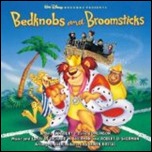
Bedknobs and Broomsticks (Richard Sherman & Robert Sherman, 1971): Disney reteamed a number of key members of the creative team behind Mary Poppins for Bedknobs and Broomsticks, another musical that mixed live action and animation.  While not as successful either creatively or financially as the earlier film, it is still a film with many charms, including another winning song score by the Sherman Brothers.

Angela Lansbury was the lead in the film and her considerable vocal skills are very well used on the film’s signature ballad “The Age of Not Believing” and the peppy “A Step In the Right Direction”.  The male lead is David Tomlinson, probably best known as the father in Mary Poppins, and he is an especially entertaining performer.  He brings a lot of energy and fun to such numbers as “With a Flair” and the lengthy production number “Portebello Road”.  Lansbury and Tomlinson work together very effectively as well on “The Beautiful Briny” (from the film’s key animated sequence) and “Substitutiary Locomotion”. 

The soundtrack album includes a few bonus tracks, including “Nobody’s Problem”, another Lansbury solo ballad that was edited out of the film.  Demo versions of two other unused songs, “Solid Citizen” and “The Fundamental Element”, are also included.

Read More »

Soundtrack Collection: Disney’s Beauty and the Beast

Note: My discussion of Disney’s Beauty and the Beast ended up being so lengthy that I decided it would fit best as a separate post. 

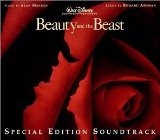
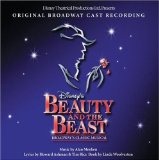
  Beauty and the Beast: Special Edition Beauty and the BeastBeauty and the Beast: Broadway Cast (cover #2)

Beauty and the Beast (Alan Menken & Howard Ashman, 1991): Beauty and the Beast is my favorite of Disney’s animated films and on my short list of favorite movies in general.  The film’s music is absolutely critical to its success.  At the time, it was the closest that an animated film had come to duplicating the style of a modern Broadway musical and, thus, it was no big surprise when several years later an adaptation of the movie became Disney’s first Broadway show.

The film featured six songs, and two reprises, by the songwriting team of Alan Menken and Howard Ashman, who had written songs for Disney’s The Little Mermaid a couple years earlier.  One previously deleted song, entitled “Human Again”, was added back in to the film for the 2002 re-issue of the film in Imax.  Menken also wrote the film’s score, which is largely based around the song melodies, but also introduces a couple additional themes.

The film and soundtrack albums open with a “Prologue” with David Ogden Stiers reading narration that sets up the story.  Alan Menken’s musical accompaniment to this is essentially an (unfortunately) uncredited adaptation of Camille Saint-Saëns’ “Aquarium” from “Carnival of the Animals”.  The music fits wonderfully, although its pretty obvious source should have been credited.

The opening number is entitled “Belle” and serves as an introduction for both the film’s heroine and, late in the song, the villain Gaston.  This is an impressively-scoped number featuring an entire ensemble, led by Paige O’Hara as Belle.  During my first viewing of the film, I remember realizing during this sequence that my jaw was pretty much hanging open from the amazement that they had pulled off such a sweeping, Broadway-style number.  This really felt like something very new and unexpected for this medium and the song and sequence continues to impress even after numerous viewings.

“Gaston” remains one of the best villain songs from a Disney film.  It also has some of the most clever wordplay of Howard Ashman’s impressive career, even managing to work in the word “expectorating”, which may have been a first for a song lyric.  The song really captures Gaston’s distinctive traits while also being exceptionally funny, with Richard White’s (Gaston) and Jessi Corti’s (La Fou) contributing highly to that.  Probably because it really doesn’t mean much out of context, the song isn’t as well known as the others from the film, but it may actually be the most complex and accomplished.

The two best known songs from the film are “Be Our Guest” and the title song.  The former is presented in a big, Busby Berkley style showstopper.  The sequence is probably the most traditional for an animated music number, but it still is tremendous fun and aided greatly by the great vocals by Jerry Orbach (Lumiere) and David Ogden Stiers (Cogsworth).

The Oscar winning title song is, of course, performed by Angela Lansbury and accompanies the romantic dance sequence late in the film.  The song has already become something of a standard and is easily one of the most beautiful songs in the Disney catalog.  The end credits’ duet version of the song performed by Peabo Bryson and Celine Dion became a huge hit on the pop chart, but pales in comparison to Lansbury’s version.

Read More »

Soundtrack Collection: Batman

Batman66

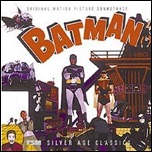
Batman (Nelson Riddle, 1966): Although I am too young to have seen it during its original airing, the late 1960s Batman TV series became a childhood favorite of mine via the syndicated reruns.  The series was very campy and silly, qualities that made it very appealing to me as a pre-teen.  My fondness for the series actually made it a bit difficult for me to warm up to the much darker version of the character that was seen in the later film versions.

Nelson Riddle scored many episodes of the series as well as the full-length feature version that was released theatrically at the end of the show’s first season.  The score to the movie was released on a limited edition CD by Film Score Monthly in 2000 and was re-issued, with a few minutes of additional music, by La La Land Records earlier this year.  I have the earlier release and didn’t see a need to upgrade to the newer one.

Riddle was best known as a jazz and big band arranger, having worked with numerous big names ranging from Ella Fitzgerald to Frank Sinatra.  This background is evident in his approach to the Batman music, where he provides a highly jazz-oriented score heavily dominated by horns and guitar.  It is a fun and fast-paced score, which is pretty deeply rooted in the 1960s Rat Pack style.  The score is very thematic, with Riddle providing a separate, distinctive theme for each of the villains.  The film brought together all the major villains, so there is quite a bit of variation to the score.

The famous and highly familiar main theme to the TV series was written by Neal Hefti and is incorporated pretty regularly into the score.  The theme gets a pretty complete performance (minus the vocals) during the cue “Batmobile to Airport” and then is referenced pretty regularly, usually in shorter bursts.  The complete theme, including the “Batman!” vocals, is featured as a bonus track at the end of the CD.

Batman89

Batman (1989, Danny Elfman): Although Danny Elfman had already done a handful of film scores (including his first two projects with Tim Burton), his score for Burton’s 1989 Batman film really was the one that established him as an important voice in film scoring.  The score was so successful that Elfman has frequently been the first choice for other super-hero movies, to a degree that sometimes has come perilously close to type-casting.

Elfman’s main theme has fairly iconic and is pretty instantly recognizable and associated with the Batman character, despite that fact that it was only used in the two Tim Burton/Michael Keaton films and as the theme for the early 90s animated TV series.  The darkly ominous opening fanfare that transitions into a haunting, brass-centered march is a very distinctive construction that very effectively fits the portrayal of the title character as a mix of tortured angst and heroic action.

While the main theme serves as the primary theme for the title character, he also introduces very effective secondary themes.  Jack Nicholson’s Joker is introduced with some brassy circus music at the end of the cue “Kitchen, Surgery, Face-off” and the character’s over the top nature is also reflected in the fairly extravagant cues “Joker’s Poem” and especially the self-explanatory “Waltz to the Death”.  A darkly melodic theme is provided for the relationship between Bruce Wayne and Vicky Vale, fully presented in the cue “Love Theme”.

The cue “Decent Into Mystery” introduces a wordless chorus into the score in a darkly resonant manner that has later become one of the most recognizable trademarks of Elfman’s film scoring.  Well paced and exciting action music, of course, is also a hallmark of this score in very strong cues such as “Roof Fight”, “Attack of the Batwing” and especially the thrilling “Finale” cue.

At the time that the film came out, much of the emphasis was on the songs that Prince wrote and performed for the film and the initial soundtrack release only contained those songs.  Elfman’s score came out on a separate CD release a few months later.  Interestingly, today the Elfman score album is still in print while the Prince album is not, although it is still widely available on bargain tables or used copies.  I’m not really a Prince fan and never purchased his album, so I can’t really comment on the content.

BatmanReturns

Batman Returns (Danny Elfman, 1992): I’m well aware that my view is in the minority on this one, but I actually prefer both the film and score for Batman Returns to the more popular original.  After the enormous success of the first film, both Tim Burton and Danny Elfman were given a considerable amount of free reign and the result was a much more quirky film and score.

Of course, Elfman does reprise his main Batman theme in the sequel, but little else is repeated.  The new score is much more string focused than the brassy approach with the original.  Elfman also much more prominently features wordless choir in this score, particularly with his main theme for The Penguin.  In many ways, this score actually more closely resembles Elfman’s Edward Scissorhands score than the previous Batman score.

Elfman provides very distinctive themes for the film’s two primary villains: The Penguin and Catwoman.  As noted above, The Penguin’s main theme makes extensive use of wordless (and sometimes “la la la”) choir, providing something of an otherworldly quality to the theme.  The character’s theme is introduced during “Birth of a Penguin” and “Birth of a Penguin, part 2”, which open the soundtrack album and the film.  As these play over the film’s opening title, the theme is effectively interweaved with the Batman theme, at times with the choral elements actually layered over the older theme.

The Catwoman theme is introduced in “Selena Transforms” and “Selena Transforms, Part 2” and substantially developed further in “Cat Suite”.  This theme features solo violin, giving it a pretty distinctively feline quality.  The theme is melodic and haunting and generally sticks with me when I listen to the album.  As Catwoman doubles as Bruce Wayne’s love interest in the film, her theme also serves as the film’s romantic theme.

The album ends with the song “Face to Face”, which was performed by  Siouxsie and the Banshees and was used in the film during a ballroom sequence when Bruce Wayne and Selena Kyle (Catwoman) are dancing together.  The song was co-written by Elfman and fits in very well with the score, including incorporating some brief references to the Catwoman theme.

Read More »

Soundtrack Collection: Recent Purchases

The soundtracks discussed below were discs that I purchased within the last few weeks.  Alphabetically, these albums should have been discussed in previous posts, so I’m highlighting them now.  I’m also going to go back and edit the previous posts so that these soundtracks still appear in the correct place.  Eventually, I’m probably going to want to set up an index to these reviews, so it seems wise to keep them in order.

99and44100

99 44/100% Dead! (Henry Mancini, 1974): Intrada recently released a limited edition CD of the soundtrack to this 1970s John Frankenheimer comedy.  Henry Mancini’s score is upbeat and fun with a very jazzy style.  The music is mainly performed by a relatively small ensemble, sometimes supplemented by electronic instruments.

The main title music gets the score off to a fast paced start with a tune that, somewhat surprisingly for Mancini, has something of a soft-rock beat to it.  The next cue, “Hangin’ Out”, shifts the music in more of a jazzy direction in a tune that mainly features piano, horns, and solo whistler.  That theme is reprised in “Bon Voyage”, the score’s concluding cue.    The score takes on a somewhat darker edge during some of the later cues, consistent with descriptions of the film (which I haven’t seen) as having a mix of comedy and drama.

As was common with Mancini’s scores, one of the central themes is built around a song.  In this case, the song is entitled “Easy Baby” and is a soft jazz number performed on the soundtrack by singer Jim Gilstrap.  The song features lyrics by Alan and Marilyn Bergman, who were frequent collaborators with Mancini.  The soundtrack also includes a “single version” of the song that has more of a 70s disco beat than the film version.

Intrada’s soundtrack presents the score and song in mono, but the sound quality is generally very good.  In addition to the complete score, the soundtrack also includes a number of bonus tracks, including one all-electronic cue (closer to sound effects) and a few source cues.  Three of the source cues are carousel music versions of “Man on the Flying Trapeze”, “Over the Waves”, and “Listen to the Mockingbird”.  The bonus tracks also include a few alternate score tracks.

Around80

Around the World in 80 Days (Victor Young, 1956): When I wrote up my comments about the Trevor Jones score to the 2004 remake, I noted that I didn’t have a copy of Victor Young’s score in my collection.  Some quick research found that a deluxe soundtrack release of that score from Hit Parade Records was pretty readily available and I ordered a copy from Amazon.com. 

Young’s score is a highly melodic, very brassy adventure score with a main theme that is instantly recognizable.  Even without previously having owned this soundtrack, the main theme was extremely familiar to me from compilation albums, pops concerts, and even radio play.  I suspect that even those that aren’t film music fans would probably find the tune to be familiar, even if they have no idea where it is from.

As expected from the film’s subject matter, there is definitely some ethnic styling to some of the cues.  In particular, the middle eastern and Indian influences are extremely evident in “A Princess in Distress (Pagoda of Pillagi)” while “Royal Barge of Siam” features low-pitched male wordless vocals that definitely are evocative of the Asian setting.  The lengthy “Sioux Attack” cue contains a lot of traditional American western music, eventually ending with quotes from “The William Tell Overture” and “Yankee Doodle”.

The Hit Parade soundtrack CD contains a little over 70 minutes of music, including an Overture, intermission music, and the exit music.  Due to the length of the film, this probably isn’t the complete score, but it definitely is a substantial representation of it.  The music is in stereo, but it does have a somewhat harsh, kind of thin sound that is fairly typical for recordings of that age. 

ATeam

The A-Team (Alan Silvestri, 2010): It came as something of a pleasant surprise that Alan Silvestri was chosen to score the new film adaptation of the well-known 1980s action series, which was definitely a guilty pleasure for many of my generation.  The film seemed like a more likely project for someone from the Hans Zimmer factory or for a more song-driven soundtrack. 

Silvestri’s approach to the score is primarily synthesizer and percussion driven, but with some orchestral support.  The use of synthesizers is more prominent than is typical for Silvestri (although continues the approach he introduced with G.I. Joe last year), with some portions even having a techno sound.  Action is definitely the main focus of the score and the music is pretty consistently fast paced and adrenaline pumping in nature.  Most of the score is generally non-melodic, but Silvestri occasionally introduces some more melodic themes, with a primary one introduced at the end of “Court Martial”, which are generally fully orchestral and have a relatively high impact.

Stylistically, parts of the score do sound pretty consistent with 1980s action films, which is likely what the filmmakers were looking for based on reports that the film stayed pretty true to the tone of the original series.  Other portions are pretty distinctly modern in style, though, giving the score a bit of a disjointed quality.  The more orchestral action music shifts more to the forefront in the last part of the score album, particularly in the very lengthy “The Docks Part 1” and “The Docks Part 2”.

The original TV series theme composed by Mike Post and Pete Carpenter is only used on the album during the opening and closing cues.  The opening cue ends on a very short statement of the theme while the ending finally provides a very welcome, complete presentation.  The theme isn’t otherwise directly incorporated into the score, although there are suggestions of it that occasionally poke through.

Soundtrack Collection: Backdraft to Bandolero!

Backdraft

Backdraft (Hans Zimmer, 1991): I’m pretty sure that Backdraft was the first film in which I really noticed a Hans Zimmer score enough to purchase the soundtrack album.  Of course, Zimmer has become one of the most successful working composers in subsequent years, but his distinctive style was something of a fresh discovery back in 1991.

The score features Zimmer’s usual mix of orchestra and synthesizer, with a rock beat behind the main theme.  While this musical sound is now pretty ubiquitous, largely because of Zimmer and his protégées, it felt very new when this film first came out and I remember being very excited to get the soundtrack album.  While it isn’t nearly as distinctive today, the score still holds up as one of the best examples of this style of scoring. 

While there are some action-oriented portions to the score, especially during the cue “Burn It All”, the majority reflects more of a dramatic intensity.  Strings and synths dominate, with a pretty ever present percussion backing.  Occasional choral elements come into play as well, particularly during some of the more action-oriented sections.

The soundtrack CD opens and closes with the Bruce Hornsby songs “Set Me In Motion” and “The Show Goes On”.  Hornsby has a very recognizable style to his songs and both of these are easily recognizable as his.  Generally, I think they fit reasonably well with this score.

BadBoys

Bad Boys (Mark Mancina, 1995): This film was the first pairing of director Michael Bay and producer Jerry Bruckheimer and was essentially the first instance of the heavily rock-influenced instrumentals that film score enthusiasts often refer to simply as the “Bruckheimer sound”.  There is a lot of room for debate as to whether or not that should be considered a positive milestone.  The scores to Bruckheimer’s films from 1995 onward are most widely associated with Hans Zimmer and his influence is evident.  While Zimmer didn’t score the film, Mancina was employed by his company (at the time known as Media Ventures) and another Mancina protégé, Nick Glennie-Smith, also contributed to the score. 

Mancina was likely hired to score the film largely on the strength of his generally acclaimed score to Speed the year before and the similarities are obvious, particularly in the main theme.  The score is generally driven by synthesizer, keyboards, and electric guitar, with orchestral components generally given a backseat.  Acoustic guitar is occasionally used to score the film’s rare quieter moments, as in the cue “You’re Going to Leave Me Alone?”  The score also has some appealing reggae influences, first given significant play during the cue “JoJo, What You Know?”, and revisited periodically afterward.  Even the score’s main theme has a reggae influenced melody, which becomes more evident as the score continues on.  Fairly intense wordless vocals are also used periodically.

The soundtrack album released with the film was primarily a song album and only included one 4 minute score cue featuring an arrangement of Mancina’s main theme.   In 2007, La-La Land Records released a limited edition 70-minute CD of the complete score.  This edition is still available at their site and is currently priced at just $9.98.  It is very much worth getting at that price.

Read More »

Soundtrack Collection: Back to the Future trilogy

Back to the Future Part II Back to the Future (score) Back to the Future Part III

The success of Back to the Future in 1985 came as something of a surprise.  The film had been a pretty troubled production, particularly since the lead actor had to be replaced a few weeks into shooting.  As the movie neared its release date, the low expectations started to be replaced by extremely positive reviews.  Once it opened, positive word of mouth propelled it to become the year’s top grossing film and it remains a true enduring classic from that era.

Several careers were boosted dramatically by the film.  Robert Zemeckis instantly became an A-list director and Michael J. Fox and Christopher Lloyd both were transitioned from TV stars to movie stars.  The film also firmly established Steven Spielberg’s credibility and marketability as a producer on films he didn’t direct.  The film also became an important franchise for Universal, eventually spawning two sequels, an animated TV series, an attraction at the Universal Studios theme parks, and various merchandise tie-ins.

Alan Silvestri’s career as a film composer also received a major  boost from the film’s success.  He had previously had success as a composer for TV (particularly scoring many episodes of CHiPs) and had collaborated with Zemeckis for the first time on the previous year’s hit Romancing the Stone, but Back to the Future was the first time he really achieved widespread attention and acclaim. 

Even though the soundtrack album only had a small portion of his score (the whole score wouldn’t come out until nearly 25 years later), the main theme quickly became extremely recognizable and the sequels both received score-only soundtracks.  After Back to the Future, Silvestri has continued to work regularly on major film projects right up to the present, including every subsequent film that Robert Zemeckis has directed.

My collection includes the original song soundtrack that was released in 1985, the complete score collection released in 2009, both of the sequel soundtracks, and a Varese Sarabande re-recording of music from all three films.  After the break, I will discuss each of the albums in some detail.

Read More »

Soundtrack Collection: Atlantis to Bachelor in Paradise

Atlantis: The Lost Continent

Atlantis: The Lost Continent (Russell Garcia, 1961): Film Score Monthly released this CD of Russell Garcia’s score to George Pal’s science fiction film, which was one of his lesser-known efforts.  The score is paired on the CD with Miklós Rózsa’s score to Pal’s The Power.

The 45 minute, monaural score is melodic and romantic, but with some fairly intense action music as well.  Some of the softer moments are characterized by solo horns and Occasional Mediterranean ethnic elements come into play as well.  Garcia uses the harp quite a bit as well, sometimes to introduce a bit of a mysterious sound, as in the cue entitled “Lost/Hallucinations”, or sometimes for a more romantic sound as in “Harps”.  The score also contains its share of fanfares, even including a track simply titled “Fanfares”.  I particularly like the big, brassy fanfare-like theme that is introduced with the simply-titled cue “Atlantis”.

Atlantis: The Lost Empire

Atlantis: The Lost Empire (James Newton Howard, 2001): This film was a bit of a departure for Disney’s animation team.  It was a widescreen, action adventure film that was closer in spirit to Indiana Jones than to Disney’s usual animated fairy tales.  James Newton Howard came on board to provide a high energy action score for the film.  Heard out of context, I doubt most people would pick this out as a Disney animation score.

The album opens with a pretty generic pop song entitled “Where the Dream Takes You”, which was co-written by Newton-Howard and Diane Warren and performed by Mya.  It isn’t anything overly special, but at least they allowed the film’s score composer write the music for the song, which is incorporated in the score as essentially the film’s love theme.

The film’s main theme is a big, brassy fanfare with wordless choral backing. It is a very catchy and memorable melody and is re-visited pretty regularly throughout the score.  The entire score is very brass and percussion focused, with strings and chorus joining in pretty regularly as well.

Author! Author!

Author, Author (Dave Grusin, Johnny Mandel, 1982): Johnny Mandel initially was hired to score this Al Pacino romantic comedy, but his score was ultimately rejected and replaced with one by Dave Grusin.  Varese Sarabande’s CD Club limited edition release includes both scores on a single CD, with Grusin’s score running about 25 minutes and Mandel’s about 23.  Note that the film included a hit song, “Coming Home To You” by Alan and Marilyn Bergman, that isn’t on the CD.

Grusin’s score has a pop music sound, using mostly electronic instruments, mainly keyboard, although saxophone is also pretty common.  During the main title track, Grusin introduces a primary melody that is repeated regularly throughout the score.  It is a warm, infectious melody, although the repetition is a bit much.    Grusin’s jazz background does shine through occasionally, particularly with the solo saxophone in “Out and About”.  The score has a pretty dated sound, definitely recognizable as a comedy score from the early 80s.  It is a good representative of that kind of score, but probably not to everyone’s taste.

Mandel’s score is orchestral, featuring a main theme that is primary played by solo piano with the string section occasionally joining in.  One fairly quietly romantic theme introduced later in the cue “Reels Five and Six” (the cues for Mandel’s score were not given titles but are instead represented by the reel numbers where they would have fit in the film) features a very nice melody played on a solo guitar. The final track (“Reel Twelve”) opens with a solo violin excerpt from Vivaldi’s “The Four Seasons” before transitioning into an orchestral finale.  The score has a darker quality and isn’t as constantly cheerful in quality as Grusin’s, but also doesn’t sound nearly as dated.  On CD, I think it is the better of the two scores, although I don’t really know which was better suited to the film.

Avalon

Avalon (Randy Newman, 1990): Barry Levinson’s 2nd film in his autobiographical Baltimore trilogy (which also includes Diner and Tin Men) was a film that I absolutely loved.  It is one of those rare films where I became so completely absorbed in the lives of the characters that I hated to leave them when the film came to an end.  Randy Newman’s sensitive, Americana score definitely contributed to the film’s success.

Newman’s score uses a variety of solo instruments to evoke varied moods throughout the score.  It opens with a simple, solo piano presenting the main theme.  Solo violin, trumpet and woodwinds later take on the same melody.  These instruments dominate the entire score, which remains gently melodic throughout.  The use of trumpet solos for some of the score’s most emotional moments is particularly effective.

Newman makes the interesting choice of avoiding ethnic elements in a film about an early 1900s Polish immigrant family with a strong emphasis on their adaptation to life in America.  Newman correctly recognized that the right emphasis should be on the characters’ current home rather than where they had come from.  Americana orchestral music itself certainly is largely an adaptation of European classical music styles, which makes it very well suited to this type of story.

Avatar

Avatar (James Horner, 2009): I’ll state right off that I’m probably one of the very few people left that hasn’t yet gotten around to seeing Avatar.  It isn’t a lack of interest that has kept me from seeing the film, but instead simply that I didn’t find a good opportunity to get out to see the film during its theatrical run and finding a 3 hour+ block to sit down and watch a movie on DVD isn’t exceptionally easy either.  I do expect to try and see the film some time in the fairly near future, so I might need to re-visit this score at a later date.

The expectations for this score were obviously very high considering that the last collaboration between James Cameron and James Horner was Titanic, which set records both for box-office gross and soundtrack sales.  While Avatar was as financially successful a film, the soundtrack wasn’t as big a breakthrough among non-collectors.  

This is the the first time in quite a while that Horner has taken on a full-blown science fiction film and there might be an expectation that the score might resemble his early successes in that genre such as Star Trek II/III, Aliens, and Cocoon, but it really doesn’t resemble those scores much.  This score does seem to be more akin to his other scores from the late 90s and 2000s.

A lot of the music is fairly dark, with some heavy percussion, strings, and low brass along with some choral elements.  The score doesn’t have the ethnic elements that have been common in some of Horner’s more recent scores (particularly Titanic), which is probably to be expected for a movie set on an alien planet.  In their place, he uses some fairly unusual instrument choices and carefully placed vocals to generate a bit more of an exotic sound.  The score does establish a couple distinctive themes, including one primary melody that comes a little bit too close to the primary love theme from Titanic.

Probably in an attempt to duplicate their last success, the album ends with a pop ballad entitled “I See You (Theme from Avatar)”, which is performed by Leona Lewis.  It is based around one of the primary themes from the score, although it is not nearly as memorable as the Celine Dion hit from Titanic.

Read More »

Soundtrack Collection: Angels in America to As You Like It

Angels In America

Angels in America (Thomas Newman, 2003): This HBO miniseries had an extremely distinguished cast (including Al Pacino and Meryl Streep) and was directed by Mike Nichols.  Along with the other feature film talent on the project, Thomas Newman came on board to compose the score. 

The album opens with a somewhat startling 1 minute opening choral piece that has a very religious quality with Latin vocals, revisited fairly regularly in the later half of the score, including in cues such as “The Infinite Descent” and “Broom of Truth”.  It is a somewhat unexpected start to a Thomas Newman score album and definitely grabs attention.  It then transitions into “Angels in America (Main Title)”, which  is a melodic orchestral piece that sounds more recognizably like Newman’s usual laid-back, atmospheric approach.

The main themes are orchestral with an emphasis on strings and woodwinds, although Newman does introduce some synthesizers at various points as well.  In cues such as “The Ramble”, “Quartet”, and “Her Fabulous Incipience” electronic instruments dominate to bring a fairly tense, almost desperate quality to the music.  In other cues, electronic instrumentation is layered over the orchestral music in a way that gives it a somewhat ethereal sound, probably to emphasize the religious elements to the story.  As it progresses, the mini-series moves more in the direction of fantasy and that is reflected in Newman’s score, particularly with the increased use of wordless choir late in the album.

The disc includes source cues “Solitude” and “A Closer Walk with Thee”, both of which are older recordings with sound quality that matches.  The album ends with the very upbeat gospel song “I’m His Child” performed by Zella Jackson Price.

Angie

Angie (Jerry Goldsmith, 1994): Angie is not one of Jerry Goldsmith’s best known scores, and was featured in a movie that is pretty much forgotten, but it features a main theme that I have always found immensely appealing and it is a soundtrack album that I have re-visited fairly regularly.

The soundtrack opens with a full presentation of the main theme in a cue aptly named “Angie’s Theme”.  The theme features a very infectious, almost waltz-like melody and is initially presented with a bit of a French ethnic sound.  Goldsmith makes pretty heavy use of electronic instruments in the piece, along with strings, piano, and even accordion. 

The main theme remains central to the remainder of the score, although the fairly playful nature of the opening track is moderated over time into more mature sounding presentations, intended to reflect the title character’s personal growth over the course of the film.  Woodwinds are particularly dominant in some of those later versions while the electronics are greatly reduced.

The Varese Sarabande soundtrack album is fairly brief (about 35 minutes), which was pretty typical for lower-profile score releases at that time.  This is probably a score that would benefit from an expanded re-issue.

Animaniacs

Animaniacs (Various, 1993): This is one really silly CD.  The 30 minute long album contains quite a few key songs from the Spielberg-produced animated series from the early 1990s.  As you would expect, the album opens and closes with the amusing opening and closing title music from the series, which were written by Richard Stone and Tom Ruegger.

The rest of the songs are very silly, but also frequently very catchy and humorous.   Most of the songs are written by some combination of Randy Rogel, Paul Rugg, and/or Richard Stone.  Most of the songs are performed by the Warner brothers and sister: Wakko, Yakko, and Dot who are voiced by Jess Harnell, Rob Paulson, and Tress McNeille respectively.

A couple of the songs actually do have some educational value as well.  This is particularly true of “Yakko’s World”, which has lyrics that are simply a list of all of the nations in the world.  Similarly, “Wakko’s America” is a list of the states and state capitals and “The Planets” gives names and brief descriptions of the planets in the solar system.  These songs could potentially be very useful as teaching aides for younger kids.  The album also includes two parodies of Gilbert & Sullivan: “Yes, Brothers Warner We” and “I Am the Very Model of a Modern Cartoon Individual”.  These could potentially be used as introductions to the real thing.

Anna Lucasta

Anna Lucasta (Elmer Bernstein, 1959): This jazzy, early score by Elmer Bernstein was released by Varese Sarabande as part of their limited edition CD Club series.  The music is monaural, but the condition of the recordings seems to be very good.  The album opens with a song called “That’s Anna”, performed by Sammy Davis, Jr., who also starred in the film.  The melody from the song is used as a main theme through the score.

The score has a very dramatic and sometimes romantic sound, with an emphasis on horns.  Many of the tracks feature an old fashioned jazz sound, with solo saxophone, drums and symbols, and lots of bass.  The mix between the jazz and more conventional orchestral is an interesting combination.

In their description of the album, Varese Sarabande referred to the four tracks that start with “The Runaways” as “one of the greatest scored sequences of Bernstein’s entire career”.  This segment of the score is the strongest presentation of the jazz-style in the score, starting with some pretty intense percussion that is next joined by very dynamic and impressive brass and piano music.  It really is a rather remarkable sequence and a definite highlight of this score.

Read More »

Soundtrack Collection: American President to Angels & Demons

The American President

The American President (Marc Shaiman, 1995): The main theme from Rob Reiner’s well-regarded romantic drama is one that many listeners are apt to recognize, even if they don’t know where it came from.  Since the film’s release, it has been pretty frequently used in commercials for other movies and as accompaniment for various sporting events or patriotic presentations.  It is a stirring melody that successfully manages to be simultaneously romantic and patriotic.  The main theme is worked pretty regularly into the rest of the score, which has a romantically melodic quality throughout.  The 7 1/2 minute finale cue, “President Shephard”, is particularly stirring and emotional.
An American Tail

An American Tail (James Horner, 1986): This Don Bluth directed hit was the first animated feature that Steven Spielberg produced.  James Horner wrote the score as well as co-writing the film’s four songs with songwriters Barry Mann and Cynthia Weil.  The story is about Russian immigrant mice in New York in the late 1880s and Horner provides the score (and songs) with an appropriately ethnic sound.  The music tends to be fast paced with lots of focus on violin.  The cue “Give Me Your Tired, Your Poor” has an interesting gospel-style opening featuring a choir performing the famous words inscribed on the Statue of Liberty.

The songs are fun, although not as memorable as what would become typical with animated features in the 1990s.  The duet “Somewhere Out There” is the best known song from the film.  In the movie it is performed by Fievel (the main character) and his sister, in rather charmingly off-key vocals.  James Ingram and Linda Ronstadt performed a pop version of the song, which was actually a pretty big hit at the time, over the end credits.  Familiar voices in the cast included Christopher Plumber and Dom DeLuise, each of whom had one featured number (“Never Say Never” for Plumber and “A Duo” for DeLuise), each of which is a very entertaining showcase for the performer.
An American Tail: Fievel Goes West

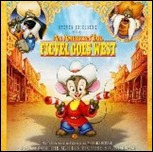
An American Tail: Fievel Goes West (James Horner, 1991): Horner returned to score the sequel to An American Tail.  The film was not very well received (it didn’t help that Universal released it the exact same day that Disney opened Beauty and the Beast), but I think that both film and score tend to be somewhat underrated. 

As the title implies, the sequel is a western and Horner’s musical approach reflects that.  While the main themes from the first film are reprised (particularly early on), much of the score is in a traditional western style, complete with the occasional harmonicas and fast paced string melodies.  The opening overture emphasizes this shift by opening with a reprise of melodies from the first film before transitioning into some of western-style music written for the sequel.  Horner seems a bit more comfortable in this musical style and I think the second film’s score is actually stronger than the first.

The sequel isn’t as much a musical as the first film, but it does include three new songs by Horner and Will Jennings.  Two of the new songs, “Dreams to Dream” and “The Girl You Left Behind”, are performed in the film by Cathy Cavadini, who provides the voice for Fievel’s sister.  Obviously hoping to repeat the big pop hit from the first film, Linda Ronstadt performed a version of “Dreams to Dream” over the end credits and her version opens the CD.  The third new song, “Way Out West” is performed by the whole cast and also is a key new theme in the score.  Early in the soundtrack (and film), Cavadini does sing a short reprise of “Somewhere Out There”, although it is played for laughs as it is quickly interrupted by items being thrown at the character. 
Amistad

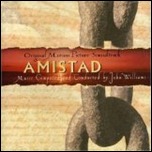
Amistad (John Williams, 1997): The album of Williams’ score to this Spielberg drama about a 19th century slave revolt on-board the titular ship opens and closes with the choral song “Dry Your Tears, Afrika”, which is one of his most striking compositions.  The song opens with rather haunting wordless female vocal humming and then transitions into full choral piece with African-style rhythms and vocals.  The song also has a strong underlying orchestral melody.

The melody from the song remains a primary theme through the remainder of the score.  African rhythm instruments, pipes, and both wordless and African language vocals are used regularly throughout the first half of the score, but with fully orchestral melodies regularly joining in.  This mix of instrumentations is unusual for Williams, but the score is still very recognizably his work. 

The lengthy cue “Middle Passage” scored the darkest sequence in the film, depicting the shipboard life of the slaves and then, finally, their revolt.  This cue opens with some very haunting, mostly non-melodic music and then transitions impressively into a full vocal and orchestral re-statement of “Dry Your Tears, Afrika”, providing a hopeful ending.

The second half of the film is largely a courtroom drama and Williams switches to a more straightforward orchestral style for much of that portion of the film.  This shift is first heard in the cue “Long Road to Justice”, which still uses the same themes from earlier in the film, but in principally a brass rendition, giving it a kind of regal, American-patriotic sound. 

The 1990s were a particularly strong period of creativity for Williams and the Amistad score is one of his most impressive compositions of that era.

Anastasia

Anastasia (David Newman, Lynn Ahrens, Stephen Flaherty, 1997): Trying to compete with Disney’s animated musical hits in the 1990s, 20th Century Fox hired Don Bluth to head up their newly-created animation division.  The first film they created was this highly entertaining musical which featured songs from Lynn Ahrens and Stephen Flaherty, the team responsible for the Broadway musicals “Ragtime”, “Once On This Island”, and (later) “Seussical”.

The songs are Broadway-style and work exceptionally well.  The opening number “A Rumor In St. Petersburg” is an elaborate, full-company (led by Kelsey Grammer and Jonathan Dokuchitz) production number that does a good job of entertainingly establishing the storyline.  Broadway star Liz Callaway was brought in to provide the singing voice for the title character and she is extremely well used in the two ballads “Journey to the Past” and, especially the haunting and stirring “Once Upon a December”.  Jim Cummings does a great job with the fun villain song “In the Dark of the Night”.  Grammer, Dokuchitz, and Callaway work together on the getting-it-done song “Learn to Do It” and, finally, Bernadette Peters leads the ensemble in the final production number, “Paris Holds the Key (To Your Heart)”.

The film’s voice cast included Angela Lansbury, but oddly she isn’t given a full song in the film.  On the album (and in the film) she only briefly sings on a couple of reprises of “Once Upon a December”, both of which are actually incorporated into the score cues.  I can’t help but wonder if she had a song that ended up on the cutting room floor as it seems strange that Lansbury would be hired for a musical but not given a song, particularly just a few years after Beauty and the Beast.

The album also includes the pop song (still written by Ahrens and Flaherty) “In the Beginning” performed by Donna Lewis and Richard Marx which plays over the end credits.  There are also fairly bad pop versions of “Journey to the Past” performed by Aaliyah and “Once Upon a December” performed by Deana Carter.  Both are extremely inferior to the Liz Callaway performances.  Finally, perhaps in an attempt to be multicultural, the last track on the CD is a Spanish version of “Journey to the Past” performed by Thalía.

The orchestral score was composed by David Newman and receives a fairly generous (for an animated musical) 22 minutes on the soundtrack.  Newman does incorporate Flaherty’s melodies into the score, but also provides a considerable amount of original music of his own.  The score has an elegant style that is in-line with the Broadway origins of the song score.  The score has lots of brass, percussion, and strings as well as occasional choral music.   The most dramatic and impressive of the score cues is the 6 minute “Prologue”, which underscored the opening sequence of the film.  The rest of the score builds off of the themes established there and continues to be very good, but that opening sequence gave Newman the meatiest sequence to score.

Angela's Ashes

Angela’s Ashes (John Williams, 1999): Alan Parker’s film adaptation of Frank McCourt’s well-regarded memoirs of his childhood in Ireland in the 1930s was one of the most bleak films to receive a John Williams score.  Williams’ score is melodic and not excessively downbeat and, in fact, played a major role in lightening the events in the film enough to make it a more watchable experience.

The score has a classical sound, with lots of strings and frequent piano and violin solos.  The soundtrack opens with “Theme from Angela’s Ashes” which, as the title suggests, introduces the main theme from the film.  The cue starts with a solo piano presentation of the theme which is later joined by full orchestra.  During the rest of the score, the main theme is most frequently presented via solo piano.

Starting with “The Land of Limerick”, Williams introduces some very effective solo harp to the score.  Considering the fairly strong ethnic and period elements to the film itself, it is surprising that this is really the closest thing to a ethnic color in the score.  Williams certainly doesn’t even come close to trying to create an ethnic connection with the music like he did with Far and Away, the last time he had done a film centered around Irish culture.

The American release of the soundtrack to the film contains a considerable amount of narration from the film overlaying the music.  There are very few score cues on the CD that do not contain at least some narration and it really can be pretty distracting.  Fortunately, the UK release of the soundtrack does not contain any of the narration and is fairly easy to obtain.  The Amazon.com link above is for this import version.

Angels & Demons

Angels & Demons (Hans Zimmer, 2009): The score for the sequel to The Da Vinci Code does re-visit some of the themes from the previous film, but is stylistically quite a bit different from the previous.  While the first score was mostly fully orchestral, this one contains a lot more electronics probably to emphasize the more technology-based focus of the story (at the time I’m writing this, I haven’t had a chance to see the film although I have read the book it was based on). 

Typically for Zimmer’s work on a thriller, the score emphasizes base and percussion quite a bit creating a fairly edgy sound.  The score makes extensive use of choral music as well, sometimes to pretty impressive effect as in the opening cue “160 BPM”.  In line with the religious themes of the story, the music sometimes has a classically spiritual style to it as well, such as in parts of the lengthy cue “Air”.  Solo violin is used frequently in the score and Joshua Bell is featured as the soloist.