
Cutthroat Island (John Debney, 1995): Cutthroat Island is one of those movies that is best known as a legendary flop. In this case, it is particularly notable as the film that killed off Carolco (the previously successful production company behind films like Basic Instinct and Terminator 2: Judgment Day) and the one that led to a conventional wisdom that movies about pirates were box-office poison, at least until Disney, Jerry Bruckheimer, and Johnny Depp changed everyone’s mind a decade later. I actually think it is a film that is better than its reputation, but it still is pretty severely flawed and it isn’t too difficult to see why it didn’t succeed.
Had the film been a hit (or at least less of a bomb), I think there is a good chance it would have propelled composer John Debney solidly onto the film composer A-list years before his acclaimed score to The Passion of the Christ finally did. Debney provided an old-fashioned, fully orchestral swashbuckler score that was largely in the Korngold tradition. His score supported the film wonderfully, giving it a sense of adventure and fun that the screenplay and performances didn’t always live up to.
The score is very brass heavy, much of it built around an exciting main theme that served as a primary theme for Geena Davis’ lead character. The theme is quickly introduced in the opening cue “Main Title/Morgan’s Ride”, initially as a brassy, orchestral opening march. This version of the theme is so big and bold that it seemed unlikely that it could get any bigger right up until the point where Debney adds in the choir during the second part of the cue. The result is wildly over the top, but in a very good way.
This is not a score that is very into subtlety and the quieter moments are somewhat infrequent. When they do come, Debney pretty deftly changes the orchestration on the main themes, keeping a tonal consistency to the score. In particular, the primary romantic theme (first introduced in the second cue, “The Rescue/Morgan Saves Henry”) is really just the primary theme with its tempo slowed down and transitioned primarily to strings instead of brass. The score also includes some occasional, lower tone suspense music, such as what is heard during parts of the cue “Anclee Plots/To Spittlefield”. These are effective, but the brassy adventure music is never far behind during these segments.
The soundtrack CD released with the film contains a generous 1 hour and 10 minutes of music and covers the key parts of the score. The CD was released by Silva Screen Records in the UK and Nu.Millennium in the US. At least in the US, the film’s box-office failure resulted in the soundtrack not being very widely distributed to stores and I recall that this was one of the first CDs that I ended up purchasing online from a soundtrack specialty store. Despite this, the CD isn’t especially rare and can pretty easily be obtained at very reasonable prices even now. In fact, Silva Screen UK still lists it in their active catalog. The Amazon link at the top of this review is to that edition.
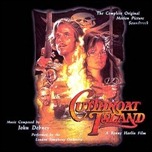
While the original soundtrack contains a good, generous representation of the music, the film was pretty much continuously scored, meaning that a lot of music was missing. In 2004, Prometheus Records released a 2-CD expanded edition of the soundtrack that runs an amazing nearly 2 1/2 hours in length and contains essentially all the music from the film as well as bonus tracks including a synth demo of the main title and a few tracks with the choral portion removed. This may be a bit much for casual listeners, but is definitely the best choice for major fans of the score. This release is still possible to obtain, but is rarer and typically quite a bit more expensive than the single disc version.

The Da Vinci Code (Hans Zimmer, 2006): For Ron Howard’s blockbuster adaptation of Dan Brown’s hugely popular novel, Hans Zimmer provided an intense score that provided an interesting mix of his own typical thriller scoring and some traditionally classical religious sounding themes. The result was one of Zimmer’s most effective and melodically diverse scores of recent years.
The film was pretty firmly steeped in classical traditions and, thus, the score is much more fully orchestral than most of Zimmer’s recent efforts. Electronics aren’t completely absent, but are used very infrequently, usually to unobtrusively add a bit to the tension. This gives the score a somewhat different and refreshing quality compared to the somewhat repetitive nature of some of Zimmer’s recent thriller scores.
The majority of the score is very string-focused with frequent choral elements, with male choir often underscoring the more intense moments while female choir is used for the more spiritual. Solo vocals also come into play occasionally, as with the haunting female vocal used in the cue “Rose of Arimathea”. Many of the cues have a definite resemblance to classical religious hymns, but with Zimmer occasionally strengthening the intensity of the strings or adding bits of brass to build tension. Particularly good examples of this include the final portions of the cue “The Paschal Spiral” and “Fructus Gravis”.
The most familiar theme in the score is also its most modern sounding, a propulsive, drivingly rhythmic theme that is first introduced during the opening cue, “Dies Mercurii I Martius” and closes the score as well. This theme serves as kind of a primary theme for the story’s puzzles and is used most often during the sequences with that focus, although it actually appears very infrequently on the soundtrack album. This is also the primary theme that survived in the somewhat more typically Zimmer-style score for the sequel, “Angels & Demons”.
The album ends with a choral hymn entitled “Kyrie for the Magdalene” by Richard Harvey. Although not written by Zimmer, it fits in fairly well stylistically with the rest of the music.

Damien: Omen II (Jerry Goldsmith, 1978): Jerry Goldsmith’s one and only Academy Award was for The Omen, a particularly impressive accomplishment when you consider the Academy’s usual lack of attention to horror movies. After that major creative success, it isn’t too surprising that Goldsmith returned to the material for the 1978 sequel (and later for the third film), providing a leaner and more action-packed score that is related to the original more in stylistic approach than in the specific musical content.
The score to the original Omen was particularly characterized by its choral pieces that brought to mind the dark, demonic flip side to a religious hymn. The sequel score extensively uses this same approach and, in fact, the dark choir is present almost continuously during the score, with only occasional brief respites. The orchestral accompaniment is dominated by strings, percussion, with occasional bursts of harsh brass. Organ and electronics are also used to effectively add to the unease on occasion. The famous “Ave Satani” from the first film is only occasionally re-visited, although much of the new music resembles it in style.
Goldsmith completely eliminated any use of the melodic “Piper’s Dream” love theme from the first film, which also removes the earlier score’s primary source of release from the dark tension. The score does have a few quieter moments, but Goldsmith manages to weave a certain underlying tension even to those pieces and typically they end with bursts of dark mayhem. In particular, the cue “Thoughtful Night” features some of the score’s most melodic and emotional music, but ends with an abrupt return of the demonic choral music.
The original soundtrack album released with the film actually contained a re-recording of the score instead of the actual film tracks. That album was released on LP at the time of the movie’s release and was later released on CD by Silva Screen Records. In 2001, Varese Sarabande released a deluxe edition that contains both the original album and the film tracks on a single CD.
The film apparently only contained a little over 35 minutes of original music and the original film tracks only run a couple minutes longer than the album presentation. The main differences in the two versions are in some of the orchestrations, the presentation order, and some performance details. In particular, the organ tends to be more intense and dominant in the film tracks than in the re-recording. The differences are mostly fairly subtle, but it is good that both sets of performances are now available. One major oddity on the film tracks is the cue “Snowmobiles”, which is a melodic, upbeat orchestral piece that seems totally disconnected from the rest of the score. It comes as a definite surprise on the album.
Read More »


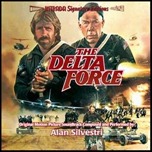
 (Alan Silvestri, 1986): Alan Silvestri’s score to the Chuck Norris action film Delta Force is one of the most prominent fully-electronic scores of Silvestri’s film career. There are no orchestral elements in the score at all. It is instead entirely performed on a Synclavier synthesizer, giving it a very energetic, modernistic sound. Silvestri’s musical style is definitely evident in the score, but the electronics gives it a somewhat different flavor.

 (Bernard Herrmann, 1951): Robert Wise’s The Day the Earth Stood Still is definitely a milestone in movie science fiction. In a time when the genre was dominated by cheesy monster movies, this was a serious, dramatic story with a powerful and resonant message. Bernard Herrmann’s score is also a milestone, establishing a style that is now immediately evocative of alien invasion storylines.
 under conductor Joel McNeely, which is still readily available and apparently contains pretty much the same program as the soundtrack album. I don’t have that release, but based on the quality of McNeely’s other re-recordings I would imagine it is a competent performance and likely has a better sound quality than the original soundtrack cues.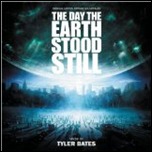
 (Tyler Bates, 2008): For the 2008 remake of The Day the Earth Stood Still, Tyler Bates had the unenviable job of following in the footsteps of Bernard Herrmann’s iconic score for the 1951 original. While I doubt it was a conscious decision, it seems like Bates’ main way of distinguishing his effort from Herrmann’s was to make it as conventional as the original score was unconventional. There isn’t anything substantially wrong with Bates’ score, but it just isn’t all that memorable or distinctive.
 (Mark Mancina & Trevor Rabin, 1997): Teaming up Mark Mancina and Trevor Rabin, two of the major composers to come out of Hans Zimmer’s Media Ventures film score company during the late 1990s, Con Air features a pretty hard-driving, largely electronic score that echoes the film’s intense, adrenaline-fueled action.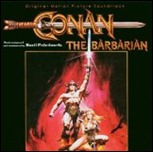
 (Basil Poledouris, 1982): Although he had been around for quite a while, and even scored some high profile projects, this extremely popular score did quite a bit to elevate Basil Poledouris into the upper tier of composers and established him as a solid choice for scoring high energy action films.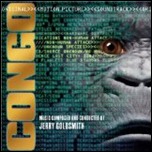
 (Jerry Goldsmith, 1995): This adaptation of Michael Crichton’s novel was seriously panned by critics (although it did reasonably well at the box-office), although I think it actually is a film that is a lot better than its reputation. Possibly its strongest component was the exciting, ethnically-appropriate score by Jerry Goldsmith.

 (Quincy Jones, 1985): To date, The Color Purple remains the only full-length theatrical movie directed by Steven Spielberg that did not contain a score by John Williams. Before Spielberg joined the project, Quincy Jones was already attached as a producer and wished to score the film as well. Jones, working with a fairly large team of co-composers and orchestrators, delivered a score that fit the film exceptionally well and also plays quite well on CD.
 (Craig Armstrong, 2004): As I know little about the film, it is fairly unlikely that I would have bought this soundtrack myself. It is one of several that I was given by a friend who works at the movie studio and it is a pretty good score. My only previous familiarity with Craig Armstrong was mainly through his projects with Baz Luhrmann, which tended to be pretty song-oriented. It is interesting hearing a more full score.
 (Trevor Jones, 1993): Trever Jones’ Cliffhanger is one of my favorite action scores of the early 1990s and it comes from what I think was probably the most purely entertaining action film of Sylvester Stallone’s career. I’ve always found it a bit puzzling that Jones didn’t make a bigger name for himself as an action composer.

 (Harry Gregson-Williams, 2005): Obviously inspired by the enormous success of the Lord of the Rings films, Walden Media and Disney saw adapting C.S. Lewis’ classic Chronicle of Narnia book series as an obvious opportunity to create a similar, but more family-friendly, franchise. Shrek co-director Andrew Adamson was a somewhat surprising choice to helm the first film in the series. Adamson brought along Shrek composer Harry Gregson-Williams, giving him a welcome opportunity to stretch his talents quite a bit beyond the animation and contemporary action scores for which he was mainly known.
 The musical content is identical on both releases, with the special edition simply offering fancier packaging. I have the special edition because I was able to get it at a decent price, but there is little reason to spend much extra for it. There also were at least two song compilation albums released which were really just “inspired by” the movie.
 (Harry Gregson-Williams, 2008): Composer Harry Gregson-Williams returned to the world of Narnia for Prince Caspian, the second entry in the series. The score maintains stylistic continuity with the first one, including reprising a couple main themes, but it does also take a more action-oriented approach while downplaying some of the more otherworldly elements from the original. The result is a score that is in the same family as the first one, but perhaps a bit more conventional. While less of a creative leap, I also think it is a somewhat more listenable score.
 (Michael Small, 1979): Here is a definite oddity in my collection: a score album from a movie that had no musical score. While it certainly isn’t the only album I have of a rejected score, this one is, I believe, unique since the filmmakers decided to replace the score with nothing at all. They didn’t even go with a song or classical temp score or anything like that. Instead, they decided that the film’s tension would be stronger and more effective without music.
 (Jerry Goldsmith, 1974): Chinatown was pretty high on the list of the most acclaimed films that Jerry Goldsmith ever scored. The score is a perfect fit to the film and a major contributor to its success. This is made all the more amazing by the fact that Goldsmith was brought in as a last minute replacement composer and, reportedly, only had 10 days to compose it.
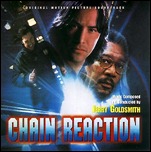
 (Jerry Goldsmith, 1996): During the 1990s, Jerry Goldsmith frequently took jobs scoring 2nd tier action films. These were usually medium-budget major studio releases with reasonably well-known actors, but they weren’t big budget tentpole releases starting top box-office draws. Goldsmith delivered very competent scores for these films, even often helping to elevate the film’s overall quality, although they didn’t usually count among the composer’s most memorable work. Chain Reaction, which starred Keanu Reeves and Morgan Freeman, was one of the more forgettable of these films and scores.
 (John Barry, 1992): Chaplin was John Barry’s first major film score after his big, Oscar-winning success with Dances With Wolves. While this is a smaller-scale score than this one, it does clearly come from the same era of Barry’s career, when his focus had shifted more towards lushly romantic melodies than big action cues.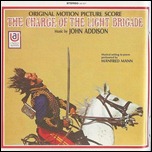
 (John Addison, 1968): This score was included in Film Score Monthly’s “MGM Soundtrack Treasury” boxed set. The film was a remake of a 1936 Errol Flynn movie (with a score by Max Steiner) about the events surrounding England’s involvement in the 19th century Crimean War against Russia.
 Bigbeaks Blog