

24 (Sean Callery, 2001-2006): I have never actually watched the TV series 24, although I think I would probably like it and expect to eventually catch up with it on video. The CD soundtracks for the series were given to me as a gift and I’m not sure I had actually listened to them before this. I have two separate volumes of music from the series, one that covers seasons 1-3 and another that covers seasons 4-5
 . All of the music is by composer Sean Callery, who I presume has done all the scoring for the show.
The series main title opens with some general beeps and other sound effects (only on the version on the season 1-3 disc) followed by some fairly atonal electronic music. It then segues into a much more fully-orchestral and melodic theme than I was expecting. Much more electronics are used in the rest of the scoring for the episodes, although there are orchestral areas as well. Parts of the scores also include some rock elements (particularly electric guitars) and some techno beats. A wordless choir is also used occasionally as well as some more chant-like vocals. The music includes slower elements too, including some gentle piano melodies and some string-oriented pieces.
Without being familiar with the show itself, I don’t know what these various elements are meant to underscore, but the music is highly varied and a fairly unpredictable listening experience from my perspective as a non-viewer. The track titles (for example, “’Copter Chase Over L.A.”) and the style of music do sometimes provide a pretty clear picture of what kind of scene is being scored and these clues suggest that Callery usually doesn’t stray too far from the conventions of how to score an action/thriller series. The music is good, though, and I appreciate the fairly singular voice to the scoring of this series. In recent years, it has become more common for a single composer to do all the scoring for a series and it is a trend that I very much like.

The 25th Hour (Georges Delerue, 1967): This score was released on CD by Film Score Monthly as part of their “Silver Age Classics” series and is paired on the disc with Delerue’s score to Our Mother’s House. I’m not very familiar with the film, except to know that it was a drama that centered around the Holocaust. As that subject-matter suggests, the music is pretty somber in tone, with a dirge-like main theme. The dark mood is further enhanced by use of a wordless male choir. Delerue’s scores are known for being extremely melodic and that is true of this one, although the melodies are definitely darker in character than is typical with his scores. The whole album isn’t downbeat, though. In particular “Johann in Budapest” and “Gathering of the Flowers” are very pleasant, almost waltz-like melodies and are very recognizably Delerue.

36 Hours (Dimitri Tiomkin, 1964): Film Score Monthly released this score as part of their “Golden Age Classics” series. The CD opens with the song “A Heart Must Learn to Cry”, which is a fairly typical early 60s romantic ballad. Tiomkin uses the melody from the song at various points throughout the rest of the score as well. The score is generally melodic, with a strong emphasis on piano melodies. The movie was a World War II dramatic thriller and the score does have some tense moments, although the majority of the score seems to put more emphasis on dramatic and romantic elements.

633 Squadron (Ron Goodwin, 1964): This is another Film Score Monthly “Silver Age Classics” release. I don’t know why they considered this one “Silver Age” while 36 Hours from the same year was “Golden Age”. I’m guessing it had to do either with the era the composer is more associated with and/or with the fact that 633 Squadron is paired on a 2-disc set with Goodwin’s Submarine X-1 score from 1969.
The score is a very rousing, brassy war movie score with quite a few fanfares and soaring strings. The sound quality is not the greatest, unfortunately. This is certainly a reflection of the condition of the source tapes, but the music tends to have a fairly harsh sound to it. The music is great and this recording is worth having, but it is a shame that higher quality elements weren’t available. The majority of the album is a remastered stereo version of the original LP soundtrack program, but the disc ends with an 8 minute suite of additional material (in mono) taken from tapes provided by Goodwin. There is also a fun suite of jazz source music.
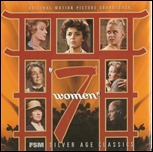
7 Women (Elmer Bernstein, 1966): This score for John Ford’s final film was released as a Film Score Monthly “Silver Age Classics” series entry paired on a single CD with Hugo Friedhofer’s score to Never So Few. The film is set in China and Bernstein introduces a bit of an Asian flavor to the music. The score has a lot of fairly quiet, sensitive passages, generally dominated by saxophone and flute. There is also some fun action music that would sound very much at home in a western.

The 7th Dawn (Riz Ortolani, 1964): This score was included as part of Film Score Monthly’s now out-of-print MGM Soundtrack Treasury , which was a boxed set of 12 CDs containing 20 different scores from the MGM library. I’m not really familiar with Riz Ortolani outside of this score, but this score is very enjoyable and easy to listen to on CD. The majority of the music is very lushly romantic and strongly melodic, largely built around a main theme that shares the film’s title. Several tracks are different album arrangements of that theme, including one with vocals. The film apparently has a war element to it and the score includes some energetic battle music as well.

84 Charing Cross Road (George Fenton, 1987): Varese Sarabande released this score as part of their limited edition CD Club series. Fenton provided a gentle, up-beat score, appropriate for a film that was a fairly small, character-oriented drama. One particularly notable track is “Dear Speed”, a very sweet melody that is entirely performed on a solo piano. The album does include a few tracks that were not composed by Fenton (although he did the arrangements), including the traditional “Sussex Carol” for a Christmas sequence, “Auld Lang Syne” for a New Year’s sequence and an excerpt from Correli’s “Church Sonata in A”.

9 to 5 (Charles Fox, 1980): The soundtrack to this hit comedy, which was released by Intrada Records as a limited edition last year, opens and closes with Dolly Parton’s extremely familiar and popular title song. The song isn’t incorporated into the score, although a few passages call it to mind without really directly quoting it. The score is by Charles Fox, who did quite a few comedy scores during the late 70s and early 80s as well as writing a number of popular TV themes, including those for Happy Days, Laverne and Shirley, and The Love Boat.
Fox’s score for this film is light and up-beat and occasionally even a bit silly. The silliness is most notable in the track titled “Violet’s Fantasy”, which includes a lot of cartoonish-style music and even some wordless female vocals that sound like they are right out of an early Disney movie and ending with a chorus singing “Halleluiah”. Bits of the score, particularly the track “Dora Lee’s Fantasy”, have a bit of a country feel, obviously connecting with Parton’s starring role.

A.I. Artificial Intelligence (John Williams, 2001): I believe that this score is John Williams’ best of the 2000s and, in fact, I’m inclined to pick this score as the best of its decade. The soundtrack runs a little over an hour and covers the most important parts of the score, although I definitely think this title should be a prime candidate for an expanded, complete release. Some longer promo CDs (I’ve never managed to get a hold of one) were distributed for Academy Award consideration, but a longer commercial release would be extremely welcome.
The film is a very controversial one that generated pretty polarized responses (I was very much on the positive side), but the score was pretty universally acclaimed for its complexity and beauty. The highlight of the score is a theme fully realized in the track “Where Dreams are Born”, which is one of Williams’ most distinctive and powerful melodies. This theme represents the film’s central relationship, between the robotic boy David and the adoptive mother that abandons him. The theme is first introduced in the impressive 10 minute long track “Stored Memories and Monica’s Theme”, which introduces it along side some gentle choral segments.
While the highly-melodic main theme is vital to the more dream-like last portion of the film, the earlier parts of the score tend to be darker in tone with less distinctive melodies. Especially notable is some unusual instrumentation choices during “The Moon Rising”, including some electronics, strong percussion and wordless vocal chanting. These definitely put some emphasis on the strangeness of the world depicted in the film’s second act.
The music adapts as the tone of the movie changes, ranging from very dark, percussive music during the mid-section of the film all the way to more traditional fantasy-style scoring, including female chorus, for later parts of the film. Finally, the concluding scenes are scored with piano-focused versions of the main theme along with some gentle woodwind melodies.
Particularly during the early parts of the film, some of the score does bring to mind some of the musical choices Stanley Kubrick made for 2001: A Space Odyssey, particularly a few segments that somewhat resemble the Gayane Ballet. Of course, A.I. was a planned collaboration between Kubrick and Steven Spielberg, who ended up writing and directing the film after Kubrick’s death.
The soundtrack also includes two versions of the song “For Always”, one performed by Lara Fabian alone and another that is a duet between Fabian and Josh Groban. The song is not used in the film at all, but the melody is based on the theme featured in “Where Dreams are Born”. The vocals lend it a fairly haunting quality that fits well with the overall tone of the score. The solo version seemed a bit more effective to me, with the duet having a bit more of a pop style. The duet was probably intended as a possible single from the film (perhaps originally intended for the end credits?), although I don’t think it was ever released as one.
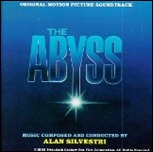
The Abyss (Alan Silvestri, 1989): For James Cameron’s first underwater adventure film, Alan Silvestri composed my pick for the best score in any of Cameron’s films to date. The film crossed several dramas, causing Silvestri to really exercise his flexibility as a composer. The movie is part military/submarine thriller, part romance, and then concludes with a purely fantasy-driven finale that is more than a little bit inspired by Close Encounters of the Third Kind. Silvestri is very successful at providing the right music for each segment, while still making it all sound like part of the same score.
After a short, otherworldly choral “Main Title” cue, the military-thriller component of the score quickly comes into play with the highly percussion-focused “Search the Montana”. Other strong action-oriented cues include “The Crane”, “The Fight”, and “Sub Battle”. Silvestri’s tension-filled music for "Lindsay Drowns” added tremendously to the effectiveness of one of the film’s most intense sequences. The film’s main theme then makes its first really fully-formed appearance in “Resurrection”, the follow-up to that scene.
One of the most interesting cues in the score is “The Pseudopod”, which underscores the film’s much talked about “water tentacle” sequence. The cue starts off with pretty intense, almost horror movie style music. Eventually it segues into the more fantasy-oriented music as the characters discover the nature of the visitor and start examining it more closely. In the end, the music turns sinister as the military commander that served as the film’s antagonist comes into the scene.
The score goes into full fantasy mode with lots of brass and strings accompanied by soaring choral music for the last 3 cues of the CD: “Bud on the Ledge”, “Back On the Air” and “Finale”. The nearly 7 minute final cue is particularly strong and exciting music and quickly became one of my favorites after I first got the CD back in 1989. It is still a track that I like to re-play fairly often.
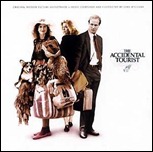
The Accidental Tourist (John Williams, 1989): While John Williams is best known for big, brassy scores for blockbuster action/adventure films, throughout his career he has also been periodically brought in to score much smaller, more dramatic films as well. His compositions for these projects has typically been very sensitive and often quite beautiful music.
Williams’ score for Lawrence Kasdan’s late 80s drama is primarily built around variations of a distinctive primary melody. This primary theme is introduced in the Main Title in a version that focuses primarily on piano, but later tracks do provide variations on other instruments, including full orchestra. Williams does an interesting job of varying the pacing and instrumentation on the theme in order to reflect the changing moods of the main character.
While scores built predominantly around a single theme like this can sometimes feel very repetitive, that really isn’t the case with this one. The theme is varied sufficiently at various points during the score and Williams does include additional material bridge and counterpoint the main melody as needed. The relatively short 40 minute running time of the soundtrack also helps.



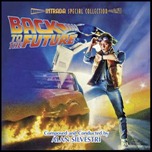


 (James Newton Howard, 2001): This film was a bit of a departure for Disney’s animation team. It was a widescreen, action adventure film that was closer in spirit to Indiana Jones than to Disney’s usual animated fairy tales. James Newton Howard came on board to provide a high energy action score for the film. Heard out of context, I doubt most people would pick this out as a Disney animation score.

 (Randy Newman, 1990): Barry Levinson’s 2nd film in his autobiographical Baltimore trilogy (which also includes Diner and Tin Men) was a film that I absolutely loved. It is one of those rare films where I became so completely absorbed in the lives of the characters that I hated to leave them when the film came to an end. Randy Newman’s sensitive, Americana score definitely contributed to the film’s success.
 (James Horner, 2009): I’ll state right off that I’m probably one of the very few people left that hasn’t yet gotten around to seeing Avatar. It isn’t a lack of interest that has kept me from seeing the film, but instead simply that I didn’t find a good opportunity to get out to see the film during its theatrical run and finding a 3 hour+ block to sit down and watch a movie on DVD isn’t exceptionally easy either. I do expect to try and see the film some time in the fairly near future, so I might need to re-visit this score at a later date.
 (Thomas Newman, 2003): This HBO miniseries had an extremely distinguished cast (including Al Pacino and Meryl Streep) and was directed by Mike Nichols. Along with the other feature film talent on the project, Thomas Newman came on board to compose the score.
 (Jerry Goldsmith, 1994): Angie is not one of Jerry Goldsmith’s best known scores, and was featured in a movie that is pretty much forgotten, but it features a main theme that I have always found immensely appealing and it is a soundtrack album that I have re-visited fairly regularly.
 (Various, 1993): This is one really silly CD. The 30 minute long album contains quite a few key songs from the Spielberg-produced animated series from the early 1990s. As you would expect, the album opens and closes with the amusing opening and closing title music from the series, which were written by Richard Stone and Tom Ruegger.
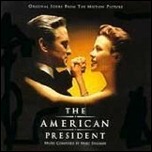
 (Marc Shaiman, 1995): The main theme from Rob Reiner’s well-regarded romantic drama is one that many listeners are apt to recognize, even if they don’t know where it came from. Since the film’s release, it has been pretty frequently used in commercials for other movies and as accompaniment for various sporting events or patriotic presentations. It is a stirring melody that successfully manages to be simultaneously romantic and patriotic. The main theme is worked pretty regularly into the rest of the score, which has a romantically melodic quality throughout. The 7 1/2 minute finale cue, “President Shephard”, is particularly stirring and emotional.
 (James Horner, 1986): This Don Bluth directed hit was the first animated feature that Steven Spielberg produced. James Horner wrote the score as well as co-writing the film’s four songs with songwriters Barry Mann and Cynthia Weil. The story is about Russian immigrant mice in New York in the late 1880s and Horner provides the score (and songs) with an appropriately ethnic sound. The music tends to be fast paced with lots of focus on violin. The cue “Give Me Your Tired, Your Poor” has an interesting gospel-style opening featuring a choir performing the famous words inscribed on the Statue of Liberty.
 (James Horner, 1991): Horner returned to score the sequel to An American Tail. The film was not very well received (it didn’t help that Universal released it the exact same day that Disney opened Beauty and the Beast), but I think that both film and score tend to be somewhat underrated.
 (John Williams, 1997): The album of Williams’ score to this Spielberg drama about a 19th century slave revolt on-board the titular ship opens and closes with the choral song “Dry Your Tears, Afrika”, which is one of his most striking compositions. The song opens with rather haunting wordless female vocal humming and then transitions into full choral piece with African-style rhythms and vocals. The song also has a strong underlying orchestral melody.
 (David Newman, Lynn Ahrens, Stephen Flaherty, 1997): Trying to compete with Disney’s animated musical hits in the 1990s, 20th Century Fox hired Don Bluth to head up their newly-created animation division. The first film they created was this highly entertaining musical which featured songs from Lynn Ahrens and Stephen Flaherty, the team responsible for the Broadway musicals “Ragtime”, “Once On This Island”, and (later) “Seussical”.
 (John Williams, 1999): Alan Parker’s film adaptation of Frank McCourt’s well-regarded memoirs of his childhood in Ireland in the 1930s was one of the most bleak films to receive a John Williams score. Williams’ score is melodic and not excessively downbeat and, in fact, played a major role in lightening the events in the film enough to make it a more watchable experience.
 (Hans Zimmer, 2009): The score for the sequel to The Da Vinci Code does re-visit some of the themes from the previous film, but is stylistically quite a bit different from the previous. While the first score was mostly fully orchestral, this one contains a lot more electronics probably to emphasize the more technology-based focus of the story (at the time I’m writing this, I haven’t had a chance to see the film although I have read the book it was based on).


 , so I have watched some of the episodes more recently that way. No DVDs of season two have been released, although the episodes are available from Netflix via their instant streaming service.


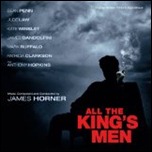
 (James Horner, 2006): This recent adaptation of the classic novel and film was one of the biggest box-office and critical disappointments of recent years. As a result, James Horner’s score was largely ignored, but it is actually one of the composer’s better works in recent years.
 (Vangelis, 2004): I’m not really much of a fan of Vangelis and haven’t seen the film (I’m not much of a fan of director Oliver Stone either), so I’m not really sure why I ended up buying this soundtrack. It is possible I received it as a gift or it might have been really inexpensive. What is surprising to me, though, is that I like quite a bit of this score, although it descends a bit too far into weirdness as it goes on.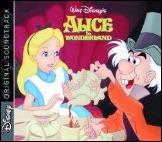
 (Oliver Wallace, 1951): The soundtrack from Disney’s classic soundtrack series for Disney’s animated feature has a bit of an unusual format. The score by Oliver Wallace is interwoven fairly tightly with quite a few songs that were written by a variety of composers and lyricists. Because of this, the songs are not generally given separate cues on the album. Instead, the cues are organized logically based on their position in the film, with score segueing seamlessly into songs and vice versa. Due to the available source materials, quite a few parts of the soundtrack include occasional sound effects as well.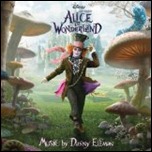
 (Danny Elfman, 2010): At the time that I am writing this, I have not yet had a chance to see Tim Burton’s recent live-action adaptation of Alice in Wonderland. I doubt I will get a chance to see it now before it comes out on video, but I expect I will make an effort to quickly see it once it it does. I’m a huge fan of Danny Elfman and particularly his score for Burton’s films, so I bought this soundtrack album as soon as it was available.


 (Michael Kamen, 1988): This film was among Terry Gilliam’s most entertaining and accessible films, although it ended up as a victim of studio politics (it was a pet project of a departed studio chief) which kept it from ever getting wide release or much in the way of financial success.
 (Henry Mancini, 1986): After a series of disappointments that culminated in the major failure of The Black Cauldron, this film is widely considered to be the start of the revival of Disney animation eventually leading to their enormous successes in the 1990s. The animation division was in such bad shape in 1986 that Disney actually licensed the soundtrack rights to The Adventures of the Great Mouse Detective out to Varese Sarabande instead of releasing it through Walt Disney Records. This is despite the fact that the movie’s score was composed by no less than Henry Mancini.
 Bigbeaks Blog