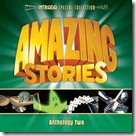
Soundtrack Collection: Amazing Stories

Amazing Stories Anthology One Amazing Stories Anthology Two Amazing Stories Anthology Three

The soundtracks to Steven Spielberg’s mid-80s anthology series Amazing Stories warrant their own blog post due to the number of different scores by different major composers.

Amazing Stories ran for 2 seasons from 1985 to 1987.  The idea behind the series was that Spielberg would use his movie-industry influence to attract top talent, particularly directors,  to produce half-hour stand-alone episodes made with feature-film production values.  Spielberg directed the pilot episode (“Ghost Train”) as well as an hour-long episode (“The Mission”) later in the first season.  Other major directors that did episodes of the series included Martin Scorsese, Robert Zemeckis, Clint Eastwood, Joe Dante, Burt Reynolds, Paul Bartel, Danny DeVito, Irvin Kershner, Tobe Hooper, and others.

The big name directors that worked on the series also brought along some of their feature film collaborators, often including their composers of choice.  Because of this, the scores for the series represented pretty much a who’s who of the major film composers working during that time.  Spielberg brought along John Williams to write the main title theme for the series as well as to score the two episodes that he directed.  Other composers that worked on the series, and are represented on the available CDs, include Jerry Goldsmith, James Horner, Alan Silvestri, Danny Elfman & Steve Bartek, Georges Delerue, Bruce Broughton, David Shire, Billy Goldenberg, Lennie Niehaus, Craig Safan, David Newman, Thomas Newman, Johnny Mandel, Arthur B. Rubinstein, John Addison, Leonard Rosenman, Michael Kamen, Fred Steiner, and Pat Metheny.

Amazing Stories Re-recordings

During the series’ original run, I kept hoping that a soundtrack album with some of the music (at least the John Williams music) would be released.  I was disappointed that the series concluded its entire two season run without any such album showing up.  The first time that any of the music was released on CD was in 1999, when Varese Sarabande commissioned re-recordings of the scores from 2 episodes (John Williams’ “The Mission” and Georges Delerue’s “Dorothy & Ben”) performed by The Royal Scottish National Orchestra conduced by Joel McNeely and John Debney.  In addition to the two episode scores, the album also included re-recordings of Williams’ main and end title themes.

In 2006, Intrada released the first of three 2-disc volumes featuring the original recordings of music from the series.  The three volumes present the scores of 31 out of the 45 episodes of the series.  While there probably are enough scores left for a 4th volume, the scores by major, well-known composers (with one major exception) have all been released making another edition pretty unlikely.  The one major score that is still missing is Danny Elfman’s score for Brad Bird’s animated “Family Dog” episode, although a short suite from it is included on Elfman’s “Music for a Darkened Theater, Vol. 2” compilation disc.  Intrada was unfortunately unable to locate the master tapes for that score.  In fact, the release of volume 3 was delayed for several months due to that search.

The scores on the Intrada CDs are not in the order that the episode aired, but instead are organized to try and provide the best album presentation.  They chose to have John Williams’ two scores bookend the releases, with “Ghost Train” opening volume 1 and “The Mission” closing volume 3.  Wanting to have other in-demand scores from big name composers open each volume, they placed Jerry Goldsmith’s “Boo!” at the start of volume 2 and Alan Silvestri’s “Go to the Head of the Class” at the beginning of volume 3.

As you might expect, each volume opens and closes with Williams’ main and end title themes and disc 2 of each sets opens with short “bumper” versions of the theme that were used for transitions to or from commercial breaks. 

AmazingStoriesSeason1

Amazing Stories was the first TV series that I wanted to retain so I could re-watch the episodes.   During its original run, I actually recorded every episode on videotape (Beta, no less!) and did re-watch favorite episodes occasionally back in the late 80s or early 90s.  A while back, Universal released a DVD set of season one, so I have watched some of the episodes more recently that way.  No DVDs of season two have been released, although the episodes are available from Netflix via their instant streaming service.

I still haven’t seen many of the episodes since around the time of their original run back in the mid-80s, though, so my memory of them is pretty spotty.  My comments on much of the music will therefore be somewhat disconnected from how they work in the episodes.

After the break are my comments for each of the episode scores available on the albums.

Read More »

Soundtrack Collection: Alien Nation to Always

 Alien Nation

Alien Nation (Jerry Goldsmith, 1988, rejected): Jerry Goldsmith was hired to score this science fiction drama and even completed composing and recording his score.  Before the film’s release, the decision was made to replace his score with one by composer Curt Sobel.  In 2005, Varese Sarabande released a limited edition CD of Goldsmith’s rejected score as part of their CD Club series.  No album of Sobel’s replacement score has ever been released.

The Goldsmith score is entirely performed on synthesizer, giving it a futuristic, other worldly quality.  This was one of only a handful of times that Goldsmith did an entirely electronic score and it has an experimental sound to it, although still very recognizably reflecting Goldsmith’s musical style. 

Much of the score centers around a very distinctive and memorable main theme.  Since Goldsmith’s score was not used in Alien Nation, he later re-worked that main theme for The Russia House, where it was given more of a jazz and orchestral treatment.  That film’s soundtrack is available as well and it is very interesting to hear the same theme in such different contexts.

All About Eve

All About Eve (Alfred Newman, 1950): The score to Bette Davis’ most famous film was paired with Newman’s Leave It To Heaven on a CD released by Film Score Monthly as part of their Golden Age Classics series.  Newman spent many years as the music director at 20th Century Fox and composed numerous memorable film scores as well as conducting or overseeing many others.  In recent years, it has been great to see the soundtrack specialty labels finally making more of his music available.

This is a very warm, fully orchestral score that includes many quiet, emotional moments as well as some occasional brassy fanfares.  The soundtrack contains 30 minutes of music, mostly presented in very short cues.  The longest cue on the album is about 2 1/2 minutes and many are less than a minute in length.  The album is mostly presented in monaural, but the last two tracks (“All the Eves” and “Encore”) are repeated in remixed stereo versions as well.

All Fall Down

All Fall Down (Alex North, 1962): Film Score Monthly released this as part of their Silver Age Classics series, paired with a lengthy suite from North’s score to The Outrage.  This is one of North’s more gentle scores, with melodic themes and a jazzy sound.  Horns, including the saxophone, play a dominant role here.  There also are some very gentle piano melodies that frequently come into play.  I’ve always had a fondness for simple piano melodies that are then joined by full orchestra, a technique that North uses pretty effectively several times in this score.

This is a tender, sensitive score from a composer whose scores I have sometimes felt tended towards the cold side, in spite of technical brilliance.  Because of the obscurity of the score and my somewhat ambivalent feeling towards North, I don’t remember listening to this score much before, although I’ve had the album for quite a while.  It is really a very pleasant score and I’m glad to re-discover it.

All the King's Men

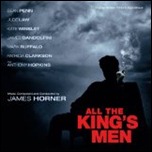
All the King’s Men (James Horner, 2006): This recent adaptation of the classic novel and film was one of the biggest box-office and critical disappointments of recent years.  As a result, James Horner’s score was largely ignored, but it is actually one of the composer’s better works in recent years.

The score tends to be stirring and dramatic, with very melodic, fully orchestral themes.  The lengthy early cue “Bring Me the Hammer and I’ll Nail ‘Em Up” (several cues are titled after notable quotes from the film) is particularly stirring and is an example of the kind of emotionally-driven music that Horner tends to excel at as a composer.  Horner establishes a primary theme that is presented in a number of interesting versions.  Piano solo versions are heard fairly often and an intriguing solo violin version opens the cue “Adam’s World”.

Horner’s most famous successes have generally been with scores for large scale epics and action films, but throughout his career he has pretty regularly taken on these smaller, more character-driven dramas and those often have been the sources of some of his best scores.  This one is very underrated.

Read More »

Soundtrack Collection (Alexander, Alice & Aliens)

Alexander

Alexander (Vangelis, 2004): I’m not really much of a fan of Vangelis and haven’t seen the film (I’m not much of a fan of director Oliver Stone either), so I’m not really sure why I ended up buying this soundtrack.  It is possible I received it as a gift or it might have been really inexpensive.  What is surprising to me, though, is that I like quite a bit of this score, although it descends a bit too far into weirdness as it goes on.

This is an extremely active, fast-paced score with lots of brass and percussion.  Choral elements, including some that more closely resemble chanting, come into play pretty frequently as well.   In particular, “The Drums of Guagamela” is a thrilling cue that really does get the blood pumping.  Other parts of the score have a haunting, medieval style, including the use of some more archaic instrumentation.  While there are a few calmer cues, particularly “One Morning at Pella” (which comes right after “The Drums of Guagamela” on the soundtrack), for the most part this isn’t a score to listen to when you want to relax.

Alice in Wonderland (Disney animated)

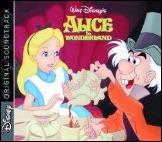
Alice In Wonderland (Oliver Wallace, 1951): The soundtrack from Disney’s classic soundtrack series for Disney’s animated feature has a bit of an unusual format. The score by Oliver Wallace is interwoven fairly tightly with quite a few songs that were written by a variety of composers and lyricists.  Because of this, the songs are not generally given separate cues on the album.  Instead, the cues are organized logically based on their position in the film, with score segueing seamlessly into songs and vice versa.  Due to the available source materials, quite a few parts of the soundtrack include occasional sound effects as well.

Lewis Carroll’s unusual writing style provides quite a bit of opportunity for clever songs and this film has more than most of the other Disney animated features of the era.  A few of the songs from the film are very well known, particularly “All In the Golden Afternoon”, “The Unbirthday Song”, and the title song.  These songs pretty frequently appear in Disney compilations and are pretty instantly recognizable.  The less-familiar songs are effective as well and this is an entertaining album to listen to.

Wallace’s score fits very well with the songs and does a good job of tying everything together.  While the film itself tends to take silliness to a higher level than most other Disney features, Wallace doesn’t really use a lot of silly-sounding music, instead allowing a somewhat more straightforward score provide musical support.

Alice in Wonderland (2010)

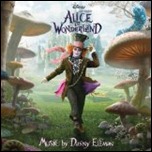
Alice in Wonderland (Danny Elfman, 2010): At the time that I am writing this, I have not yet had a chance to see Tim Burton’s recent live-action adaptation of Alice in Wonderland.  I doubt I will get a chance to see it now before it comes out on video, but I expect I will make an effort to quickly see it once it it does.  I’m a huge fan of Danny Elfman and particularly his score for Burton’s films, so I bought this soundtrack album as soon as it was available.

The score is really great.  It is charming and melodic with a style that is pretty unmistakably Elfman’s.  The album opens with “Alice’s Theme”, a charmingly bombastic original song written by Elfman and performed with an operatic female vocal.  The song is kind of strange and unworldly, which seems to me to be a pretty good fit to an Alice in Wonderland theme.  The song’s melody (and occasionally some of the vocals) is used throughout the score.  Several cues on the soundtrack are directly billed as reprises to the song.

Musically, Elfman’s score is one of the brighter ones that he has done for a Burton project, but still has some pretty dark edges to it.  The score is very string heavy, but with some liberal use of brass and percussion to emphasize the more action-oriented passages.  Elfman brings in a wordless choir at a number of points, which helps to establish the other-worldly quality to the music. “Alice’s Theme” is the one really strongly established and repeated theme, although the entire score is fairly melodic.

Read More »

Soundtrack Collection (Ace Eli through Aladdin)

Ace Eli and the Rodger of the Skies

Ace Eli and Rodger of the Skies (Jerry Goldsmith, 1973): This fairly obscure Goldsmith score was released by Film Score Monthly, paired on a CD with Goldsmith’s music for the TV series “Room 222”.  The score is from a film that is largely forgotten and unavailable on video (and was badly panned during its release), although it is somewhat notable for the “Story by” credit, which was Steven Spielberg’s first for a theatrical movie.

The score is highly melodic with an old fashioned Americana sound.  The main “Ace Eli Theme” is presented alone with a fast paced, ragtime style, but the theme is incorporated into other parts of the score with some other varied styles, including some more purely orchestral versions.  Several tracks have a carnival-atmosphere style while others have a bit of a country feel. There are some quieter, more gentle melodies as well.  The tracks “No Pony” and “Night Talk” are particularly good examples of Goldsmith’s more sensitive side.

Probably due to the obscurity of the score, and extensive re-cutting and re-scoring done before the film’s release, the album was put together from some pretty widely varied source elements.  Parts of the score were only available in monaural elements, so the album shifts back and forth between stereo and mono.  A few score cuts are presented as bonus tracks because the only available sources were either incomplete or damaged.

A fairly generic pop/country song entitled “Who’s for Complainin’?” is also included as a bonus track along with an instrumental version that was used as a bit of a score.  This song is written and performed by Jim Grady and the liner notes indicate that it replaced Goldsmith’s main and end title music.

David Raksin at MGM

Across the Wide Missouri (David Raksin with Al Sendrey, 1951): This score was released by Film Score Monthly as part of a 5-disc boxed set entitled “David Raksin at MGM”, which features 13 of Raksin’s scores.  Disc 1 contains a first-time release of the complete score that Raksin wrote for this western as well as bonus tracks containing revisions and additional music from studio orchestrator Al Sendrey to accommodate some significant re-editing of the film.

The score is a rousing western score with fast paced action cues as well as a folk-music style approach for the more melodramatic portions.  Raksin incorporates the classic folk songs “Shenandoah” and “Skip To My Lou” in various parts of the score and also composed his own original main themes that stylistically resemble folk melodies.  An alternate version of the main title cue includes vocals on “Shenandoah”, but otherwise the songs are strictly presented as instrumentals.

The Adventures of Baron Munchausen

The Adventures of Baron Munchausen (Michael Kamen, 1988): This film was among Terry Gilliam’s most entertaining and accessible films, although it ended up as a victim of studio politics (it was a pet project of a departed studio chief) which kept it from ever getting wide release or much in the way of financial success.

Michael Kamen delivers a very lively, varied and often amusing score that was one of the best of his career.  The globetrotting nature of the score allows for a good variety of themes and styles ranging from the vaguely Middle Eastern style in “The Sultan” to the action music for the various war sections.  One of the strangest tracks is “On the Moon” which transitions from other-worldly music that sounds like it comes out of a science fiction movie into basically nursery rhyme music, some of which features a kazoo soloist. A major highlight is the very impressive waltz featured in “Vulcan and Venus”, an original Kamen composition for the film that sounds like it could have been by Strauss.

The first half of “The Sultan” is “The Torturer’s Apprentice”, an opera that is performed during early scenes of the film.  This humorous song has lyrics by Eric Idle (set to Kamen’s music) and sounds a lot like something out of Monty Python.

The Adventures of the Great Mouse Detective

The Adventures of the Great Mouse Detective (Henry Mancini, 1986): After a series of disappointments that culminated in the major failure of The Black Cauldron, this film is widely considered to be the start of the revival of Disney animation eventually leading to their enormous successes in the 1990s.  The animation division was in such bad shape in 1986 that Disney actually licensed the soundtrack rights to The Adventures of the Great Mouse Detective out to Varese Sarabande instead of releasing it through Walt Disney Records.  This is despite the fact that the movie’s score was composed by no less than Henry Mancini.

I admit that I’m not a fan of the film, which I find fairly tedious, but Mancini’s music is great fun.  This was Mancini’s only contribution to a Disney animated feature, which is a bit of a shame since the melodic and lively style that Mancini is best known for is an excellent fit.  The main title track introduces a very catchy and memorable main theme that is a central component of the rest of the score.  Another major highlight of the score is “Big Ben Chase”, the very exciting action/chase music Mancini provided for the film’s finale.

Like most Disney animated films, this one does include a few songs.  “The World’s Greatest Criminal Mind” and “Goodbye So Soon” are both sung by Vincent Price, who provided the voice of the film’s villain.  The songs are generally as much fun as you would expect from the combination of Vincent Price and Henry Mancini.  The other song from the film is “Let Me Be Good To You”, a catchy saloon-style song which is performed by Melissa Manchester.  For some reason, none of the songs from the film have typically been included in Disney music compilations or shown up in theme park shows, so they will likely be unfamiliar to most fans unless they know the film or the soundtrack well.

Read More »

Soundtrack Collection (24 through Accidental Tourist)

24 Seasons 1-3 24 Seasons 4-5

24 (Sean Callery, 2001-2006): I have never actually watched the TV series 24, although I think I would probably like it and expect to eventually catch up with it on video.  The CD soundtracks for the series were given to me as a gift and I’m not sure I had actually listened to them before this.  I have two separate volumes of music from the series, one that covers seasons 1-3 and another that covers seasons 4-5.  All of the music is by composer Sean Callery, who I presume has done all the scoring for the show.

The series main title opens with some general beeps and other sound effects (only on the version on the season 1-3 disc) followed by some fairly atonal electronic music.  It then segues into a much more fully-orchestral and melodic theme than I was expecting.  Much more electronics are used in the rest of the scoring for the episodes, although there are orchestral areas as well.  Parts of the scores also include some rock elements (particularly electric guitars) and some techno beats.  A wordless choir is also used occasionally as well as some more chant-like vocals.  The music includes slower elements too, including some gentle piano melodies and some string-oriented pieces.

Without being familiar with the show itself, I don’t know what these various elements are meant to underscore, but the music is highly varied and a fairly unpredictable listening experience from my perspective as a non-viewer.  The track titles (for example, “’Copter Chase Over L.A.”) and the style of music do sometimes provide a pretty clear picture of what kind of scene is being scored and these clues suggest that Callery usually doesn’t stray too far from the conventions of how to score an action/thriller series.  The music is good, though, and I appreciate the fairly singular voice to the scoring of this series.  In recent years, it has become more common for a single composer to do all the scoring for a series and it is a trend that I very much like.

The 25th Hour

The 25th Hour (Georges Delerue, 1967): This score was released on CD by Film Score Monthly as part of their “Silver Age Classics” series and is paired on the disc with Delerue’s score to Our Mother’s House.  I’m not very familiar with the film, except to know that it was a drama that centered around the Holocaust.  As that subject-matter suggests, the music is pretty somber in tone, with a dirge-like main theme.  The dark mood is further enhanced by use of a wordless male choir.  Delerue’s scores are known for being extremely melodic and that is true of this one, although the melodies are definitely darker in character than is typical with his scores.  The whole album isn’t downbeat, though.  In particular “Johann in Budapest” and “Gathering of the Flowers” are very pleasant, almost waltz-like melodies and are very recognizably Delerue.

36 Hours

36 Hours (Dimitri Tiomkin, 1964): Film Score Monthly released this score as part of their “Golden Age Classics” series.  The CD opens with the song “A Heart Must Learn to Cry”, which is a fairly typical early 60s romantic ballad.  Tiomkin uses the melody from the song at various points throughout the rest of the score as well.  The score is generally melodic, with a strong emphasis on piano melodies.  The movie was a World War II dramatic thriller and the score does have some tense moments, although the majority of the score seems to put more emphasis on dramatic and romantic elements.

633 Squadron

633 Squadron (Ron Goodwin, 1964): This is another Film Score Monthly “Silver Age Classics” release.  I don’t know why they considered this one “Silver Age” while 36 Hours from the same year was “Golden Age”.  I’m guessing it had to do either with the era the composer is more associated with and/or with the fact that 633 Squadron is paired on a 2-disc set with Goodwin’s Submarine X-1 score from 1969.

The score is a very rousing, brassy war movie score with quite a few fanfares and soaring strings.  The sound quality is not the greatest, unfortunately.  This is certainly a reflection of the condition of the source tapes, but the music tends to have a fairly harsh sound to it.  The music is great and this recording is worth having, but it is a shame that higher quality elements weren’t available.  The majority of the album is a remastered stereo version of the original LP soundtrack program, but the disc ends with an 8 minute suite of additional material (in mono) taken from tapes provided by Goodwin.  There is also a fun suite of jazz source music.
7 Women

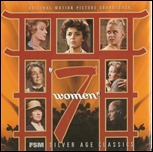
7 Women (Elmer Bernstein, 1966): This score for John Ford’s final film was released as a Film Score Monthly “Silver Age Classics” series entry paired on a single CD with Hugo Friedhofer’s score to Never So Few.  The film is set in China and Bernstein introduces a bit of an Asian flavor to the music.  The score has a lot of fairly quiet, sensitive passages, generally dominated by saxophone and flute.  There is also some fun action music that would sound very much at home in a western.

The 7th Dawn

The 7th Dawn (Riz Ortolani, 1964): This score was included as part of Film Score Monthly’s now out-of-print MGM Soundtrack Treasury, which was a boxed set of 12 CDs containing 20 different scores from the MGM library.  I’m not really familiar with Riz Ortolani outside of this score, but this score is very enjoyable and easy to listen to on CD.  The majority of the music is very lushly romantic and strongly melodic, largely built around a main theme that shares the film’s title.  Several tracks are different album arrangements of that theme, including one with vocals.  The film apparently has a war element to it and the score includes some energetic battle music as well.

84 Charing Cross Road

84 Charing Cross Road (George Fenton, 1987): Varese Sarabande released this score as part of their limited edition CD Club series.  Fenton provided a gentle, up-beat score, appropriate for a film that was a fairly small, character-oriented drama.  One particularly notable track is “Dear Speed”, a very sweet melody that is entirely performed on a solo piano.  The album does include a few tracks that were not composed by Fenton (although he did the arrangements), including the traditional “Sussex Carol” for a Christmas sequence, “Auld Lang Syne” for a New Year’s sequence and an excerpt from Correli’s “Church Sonata in A”.

9 to 5

9 to 5 (Charles Fox, 1980): The soundtrack to this hit comedy, which was released by Intrada Records as a limited edition last year, opens and closes with Dolly Parton’s extremely familiar and popular title song. The song isn’t incorporated into the score, although a few passages call it to mind without really directly quoting it. The score is by Charles Fox, who did quite a few comedy scores during the late 70s and early 80s as well as writing a number of popular TV themes, including those for Happy Days, Laverne and Shirley, and The Love Boat.

Fox’s score for this film is light and up-beat and occasionally even a bit silly.  The silliness is most notable in the track titled “Violet’s Fantasy”, which includes a lot of cartoonish-style music and even some wordless female vocals that sound like they are right out of an early Disney movie and ending with a chorus singing “Halleluiah”.    Bits of the score, particularly the track “Dora Lee’s Fantasy”, have a bit of a country feel, obviously connecting with Parton’s starring role.

A.I. Artificial Intelligence

A.I. Artificial Intelligence (John Williams, 2001): I believe that this score is John Williams’ best of the 2000s and, in fact, I’m inclined to pick this score as the best of its decade.  The soundtrack runs a little over an hour and covers the most important parts of the score, although I definitely think this title should be a prime candidate for an expanded, complete release.  Some longer promo CDs (I’ve never managed to get a hold of one) were distributed for Academy Award consideration, but a longer commercial release would be extremely welcome.

The film is a very controversial one that generated pretty polarized responses (I was very much on the positive side), but the score was pretty universally acclaimed for its complexity and beauty.  The highlight of the score is a theme fully realized in the track “Where Dreams are Born”, which is one of Williams’ most distinctive and powerful melodies.  This theme represents the film’s central relationship, between the robotic boy David and the adoptive mother that abandons him.  The theme is first introduced in the impressive 10 minute long track “Stored Memories and Monica’s Theme”, which introduces it along side some gentle choral segments.

While the highly-melodic main theme is vital to the more dream-like last portion of the film, the earlier parts of the score tend to be darker in tone with less distinctive melodies.  Especially notable is some unusual instrumentation choices during “The Moon Rising”, including some electronics, strong percussion and wordless vocal chanting.  These definitely put some emphasis on the strangeness of the world depicted in the film’s second act.

The music adapts as the tone of the movie changes, ranging from very dark, percussive music during the mid-section of the film all the way to more traditional fantasy-style scoring, including female chorus, for later parts of the film.  Finally, the concluding scenes are scored with piano-focused versions of the main theme along with some gentle woodwind melodies.

Particularly during the early parts of the film, some of the score does bring to mind some of the musical choices Stanley Kubrick made for 2001: A Space Odyssey, particularly a few segments that somewhat resemble the Gayane Ballet.  Of course, A.I. was a planned collaboration between Kubrick and Steven Spielberg, who ended up writing and directing the film after Kubrick’s death.

The soundtrack also includes two versions of the song “For Always”, one performed by Lara Fabian alone and another that is a duet between Fabian and Josh Groban.  The song is not used in the film at all, but the melody is based on the theme featured in “Where Dreams are Born”.  The vocals lend it a fairly haunting quality that fits well with the overall tone of the score.  The solo version seemed a bit more effective to me, with the duet having a bit more of a pop style.  The duet was probably intended as a possible single from the film (perhaps originally intended for the end credits?), although I don’t think it was ever released as one.
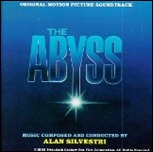
The Abyss

The Abyss (Alan Silvestri, 1989): For James Cameron’s first underwater adventure film, Alan Silvestri composed my pick for the best score in any of Cameron’s films to date.  The film crossed several dramas, causing Silvestri to really exercise his flexibility as a composer.  The movie is part military/submarine thriller, part romance, and then concludes with a purely fantasy-driven finale that is more than a little bit inspired by Close Encounters of the Third Kind.  Silvestri is very successful at providing the right music for each segment, while still making it all sound like part of the same score.

After a short, otherworldly choral “Main Title” cue, the military-thriller component of the score quickly comes into play with the highly percussion-focused “Search the Montana”.  Other strong action-oriented cues include “The Crane”, “The Fight”, and “Sub Battle”.  Silvestri’s tension-filled music for "Lindsay Drowns” added tremendously to the effectiveness of one of the film’s most intense sequences.  The film’s main theme then makes its first really fully-formed appearance in “Resurrection”, the follow-up to that scene.

One of the most interesting cues in the score is “The Pseudopod”, which underscores the film’s much talked about “water tentacle” sequence.  The cue starts off with pretty intense, almost horror movie style music.  Eventually it segues into the more fantasy-oriented music as the characters discover the nature of the visitor and start examining it more closely.  In the end, the music turns sinister as the military commander that served as the film’s antagonist comes into the scene.

The score goes into full fantasy mode with lots of brass and strings accompanied by soaring choral music for the last 3 cues of the CD: “Bud on the Ledge”, “Back On the Air” and “Finale”.  The nearly 7 minute final cue is particularly strong and exciting music and quickly became one of my favorites after I first got the CD back in 1989.  It is still a track that I like to re-play fairly often.
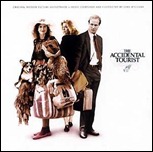
The Accidental Tourist

The Accidental Tourist (John Williams, 1989): While John Williams is best known for big, brassy scores for blockbuster action/adventure films, throughout his career he has also been periodically brought in to score much smaller, more dramatic films as well.  His compositions for these projects has typically been very sensitive and often quite beautiful music.

Williams’ score for Lawrence Kasdan’s late 80s drama is primarily built around variations of a distinctive primary melody.  This primary theme is introduced in the Main Title in a version that focuses primarily on piano, but later tracks do provide variations on other instruments, including full orchestra.  Williams does an interesting job of varying the pacing and instrumentation on the theme in order to reflect the changing moods of the main character.

While scores built predominantly around a single theme like this can sometimes feel very repetitive, that really isn’t the case with this one.  The theme is varied sufficiently at various points during the score and Williams does include additional material bridge and counterpoint the main melody as needed.  The relatively short 40 minute running time of the soundtrack also helps.

Soundtrack Collection (‘Burbs through 2010)

Introduction

I have been collecting movie and television soundtracks, mostly instrumental scores, for around 30 years and have a collection of more than 1,100 albums.  My first purchase was John Barry’s score to The Black Hole in 1979 when I was 10 years old.  Ever since, film music has been the dominant style of music that I listen to and purchase.

When I first started buying soundtracks, it was mainly as a souvenir from movies that I really liked.  In time, though, my purchases became more for the music itself.  I am very familiar with the most important film composers and will purchase music from favorite composers in much the same way that anyone else will buy albums from favorite artists.  Because of this, I have many albums from movies that I have never seen.  Some are from movies that I don’t even have any interest in seeing, but I still enjoy the music.

With such a large collection, there are quite a few albums that I have only listened to a handful of times.  In some cases, I probably have only played them all the way through one time.  I do regularly use shuffle play features against my entire collection to essentially create my own radio station, which does mean that I periodically hear individual tracks from pretty much everything.

In order to re-acquaint myself with some of the music that I haven’t heard recently, this week I started listening to every soundtrack album in my soundtrack collection in alphabetical order.  As I listen to each album, I am writing up a few sentences (sometimes more) about each.  I often listen to music while at work as well as occasionally playing music at home on weekends, but I still suspect it will take at least a year, and possibly much longer, to get through the entire collection.  As I get enough notes on albums to make a decent post, I will periodically upload them to this blog.  I’m not yet sure how often these posts will be, although I suspect at least once a week is likely.

As much as possible, I am going to make each album title (and the album art) link to somewhere that the album can be purchased.  In the interest of full disclosure, I’ll state that in many cases it will be an affiliate link to Amazon.com that returns to me a small percentage of any sales for the referral.  Quite a few film scores are released as mail-order only limited editions, so those will often feature a link to the label’s online store or a soundtrack specialty retailer.  In a number of cases, the albums are now out of print (or, if limited editions, sold out) and may be difficult and/or expensive to obtain.  A few may be completely impossible to come by now.

My music player of choice (MediaMonkey) places albums that start with symbols or numbers at the start of the list (and ignores articles like “The” or “A” as the first word), so that is where I will begin.  I may occasionally back-track as I get new albums from earlier in the alphabet.  This first batch may seem to start in a strange place, but the first two titles actually start with symbols (an apostrophy and an asterisk), which is why they were the first that I came to.

Read More »

Orlando and Disney World Trip Jan 2010 – Dining

Eating out tends to be a big part of our trips to Walt Disney World.  Since we make frequent visits, we don’t really feel any strong pressure to see everything.  We really enjoy taking a somewhat leisurely pace on our trip and including at least one sit-down meal during each day is something that we particularly enjoy.

In this post, I’m going to start with a brief discussion of the Disney Dining plan and then provide a day-by-day overview.  I apologize that photos are a bit sparse in this report.  I’ve never really gotten into the habit of taking a lot of photos at restaurants, other than family photos at character meals or other themed locations.  In fact, even the pretty general photos (without my family) of the Sci-Fi Dine-In below are ones that I actually took several years ago.  If I had thought ahead of time of focusing my main trip report on the meals, I probably would have made more of an effort to get at least exterior photos of more of the restaurants.  I’ll try to think of this on my next trip.

Disney Dining Plan

During the last few trips, we have taken part in the Disney Dining Plan, which allows us to pre-pay a fixed per-day amount to cover the majority of our meals.  The plan provides credits for 1 counter service meal, 1 table service meal, and 1 snack item per person for each day of the trip.  The credits are pooled over the length of the trip (expiring at 11:59pm on the departure day), which does provide some flexibility for how they are used.

The dining plan has been somewhat controversial among Disney fans for some reasons that I do think have merit, particularly related to the increased difficulties getting into table service restaurants (at many locations, it is now pretty much mandatory to make reservations 6 months in advance) and it does also seem that some of the menus have been simplified somewhat since the dining plan began.  Overall, the program does work very well for our family and it does save us a considerable amount of money as we tend to order meals that would cost quite a bit more if we were paying directly.

While we still find the plan to be worthwhile, it is unfortunate that some changes were made that reduced the value a bit since it first began.  Originally, the table service meals included appetizer, entree, dessert, non-alcoholic beverage, and gratuity.  A couple years ago, the appetizer and gratuity were removed.  Including both the appetizer and dessert did make for a bit more food than we probably really wanted at some meals.  I do think it would be much better, though, if they would change the plan to offer a choice between the appetizer or a dessert instead of only providing the dessert.  There were a number of occasions where an appetizer (particularly soup or a salad) would definitely have been my preference over getting a dessert.

I’m definitely more torn on the elimination of the gratuity.  On the one hand, I admit that I did notice that service was sometimes a bit lackluster back when the tip was included and, thus, guaranteed.  On this trip, we didn’t really have any experiences where the service was less than good.  On the other hand, though, having to pay the gratuity separately for each table-service meal definitely takes away from the “pay it and forget it” aspect of the dining plan.  Since you calculate the tip based on the original menu prices, it does re-introduce a little bit of a tendency to want to look at the cost of each item ordered and a brings back a little bit of motivation for ordering the less expensive items.

I was also less than thrilled that an 18% gratuity was automatically added to our check at every location.  I’m not sure if that was because of the dining plan or because we had 6 people in our party, but it isn’t a policy that I like very much in either case.  At a few locations, the server did ask me first if I wanted to charge the gratuity to my room charge, but in most cases he/she just brought the charge slip without asking first or commenting.

My main reason for not really liking the automatic gratuity is that I prefer to be able to increase or decrease it a bit based on how the service was.  I also tend to think that 18% is a bit high for buffet meals, but the amount was not lowered at those locations.  I will note that, since the gratuity was charged automatically, I never added anything to it and I’m pretty sure I would have tipped a bit higher at a few locations had it been left up to me.

Read More »

Orlando and Disney World Trip Jan 2010 – Bay Lake Tower

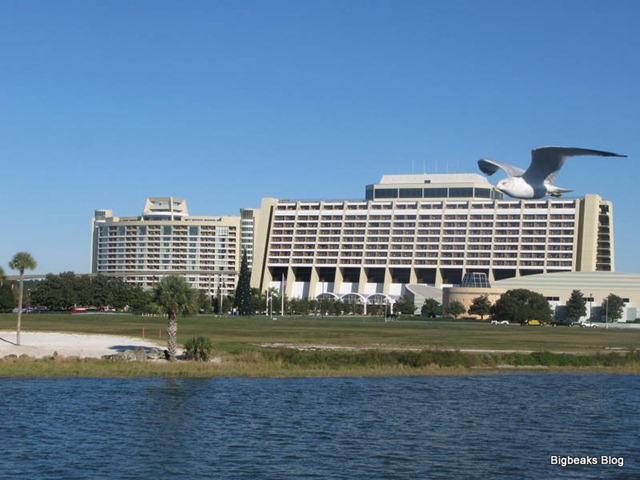
Disney's Contemporary and Bay Lake Tower

During our visit to Walt Disney World the first week of January, we stayed at the newest hotel on property, Bay Lake Tower at Disney’s Contemporary Resort.  Bay Lake Tower is the recently-opened 15-story Disney Vacation Club tower located adjacent to the Contemporary on the site where the north garden wing used to be located.  The Contemporary, of course, was one of the two original Disney World hotels (along with The Polynesian) and is the closest to the Magic Kingdom.

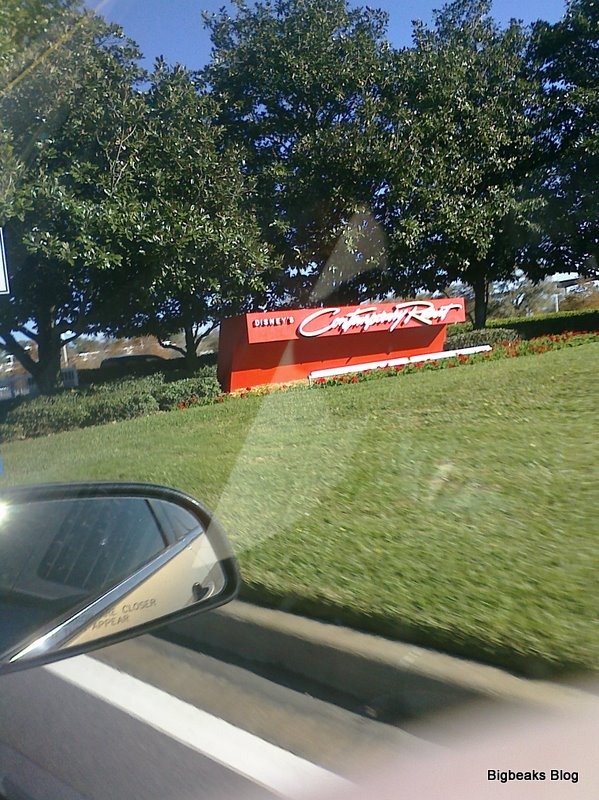
 Entrance to the Contemporary

We have been Disney’s Vacation Club members for a few years, having previously purchased points with Disney’s Saratoga Springs as our home resort.  We had always been a bit reticent about that resort due to its size and location and didn’t actually stay there for any length of time until 2008.  For most of that trip, all of the alternative DVC resorts had sold out by the time the home resort exclusivity window was over.  We really weren’t very happy with it, since it was so far away from all the parks while also being so large and spread out that we found it difficult to navigate around or to use many of the resort’s amenities.  After that experience, we sold off our interest in the early part of 2009 and then re-purchased with Bay Lake Tower as our home resort.

While we were taking a little bit of a risk by re-purchasing at a brand new DVC resort, we felt it was a very small risk.  We had actually stayed at the Contemporary once before during our last trip before we bought into DVC.  On that trip, we had stayed in a room in the old north garden wing, which was since demolished to make way for Bay Lake Tower.  We knew from that experience that we liked both the location and the overall amenities of the Contemporary and that the specific location of the new DVC tower worked really well for us as well.

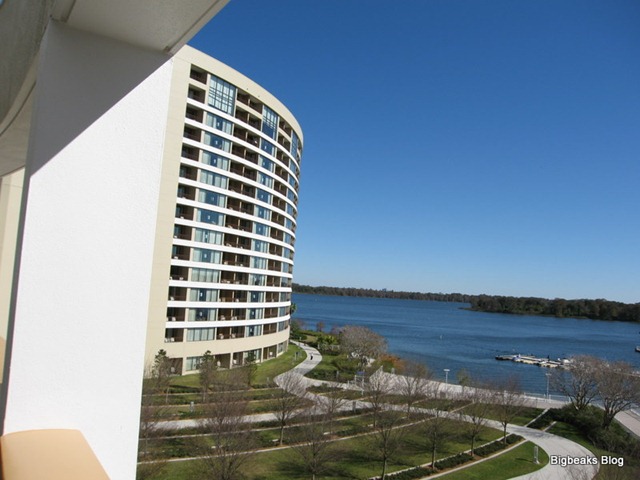
Bay Lake Tower is considered to be a part of the Contemporary Resort and generally shares amenities.  Check-in and other guests services are done at the main desks in the Contemporary lobby.  Access to the tower is available via a couple ground floor entrances or by way of a skybridge that connects the 4th floor of the Contemporary with the 5th floor of Bay Lake Tower.  The bridge is not fully enclosed and, therefore, exposed to the elements.  If the weather indicates, it is definitely important to remember to grab coats or rain gear when crossing between the two buildings.

View from the Bay Lake Tower SkybridgeView from the skybridge

They do maintain a certain amount of exclusivity by always requiring the use of a room key to access any of the Bay Lake Tower entrances.  This isn’t strictly enforced as it is extremely easy to simply follow other guests into the building, but I do think this is a generally good policy to discourage non guests from wandering the building.  There are some pretty impressive views from the elevator lobbies and hall windows in the tower and I could easily see crowding and noise levels becoming a problem without the more restrictive access.

The 4th floor of the Contemporary (where the skybridge is located) is the hotel’s famous “Grand Canyon Concourse” which includes the monorail station as well as various gift shops, restaurants, and a video arcade.  The gift shops include two general Disney merchandise stores, Bayview Gifts which was mostly clothing and the Fantasia Shop, which featured a lot of Disney-branded toys, trinkets, and a pin shop.  Near the skybridge is an additional shop called Concourse Sundries and Spirits, which has some grocery items.  This store had a small selection of DVC-branded clothing and other items, including one Bay Lake Tower t-shirt, but I didn’t much like the design on it.  We were disappointed that none of the shops had anything else in the way of merchandise specific to the Contemporary or Bay Lake Tower.

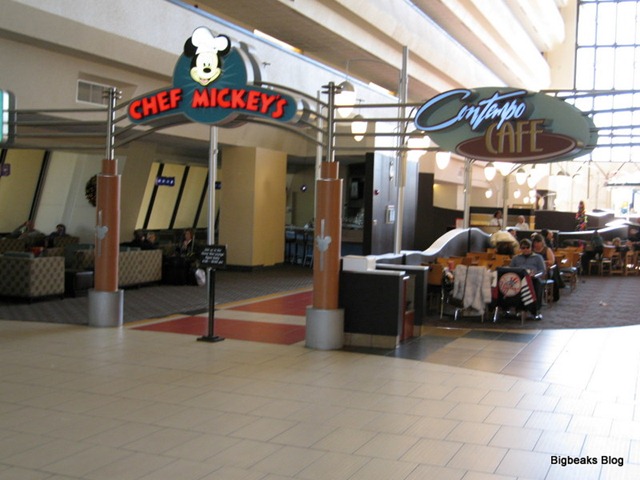
Chef Mickey's and Contempo Cafe

The two restaurants on the 4th floor included Chef Mickey’s, which is a character buffet, and the quick service Contempo Cafe.  We had a nice breakfast at Chef Mickey’s on our day of arrival and had a couple quick service meals at Contempo Cafe at various times during our trip.  Both were nice locations and we particularly appreciated having the quick service location that was so conveniently located.  The Contempo Cafe is fairly new (it is in the former location of the old Concourse Steakhouse) and has a very modern feel to it, including a touchscreen ordering system.  The Contemporary has two more restaurants that we didn’t visit, which are The Wave down on the first floor (in the location of the old fast food location) and the high-end California Grill on the top floor.

Read More »

Orlando and Disney World Trip Jan 2010 – Part 1: On Our Way!

Today is New Year’s Eve 2009 and I’m writing this from the airplane as we are on our way to Orlando for our annual visit with my family and trip to Walt Disney World.

Since Andy started Kindergarten this year, we had to arrange our travel plans around his school schedule.  While we don’t really know whether or not his school and teacher would have been open to us taking him out of school for a vacation, we felt that we really preferred to try to find a time when he wouldn’t miss any.  Looking at the schedule, we discovered that his winter break extended for the full week after New Years, which seemed like a good opportunity.  We are hopeful that we will avoid the worst of the Christmas season crowds with this plan as well as take advantage of some good travel bargains.

We came up with the idea of traveling on New Years Eve with the hope that it might not be as busy a travel day as some of the surrounding dates.  We figured today to be a day that a lot of people would be more apt to want to stay at home or go out celebrating somewhere.  While our flight did end up being relatively full, the airport turned out to be pretty easy to deal with today.

For tonight and tomorrow, we are going to be staying at a Fairfield Inn near my parents’ house in Clermont.  We didn’t really want to deal with the Disney World crowds on the first two New Year’s Eve and New Year’s Day.  This should give us a chance to rest a bit tomorrow after the travel day as well as to give us some pretty good quality time visiting casually with my parents at their house tomorrow.

On Saturday, we will be transferring to Bay Lake Tower, the new Disney’s Vacation Club resort that opened next to the Contemporary Resort earlier in 2009.  Early in the year, we sold off our DVC points at the Saratoga Springs Resort (which we didn’t like very much) and re-purchased at Bay Lake Tower.  We are definitely looking forward to our stay at what is now the highest-end DVC resort.  We then plan to spend lots of time at the theme parks starting Saturday and through the rest of next week, flying home on a week from Saturday.

With the recent reports of heightened security after the attempted terrorist attack last week along with our uncertainty about how crowded the airport was going to be, we decided that we needed to get a really early start this morning.  The fact that today is a Thursday and not necessarily a work holiday for many people also introduced the potential risk of some major traffic on the 405 freeway heading down to LAX.  Because of all this, we got up at 4:30am this morning and left home pretty much right at 6;30am.  I guess we are kind of having to adjust to Eastern time a day early, although we still went to sleep on Pacific Time last night, making us really tired today.

None of the concerns really ended up being a problem, although I’m still glad we maintained some peace of mind by allowing all the extra time.  Traffic on the 405 turned out to be pretty much full-speed all the way, allowing us to get to the airport parking facility (we use WallyPark) in about 20 minutes or so.   At the parking facility, we were able to very quickly get parked, unload our luggage, and get onto a shuttle bus, which we had all to ourselves. 

At the Delta Airlines terminal, there was no line at all for curbside check-in, which let us take care of our checked bags very quickly and without any major hassle.  It was really very nice being able to avoid the need for a luggage cart or having to drag our bags through the airport to the regular check-in desks.  I suppose I could have saved the tip by checking the bags inside, but I felt the small cost was well worth it.

Security was probably our biggest worry.  Over the last week, I’d been hearing all kinds of horror stories about the wait, with reports of wait times anywhere from an hour or so all the way up to 7 hours.  Of course, these were all hearsay and the airport, airlines, and TSA were really saying nothing officially, leaving us with little idea what to expect.  At least this morning, though, the wait really wasn’t much at all.  We made it through in about 20 minutes, which included a little extra time for them to do a hand-search of my backpack, mainly because I forgot to take the camcorder out. 

We ended up getting to the gate nearly 3 hours before the flight.  That gave us plenty of time to get an over-priced breakfast at the airport McDonalds and otherwise catch our breath a bit before getting on the plane.  We found seats at the gate that were right in front of a window and Andy had quite a bit of fun watching the airplanes.

Security does seem somewhat increased from what we have seen in the past.  The security checkpoint felt a bit more formal and by the book than usual, although I honestly don’t know how much of that was perception.  As I mentioned, I did get a secondary search on my bag, which seemed pretty quick.  At the gate, they had a pretty substantial TSA presence during boarding, including multiple officers both at the entrance to the jetway and at the plane’s hatch.  They announced at the start of boarding that the TSA would be doing some random searches and pat-downs during boarding, although I didn’t see them actually pull anyone out of the line for it.  Before they started boarding, they also made a point of announcing that we were waiting for the TSA to search and clear the plane as well.

I’m going to conclude this first post of the trip by mentioning that this plane offers in-flight wi-fi and I have written all of this on-board and will post this momentarily from the air!  As of right now, we are flying over Texas with another hour and a half or so to go before arrival.  So far, the flight has had a bit of turbulence, but otherwise has been pretty uneventful.

Memories of My Son’s birthdays – Part 4 (Age 6)

Click here for Ages 1-3
Click here for Age 4
Click here for Age 5

Age 6

As I mentioned when I started this series of posts, my son turned 6 last week.  After the fairly big and elaborate celebration of last year, we decided to keep everything very low key this year.  We even decided to limit the birthday celebrations to just the immediate family, although that really had more to do with logistics and scheduling than anything  else.

CIMG0042

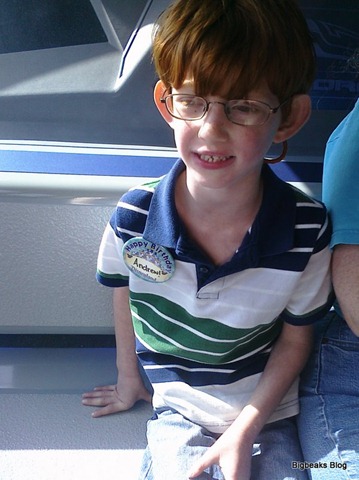
As our son’s main birthday treat, we decided to make a trip down to Disneyland on the Saturday before.  We have an ownership interest in the Disney’s Vacation Club timeshare and looked into the possibility of getting a reservation at the recently opened Villas at the Grand Californian, but there wasn’t any availability that night so we decided to simply make it a day trip.

We live only about an hour away from Disneyland and have passes for admission, so we do make reasonably frequent visits down there, although not nearly as often as my wife and I did when we were younger and childless.  Our last visit had been only about a month before, but was primarily for the celebration of an adult friend’s birthday.  Since that day had a bit more of a scheduled agenda, we decided to make this visit an “Andy’s choice” day, where he would pretty much get his pick of rides and activities.  For this reason, we also chose not to try and meet up with any other friends, but instead just make it a family day.

 IMG_2921IMG_2930

IMG_2955 IMG_2935-1

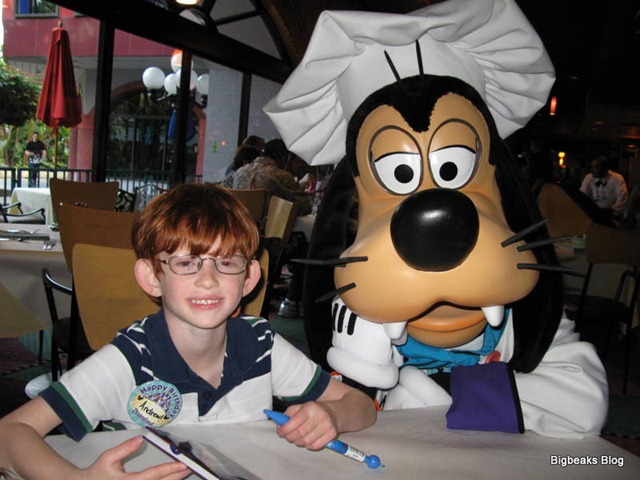
One special activity we included that day was lunch at Goofy’s Kitchen, the character dining location at the Disneyland Hotel.  Andy is still a huge fan of the Disney characters and gets a bit kick out of these meals where some of his favorites come around and visit the table.  During our meal, we had visits with Goofy, Chip & Dale, Mulan, Jasmine, Baloo (from The Jungle Book) and Brer Fox.  We also got to visit with Pluto for a couple photos before we went to our table.

IMG_2952 IMG_2944

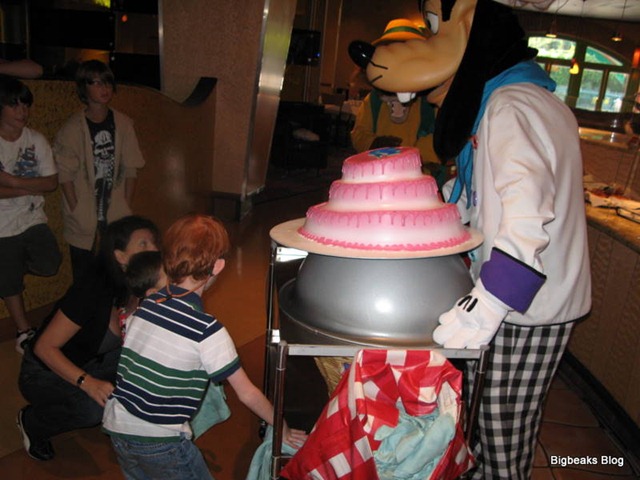
The restaurant also has occasional kid participation activities and Andy had the chance to get up and do The Twist with the characters as well as to help Goofy with baking of a cake (which mostly involved kids playing noisemakers and pretending to help clean up). 

IMG_2938  IMG_2937

Toward the end of our visit to the restaurant, the waiter brought Andy a cupcake with a birthday candle on it and Chip plus a few of the restaurant staff members all gathered for a short birthday celebration.  It wasn’t anything overly fancy, but Andy definitely got a big kick out of it.

IMG_2965

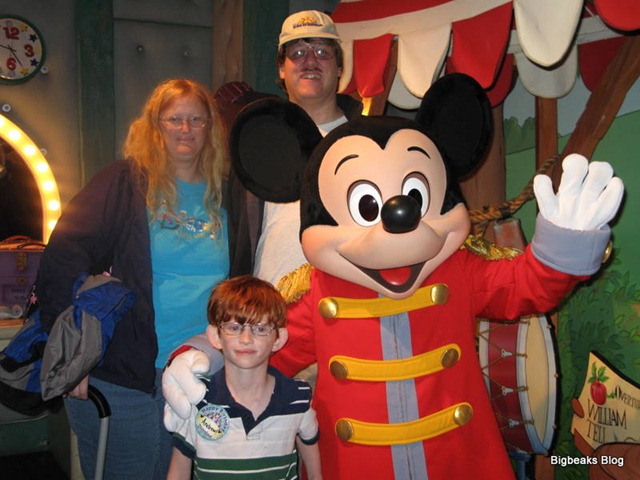
After lunch, we headed back into the park to visit attractions.  This included a visit to see Mickey Mouse at his house in Toontown, where everyone did give Andy a bit of extra attention for his birthday.  The birthday visit was during the first weekend that Disneyland had all of their Christmas activities up and running, so we took that opportunity to see the Christmas parade and fireworks show.  Overall, it was a fun day and Andy seemed to really enjoy himself.

IMG_3040 IMG_3057

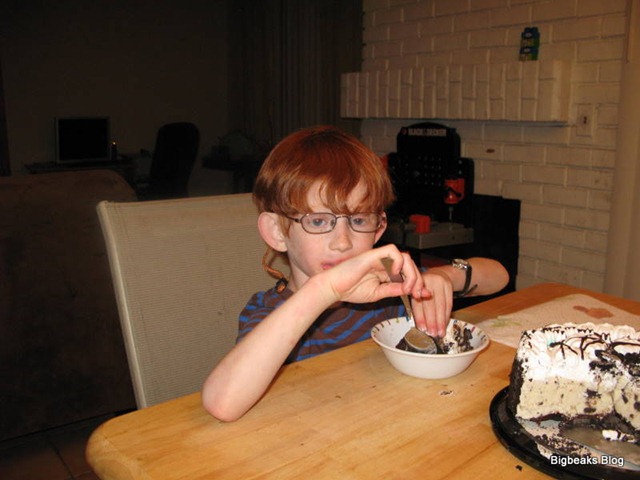
For the evening of Andy’s actual birthday, he picked pork chops and mashed potatoes for his birthday dinner, a bit of a surprise since we had never really thought that pork chops was one of his favorites.  We then had the traditional ice cream cake for dessert and then let him open presents.

IMG_3010 IMG_3013

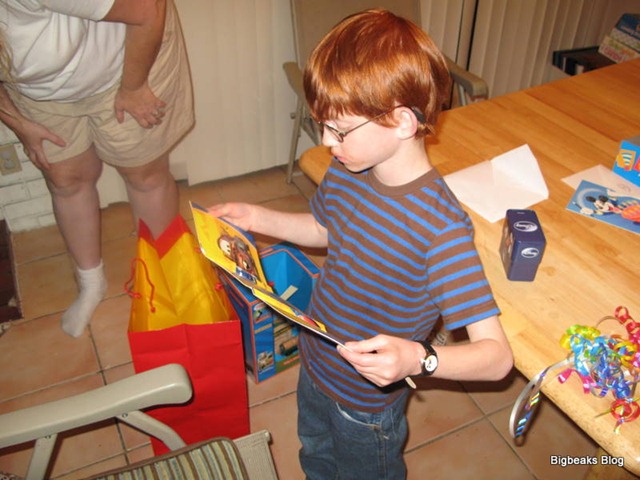
While he got a lot of really nice gifts, it was kind of funny that possibly the biggest hit of the bunch was the birthday card that I had picked up for him the night before.  The card is the type that has a chip in it that plays sounds when the card is opened.  It features the characters from the Disney/Pixar movie Cars and plays the song “Life is a Highway” from the movie, which has been Andy’s favorite song for quite a while.  Even though my wife had already bought another card for him, I couldn’t resist buying this one when I spotted it while shopping for a couple other items at the local Walgreens store the night before.

IMG_2989 IMG_3023

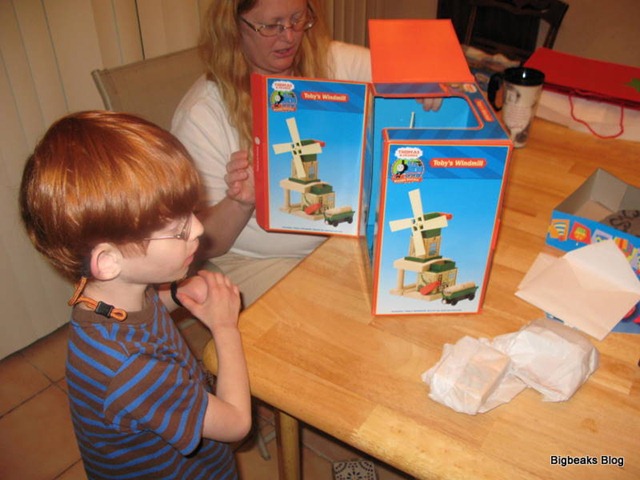
The main gifts this year included a couple Thomas the Tank Engine toys from my wife and me and a shirt and Mickey Mouse wristwatch from one of his sets of grandparents.  The watch was a pretty exciting gift for him as it is his first and he was pretty proud about getting a big kid’s gift like that. 

IMG_3065 IMG_3088

Andy’s other set of grandparents were a bit late in shipping out his gift from them (a Mr. Potato Head and full set of parts), so he had a little extra gift opening event later in the week.  That turned out to be a bit of a nice opportunity to prolong his birthday celebration a bit longer.

There was also a little celebration of his birthday in his class at school, but I don’t have any photos as neither my wife nor I were there for it.  My wife brought along a couple packages of mini-cupcakes that were distributed around to the class and the teacher gave him a small gift as well.

While this was probably a much more low key birthday than many of his past ones (particularly the year before), it still was a fun time.  Happy birthday, Andy!